Showing posts with label home. Show all posts

Thursday, 30 April 2015

ECOsystem, ECOlogy, ECOnomy
It’s all about “How We Live” in our HOME

Image by PeapodLife: ECO=HOME
Image Credit: Earth Nature Vector House & Ecology Graphic 
“There's only one corner of the universe you can be certain of improving, and that's your own self.  So you have to begin there, not outside, not on other people.  That comes afterward, when you've worked on your own corner.”
~ Aldous Huxley, Time Must Have a Stop
Let’s start with the following short film entitled ‘How We Live – A Journey Towards a Just Transition’ by Kontact Films, paying close attention to the first few minutes of the film discussing the definition of ‘eco’ as it relates to ecosystem, ecology and economy.


So let’s break it down once more:
  • Eco = home.
  • Ecosystem = the complex interrelationships of home.
  • Ecology = the study & knowledge of home (self-knowledge, where ‘home’ is an individual).
  • Economy = the management of home.  

And there are three pillars of economy…
  1. Resources
  2. Work
  3. Culture
Now, the film goes on to describe new business models, more democratic ownership, more local ownership, and even starts discussing human consciousness in terms of human behaviour, actions, interactions, “living better,” etc.

But sadly, while the film “gets” that we cannot expect the banking system which got us into this mess to get us out of it, the film ignores its own axioms in prescribing more top-down structural thinking as being the source for a plausible solution.

Nature doesn’t do much from a top-down level. The term ‘seed change’ comes from this very notion of incremental organic change. The planting of a seed which over generations produces not only one tree, but a forest of trees; the pebble dropped into the pond sending out ripples over time.

Now consider all the so-called “green” movements and technologies related to energy conservation, recycling, etc. At the end of the day, these reduce our negative impact on the planet, but do they actually heal our relationship with the planet? What does it mean, to have a relationship with nature?

How can we propose to create a mindset within ourselves—or a culture within our companies, let alone society—aligned with long term sustainability on the planet, if we have no idea what living in harmony and mutual symbiosis actually feels like?  In other words, no practical, experiential knowledge?

We cannot hope to better manage the resources, people and culture of economy unless we experience what it means to live in an ecosystem. Living in an ecosystem, gives us the experiential knowledge we need we truly comprehend the meaning and dynamism of harmony and mutual symbiosis—what we call ecology—and how it relates to our own self-knowledge.

Building upon such a nucleus, such a seed, we can adapt and grow an economy based on harmony and mutual symbiosis… exactly what we experience day in and day out at home—in our homes, offices, schools, as a reflection of what we’re experiencing in our hearts and minds.

In synthesis, we become a part of actual ecosystems…we gain authentic ecology through experience…and our economy cannot help but reflect everything we are and everything we know.

Image by PeapodLife: Explore Our Advanced Human Habitats with a pPodLite Angolo Unit perfect for Home & Small Office

It doesn’t take much, truly. Even a small pPodLite Rainforest Ecosystem from PeapodLife is enough to begin transforming your home/office into a place of harmony and mutual symbiosis…begin giving you the experience of what being in alignment with nature feels like.

Then the real magic happens. But you wouldn’t believe us if we told you! Like all believers in the magical powers of nature to inspire, transform and heal, it’s something you simply know in your heart, and/or have to experience first-hand for yourself. 


Tuesday, 7 April 2015

Bring the Mind Home at Last
with an Ecosystem in the Home First

“All of man’s difficulties arise from his inability to sit quietly in a room by himself.” We do so many things, we speak volumes, and we think an endless amount of useless thoughts, but we’ve lost the sense of being. We’ve lost our ground. The most important thing is presence. Being. We’re often so distracted that: “We’re scattered everywhere, but nobody is at home.”
~ Blaise Pascal, with Sogyal Rinpoche
Source: School of the Holy Science Facebook Page:

The French philosopher Pascal once said, “All of man’s difficulties arise from his inability to sit quietly in a room by...
Posted by School Of The Holy Science on Tuesday, April 7, 2015


Let’s face it: very few of us can sit quietly in a room by ourselves. For so many reasons, both internal and external, we find it very difficult to just be still with ourselves.

Whether it’s the cacophony of our crazy busy mind, our crazy buy life, or the mixed-mash-up of real and perceived distractions pulling our attention in all directions, we find ourselves living in a kind of hurricane; a typhoon of never-ending thoughts, worries, wants, to-do lists, etc.

Like a song that gets stuck in our head, we cannot escape the prison of “mental calm depravation.” We may even have difficulty sleeping; either unable to fall asleep due to the never-ending stream of thoughts troubling us and keeping us awake, or disturbing and unsettling dreams reflective of our waking psychological state.

And while it’s all well and good to tell ourselves we can “leave our troubles at the door,” the reality is our subconscious minds have other plans. Without taking time on a regular basis to relax, concentrate, visualize and remember, revere and experience our naturally pure state of being, we remain trapped on the hamster wheel of an unsettled mind; lost in the hurricane of our lives.

PeapodLife can help. High order ecosystems are the eye in the storm of our lives. An ecosystem in the home creates a space which encourages us to sit comfortably and quietly. The natural harmonics of the ecosystem coupled to the phenomenon of entrainment tune our senses, our central nervous system, and our brain to a more soothing state.

Add to this field of harmony and mutual symbiosis the beautiful colours, soothing sounds, replenishing oxygen, and ambiance of energy and vitality, and you experience a space where you have a chance to actually be…not only alone with yourself, but with whatever deeper experiences of reality your heart and mind are open to having, via meditation, a good book, just your own thoughts coming into clarity, or maybe just the deepest, soundest sleep you’ve had in ages.

The point is, we all can use an eye in the storm; a sanctuary and a place where positive rejuvenating harmonics help you return to your natural, optimal state of being. What you do when you arrive there is up to you. PeapodLife’s job is helping you get there…bringing an ecosystem into your home first so you can bring your mind home at last.
 
Our ‘Crazy-Busy’ Life is a Hurricane & PeapodLife is the Eye of the Storm
Image by PeapodLife: Our ‘Crazy-Busy’ Life is a Hurricane & PeapodLife is the Eye of the Storm


Thursday, 29 January 2015

Going with the Flow vs. Being in the Flow


You’ve heard the expression, go with the flow. It’s been used in countless situations by motivational speakers, counsellors, life coaches, teachers, even just friends and family.

The intention behind go with the flow is usually to encourage individuals to show less resistance to the circumstances and direction of their life. It’s in the same vein as don’t rock the boat, and don’t worry about the things you cannot change; don’t worry about the things you can. 

There’s a kind of hurried passivity to going with the flow which reminds us of the rat race and rush hour.  Everyone is in a hurry to get somewhere, but limited to the flow of the traffic. Everyone is in their own little world, wanting to be anywhere but where they are, push/pulled forward by the inevitability of the “big machine”—or, for a more organic metaphor, the enormous lumbering amoeba. 

Video: Tokyo time lapse in rush hour; Published by  Flow Bo

Cog in the wheel, ant in the hive, there is something about going with the flow which says follow the crowd, to us…be at one with the mob.  To go with the flow is a kind of surrender of oneself, but a surrender to circumstances and the status quo.

Going with the flow strikes us a kind of unconscious activity. A “shrug your shoulders and give up” type of response to the “inevitability of life.” Get up, go to work, come home, watch TV, go to sleep. That is a flow, alright…and it’s a flow many certainly go with. But it’s not exactly one anyone wants to be in. So, we tune out. And therein lies the crux of the problem with going with the flow.

Going with the flow leads to a kind of psychological and spiritual stagnation. A dead leaf blown haphazard on the wind…no longer connected to any real purpose. Just going, going, gone.

When you go with the flow, you are never really being in the flow.

One can be very much in the flow and yet not just going with it. To be, present, here and now, conscious, awake, alive…whether one is standing still and observing an ocean of people pass by during rush hour, or walking together very much in sync with them.

Being in the flow of life is the difference between the dead leaf which floats downstream, and the otter which is one with the river, no matter sunning himself on a rock or playfully shooting the rapids. The leaf goes with the flow. The otter is being one with the flow.

And it’s amazing what an experience one can have when one joins in being one with the flow of the moment especially if there’s actually an otter involved!)…

Video: Swimming with river otter in the Chagres River Panama; Published by chattaba

PeapodLife high-order rainforest ecosystems help remind us to be in the flow. Our ecosystems are in constant motion, evolving, responding to you, your moods, your life. That’s because our ecosystems are being in the flow of your life, constantly balancing themselves and by extension, you.

Being in the company of an ecosystem, being one with its flow, can profoundly affect your ability to be in the flow of your life. Now, we’re not saying you’re going to have experiences like playing with an otter, but you’d be surprised just how profound an effect an ecosystem can have on you.

This recently completed Living Wall Rainforest EcoSystem was installed at 235 Fitch Street in Welland, Ontario. 
Like most PeapodLife EcoSystems, it features orchids, moss, bromeliads, African violets, cacti, aquatic plants, fish & more. 
Like all PeapodLife EcoSystems, there is no soil, chemical additives or fertilizers of any kind.
Published by PeapodLife


Tuesday, 20 January 2015

The Changing Face of Real Estate in Toronto 2015

Video: TREB Market Report December 2014 
“The stakes are high surrounding the fortunes of the Greater Toronto Area housing market,” adds the report. “A healthy housing system is critical to a region’s economic fortunes. And with the GTA key to Canada’s economic engine, the success or failure of housing in this region carries significant national importance.”
~ TD Economics Report
$140,000 is a big number. And according to a TD Economics Report released Monday, it is the annual income needed to finance a single-family home in the GTA (which now costs about $740,000). Source: thestar.com Real Estate

The problem, as it turns out, is all that urban densification happening around the city (translation: the condo-crazy city).

New home sales are way down compared to new condo sales. This has led to a shortage in supply of homes and that has helped push prices up to the point where Toronto is nearing New York-like home costs. And it should not come at all as a surprise, according to George Carras, President of RealNet:
“This is a problem ten years in the making. … The desire to curb sprawl and encourage intensification has led to the continued condominium boom in the 416, spiking home prices and a widening price gap between low-rise and high-rise housing product.” 
~ George Carras, President, RealNet, Altus Group
Source: National Post

Image: Gap between low-rise homes and condo reaches all-time high of $251,337
Source: National Post

If something is not done, it is clear that more families will have to live in hi-rise condominiums. And, as it turns out, builders are responding by starting to offer larger condos (as opposed to the 400 sq. ft. variety designed for first-time buyers and young singles).

What to do? Clearly, new homes require land. No one wants to take the GTA back into the urban sprawl scenario which warranted the current urban intensification approach. And yet, it is all but impossible for entire neighbourhoods to be levelled to build new low-cost low-rise housing.  

What can be done?

PeapodLife is Changing the Face of Real Estate in Toronto in 2015

With our partner, Casavant, PeapodLife is able to offer benefits to each of the following:

•    Home buyers: a way to purchase, renovate and own a home they could otherwise not afford, complete with an indoor rainforest ecosystem.

Image By PeapodLife: BEST HOMES Process

•    Low-income Renters: newly renovated second-suites in good neighbourhoods, with their own small rainforest ecosystem included.

•    The City of Toronto: a practical way to achieve urban densification and urban renewal while reducing the load on aging infrastructure and services (PeapodLIfe BEST HOMES are more efficient, and utilize cisterns to capture and utilize precious rainwater for ecosystems instead of it running off into Toronto’s overwhelmed drainage and sewer system).

•    Real Estate Investors: an easy way to increase their return on investment.

Infographic By PeapodLife: $500K VS $2M => 4 BEST Homes w/Ecosystems

So, from our standpoint, in 2015 the BEST thing that can happen to the Toronto Real Estate market is PeapodLife. Why not contact us for more information and put your BEST foot forward in 2015.


Tuesday, 23 December 2014

Season’s Greetings 2014


YouTube Video: "The Light Shines All Over The World" 
Hope for Light: Marilyn Lightstone on her Iconic, Multi-Faith Holiday Song
Credit: YouTube MarilynLightstone's channel
"However we worship, whatever our clan,
We all first belong to the family of man.
All over the world...The light shines all over the world."
~ Marilyn Lightstone
Video & Quote: Marilyn Lightstone 
Source: YouTube "The Light Shines All Over The World"
At this special time of year we take this opportunity to wish you and yours a magical Holiday Season, filled with family, friends, and the warmth of the season, no matter what faith (if any) you celebrate.

We also extend our heartfelt gratitude for our clients and partners who made 2014 so special. We look forward to an even more prosperous 2015 filled with new opportunities to bring the beauty, tranquility and healthfulness of the PeapodLife to even more people.

Our sincerest wishes for a joyful holiday,
a happy and prosperous New Year for all,
and Peace on Earth for all Beings.

Image Collage: Happy Holidays from PeapodLife 


Tuesday, 4 November 2014

Dancing KINGS & the PEACOCK Life
Men: “Get Down and COLOURFUL” to “Get it On” the Natural Way

Video: At 0.15” these miniscule jumping spiders are nature’s tiny talents.
Source: YouTube – Peacock Spider 7 
“You can dance if you want to,
you can leave your friends behind.
‘Cause your friends don’t dance
and if they don’t dance,
Well that’s no friend of mine.”
~ Men Without Hats, Safety Dance
The natural world is filled with flamboyant, elaborate and beautiful displays by male species courting their female counterparts.

The above ritual by the tiny Peacock Spider, native to Australia, is one such dancing display, complete with colourful abdomen flap which raises just like a peacock’s feathers—hence the name. But these small spiders are by no means the only ones “putting the moves on” their ladies.

It’s no secret that male birds are often more colourful than females, and that they must woo partners using all types of behaviours. But Papua New Guinea’s Birds of Paradise are legendary not only for their elaborate ritual/mating dance, but their beautiful plumage. 

Video: Birds of Paradise

Now let’s face it: the human animal likewise performs its own mating rituals, whether we admit to it or not. And the proliferation of beauty, fashion & lifestyle magazines for women and health, fashion and lifestyle magazines for men are proof of this. Such publications often offer both sexes ways to gain an “advantage” over rivals when it comes to “attracting and/or keeping a mate.”

Image Collage: The “Peacock life” by PeapodLife.

Then there’s “the nest.” Some birds woo a mate by building an elaborate nest which prospective mates come and examine. If the nest is to their liking and meets with their approval, the courtship is successful and mating can proceed.

Video: “The Bachelor Pad” in Nature

This also has its correspondence in the human animal. The “swinging bachelor pad” is but one example of how men attempt to make a good impression on prospective partners, by showcasing their success, cleanliness, organization, likes and interests, tastes in food, design & music, and much more. 

Now, imagine if your “bachelor pad” had one of PeapodLife’s high-order rainforest ecosystems…

Image: PeapodLife Rainforest Ecosystem turns any Bachelor Pad into a sanctuary for new “lovebirds” to become “empty nesters.”

The colours, vivacity, freshness, vitality and life-affirming energy of our indoor rainforest ecosystems will surely turn any bachelor pad into a sanctuary where “lovebirds” can meet, mate and perhaps even become “empty nesters.” But not just any old nest…a nest of MUTUAL HARMONY & SYMBIOSIS, as embodied by one of our high-order ecosystems. The essence of balanced, sustainable beauty. 

In other words, while what starts off appearing as “The Peacock Life” in time reveals itself to create The PeapodLife. And who doesn’t want a relationship of mutual harmony and symbiosis? Contact PeapodLife today and get to work on your “Nest of Paradise.”


Thursday, 23 October 2014

BEST HOMES Investment Case Study


FOR DISCUSSION PURPOSES ONLY. ACTUAL VALUES MAY VARY. NOT AN OFFER.

Here’s a very simple scenario, but a target scenario for Toronto (based on an actual property available for purchase, real world renovation costs, real estate fees, etc. and greenhab investing with PeapodLife BEST HOMES Program):

House in trendy/desirable “Junction” in Toronto (nicely renovated properties sell in $1.3-1.8 million range in the Junction, usually for asking price, sometimes above asking).

Image: PeapodLife BEST HOMES Investment Case Study

The Bottom Line

In this scenario, the Investor nets out at an estimated ROI of 77%.

As you can see, PeapodLife takes a 1% commission / management fee for managing the PeapodLife BEST HOMES process beginning to end on behalf of the Investor. We are therefore incentivized to create a truly stunning home, perform outstanding marketing and promotion to and through the real estate brokers (and beyond), negotiate the best sale price, and realize savings whenever and wherever possible. This is a preliminary fee% for initial deal, and is subject to increase moving forward, based on performance.

We are certain that there are investors who will want varying degrees of involvement, etc. in the process. PeapodLife’s goal is to identify the “right” investor(s) for PeapodLife BEST HOMES. Ones who can SEE our Vision/Mission (SEE – Social, Environmental, Economic) of our consortium of partners, and who want to get on the same page with us: to make money building BEST HOMES and bringing Advanced Human Habitat to the world. We encourage any Investor to check their values against ours and that of our Non-Profit Division, www.GenesisEcoFund.org, as expressed on its website and PeapodLife’s blog: http://greenaddition.blogspot.ca.

And again, please understand that no other company in the world has PeapodLife’s ecosystem technology. Any Investor who thinks they can build something on par with a BEST HOME will soon find themselves knocking on PeapodLife’s door. Also, we have made no mention of our social housing opportunities, and commercial building concepts. We are trying to keep things simple at this stage.


Tuesday, 8 July 2014

How Green Roofs & Walls Impact Building Occupants’ Well-Being
Living Architecture Monitor looks at Green Infrastructure & Human Health

Image Collage: Living Architecture Monitor Summer 2014 Cover & PeapodLife Living Wall Ecosystem  
Source: livingarchitecturemonitor.com: Living Architecture Monitor (LAM) magazine Digital Edition Summer 2014 - Health Issue
“…Green infrastructure in commercial or residential properties can increase employee productivity and property values, by providing visual and physical access to green space.” 
– Living Architecture Monitor¹ 

In the Summer 2014 edition of Living Architecture Monitor, three professionals share their insights into the advantages and benefits of installing “green infrastructure”—green roofs and walls—into their buildings. The complete article can be read in Living Architecture Monitor Online, but here are some highlights:

On the affects of green roofs and/or walls on building occupants:

“The response that our employees had was and is overwhelmingly positive…The investment into what was unusable space and the environmental benefits increased company-wide awareness, exposure and appreciation of the overall design.” – Kevin Repasky, Director of Operations, Hanover Architectural Products Source¹

“The Manulife Centre’s green roof…is considered to be a garden in the heart of the city, a quiet and tranquil place for tenants and employees to use at their leisure, hidden above the bustling corner of Bay and Bloor Streets.” – Michael Bardyn, Managing Director, Greater Toronto, Manulife Real Estate Source¹

On the financial impacts of Green Architecture:

“The living wall is definitely one of the greater features to the building and an added value to the project. The visitors and guests are always admiring the living wall. It’s also a tour stop for our leasing team. The living wall is definitely an emenity for the tenants and visitors to the property." – Sherry Mashadian, Manager, Operations, Irvine Company Office Properties, Source²

“We believe it has a very positive affect on our tenants as evidenced by our low vacancy rate which drives long-term value for the property.” – Michael Bardyn, Managing Director, Greater Toronto, Manulife Real Estate Source²

Additionally, the article cites that 1330 Boyslston Street Apartment near Fenway Park in Boston generates an additional $120,000 in additional revenues for units that overlook a newly installed green roof. J.P. Morgan Asset Management estimates the green roof has increased the value of the property by $2.4 million.²

And, according to Economics of Biophilia report, 10% of employee absences can be attributed to architecture which has no connection to nature.²

For more information on what nature can do for YOUR commercial or residential building, its tenants, your business, etc, Connect with PeapodLife Today.

¹ Source http://www.nxtbook.com/dawson/greenroofs/lam_2014summer/#/8
² Source http://www.nxtbook.com/dawson/greenroofs/lam_2014summer/#/10


Thursday, 19 June 2014

The BEST Green Real Estate Investment Opportunity
(Greenhabbing that’s Social too)

Image by PeapodLife: BEST HOMES: The BEST Real Estate Investment Opportunity

“…we focus heavily on the nexus between green investment and profit,
and how investors can use green technology and incentives to create win-win solutions.”

No matter what anyone tells you, we know that real estate investing is still pretty much about one thing: maximizing ROI. However, how one goes about achieving that goal as an investor is changing.

From Ethical Funds to Green Real Estate News, including “greenhabbing" (making green improvements to existing real estate properties) CSR, “Corporate Social Responsibility,” normally measured as SRI—Social Responsibility Index—is trickling down into the real estate market. So what is "greenhabbing?" Checkout this excellent YouTube video by Jim Simcoe:

Video: Green Real Estate Investing (Greenhabbing) with Jim Simcoe

For the purposes of today’s article, our focus will be on “Social, Environmental, Economic Real Estate Investing” or "SEE REALTY." This is a type of real estate investing which takes greenhabbing to new heights of social responsibility and positive social impact, all the while maintaining an ROI focus.

It would be nice if "SEE REALTY" took off, because after all, it's only one "I" short of SEEing the REALITY of the housing situation we all live in, but we'll just have to wait for it to catch on.

PeapodLife BEST HOMES (Building EcoSystems & Technology via Home Ownership for the Masses that's Economical & Social) offers investors an approach that is truly unique.

Together with our partner, Casavant, we can help investors profit from the healthiest, most stress-free, energy-efficient and environmentally friendly properties possible.

PeapodLife's unique all-in-one green real estate investment program rolls green renovations and PeapodLife ecosystems into the mortgage, greatly reducing the up-front capital costs (and risks) for investors!

Here’s how it breaks down:

Image By PeapodLife: UNIQUE BEST HOMES INVESTMENT PROCESS

Just imagine being able to buy, renovate and sell green properties at a fraction of the typical capital investment, and even less time and effort.

PeapodLife and any affiliated contractors / subs we use are performance bonded to 1 ½ times the cost of the renovations.

The system our Architectural Technologist uses is the same one as the insurance agency and is featured on W Network program The Property Brothers.

THE POSSIBILITIES FOR GREEN SOCIAL REAL ESTATE INVESTMENTS ARE ENDLESS:

Working with the right investors, PeapodLife can also convert existing properties into green rental, rent-to-own, condo, co-op, mixed residential-commercial, or commercial properties.

If we’re looking at a simple home buy, renovate & flip scenario, we can also create a Legal Second Suite (most likely in the basement) that benefits from all the green technologies on the property, including the ecosystem!

Just to remind you what that looks like (and the IMPACT IT CAN HAVE ON PEOPLE WHO EXPERIENCE IT IN PERSON), check-out our latest video of an ecosystem in-progress (in an AFFORDABLE GREEN RETIREMENT RESIDENCE)...

Video: PeapodLife EcoSystem in Progress in Fitch Street Low-Income Green Retirement Residence

SO JUST HOW “SOCIAL” IS PEAPODLIFE'S APPROACH TO GREENHABBING?

Let’s face it: you know the condition of many basement apartments in Toronto. You know the problems they have with flooding, mould, etc. With skyrocketing prices in places like Toronto and Vancouver, coupled to “real estate investing as usual” (bottom-line profit at any price) the low-income and underprivileged trying to get by really do get shafted in terms of quality and healthfulness.

PeapodLife, partnered with Casavant’s Second Suites Program will completely change the complexion of social and affordable housing. This program is a true game-changer. It is so revolutionary and potentially lucrative, to receive details investors must first sign and return a confidentiality agreement.   CONTACT US TODAY for more information.

Why the secrecy? Because we don't want our trade secrets used to perpetuate some of the awful trends which can be seen in low-income housing projects. In the wake of PeapodLife's approach to greenhabbing, their days are numbered anyway...

WHY CONVENTIONAL REAL ESTATE INVESTING CAN’T COMPARE TO PEAPODLIFE

In today's red-hot real-estate market, many are doing just the same old slap on a coat of paint" routine. You know, lipstick on a pig. Mostly contractors who are perhaps best equipped to assess renovation costs, swallow additional "surprise" expenses, and generally milk every wholesale discount they can to maximize their profits. Makes perfect sense. Not exactly “green.”

But what about other investors? No matter who they are; no matter how close a relationship they may have with architects, contractors, etc., the fact remains that they are taking a good deal of risk footing the bill for renovations which are really out of their hands; unexpected costs which are more often than not beyond their control.

Then there's the whole issue of differentiation. Sure, with a well-designed, renovated and staged property in the right location in Toronto, a bidding war may even ensue. But this is becoming less common as more and more new and/or renovated homes come onto the market, all sporting the same contemporary look, features, etc. 

PeapodLife BEST HOMES offers less risk, more convenience, greater differentiation in the marketplace, while building SUSTAINABILITY and SOCIAL RESPONSIBILITY into every property.

CONTACT US TODAY for more information.


Tuesday, 17 June 2014

Living Wall EcoSystem COMES ALIVE! What Progress Indeed
Fitch Street Retirement Residence gets a Colourful Burst of Fresh Air

HD Video by PeapodLife: EcoSystem-in-Progress features Active Rainforest Cycle, Seeded Moss, Bromeliads, Ferns, Grasses.
PeapodLife Rainforest Living Wall EcoSystem "Under Construction" at Fitch Street Affordable Retirement Residence in Welland, Ontario.
Video features active Rainforest Cycle (automated spray misters); moss (seeded); bromeliads, ferns, grasses.
Still to come: Orchids, aquatic plants, fish and more.
Published on Jun 17, 2014 by PeapodLife

“I suffer from depression. My new morning ritual is going to be to come down and sit right here for a little a while. My God it’s so beautiful. It just makes me happy.”
~ Fitch Street Retirement Home Resident

The above video really does speak volumes (watching it on our YouTube Channel in HD is best).

As a part of our continuing series showing the evolution and organic growth of a PeapodLife Rainforest EcoSystem, today we offer video evidence of the dramatic improvement an EcoSystem makes to any space.

In addition, we offer more “in-progress” photographs which will serve as a kind “before and after” pics for the purposes of today’s article.

Image by PeapodLife: “BEFORE” Fitch St. EcoSystem Mechanicals & Foundation Installed.

Image by PeapodLife: “AFTER” Fitch St. EcoSystem: Bromeliads, ferns, grasses planted; moss seeded.

As we mentioned in previous blog posts, the process of installing a high-order indoor rainforest ecosystem by PeapodLife takes time. It is a step-by-step organic process.

There is NO SOIL. NO CHEMICALS. NO FERTILIZERS. NO ADDITIVES OF ANY KIND.

When you’re dealing with nature ON HER TERMS, patience and organic growth are the order of the day. There are no shortcuts. There is no way to exploit the laws of nature and “get away with it.” Apologies to industrial agri-business, et al.

Still to come: orchids, aquatic plants, fish & more!

At PeapodLife, we let our Living Wall EcoSystems to the talking. No dying plants. No smell. Just the freshest, cleanest air; and a most beautiful, vibrant, colourful and energetic background.

On of the Fitch Street residents (who shall remain nameless) put it best when she came by with her little dog to admire our work. She said,
“I suffer from depression. My new morning ritual is going to be to come down and sit right here for a little a while. My God it’s so beautiful. It just makes me happy.”

Enough said.


Friday, 13 June 2014

List of Heart Disease Risk Factors Grows: Air Quality & Environmental Noise
A Healthy Heart is STRESS-FREE, a Healthy Environment is CLEAN & NOISELESS.

Image Collage by PeapodLife: Nature = Stress Free, Healthy Heart Zone

“A Healthy Environment Makes a Healthy Man” 
~ Unknown

Here are some Controllable Risk Factors for Heart Disease:
  
•    Smoking
•    High LDL, or "bad" cholesterol and low HDL, or "good" cholesterol
•    Uncontrolled hypertension (high blood pressure)
•    Physical inactivity
•    Obesity (more than 20% over one's ideal body weight)
•    Uncontrolled diabetes
•    Poor air quality
•    Noise

Sources: webmd.com: WebMD: Heart Disease Health Center: Risk Factors for Heart Disease ;
baqs.spph.ubc.ca: Border Air Quality Study: Noise and Air Quality Research

Whenever we see a list like this, it’s always interesting to note how entries such as “stress and anger” are listed as two separate items, as if they were in themselves unrelated. Likewise, noise and air pollution are shown unrelated to stress.

Now, obviously there are practical reasons for this. For instance, it’s clear that noise causes stress (at least, it should be common sense). Thus, it is not the noise itself that leads to heart disease, it is the stress it causes which matters. But one cannot say it is stress alone that causes heart disease because people might be tempted to believe a relaxing cocktail and a meditation CD will do the trick.

The key here is to recognize and distinguish between lifestyle factors and environmental factors. Whether or not one smokes is a lifestyle choice. Whether or not one works in a toxic workplace environment is less of a choice and more of an environmental circumstance.

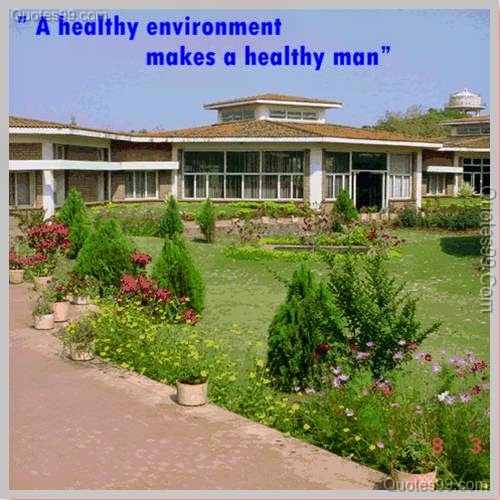
Image: Healthy Environment Makes a Healthy Man  
Image Credit/Source: Quotes99.com: A healthy environment makes a healthy man


A study out of British Columbia published in 2010 asserts that workplace noise is a contributing factor to Heart Disease (Source: http://knowelty.com/study-shows-workplace-noise-can-lead-to-heart-disease/873839/).  Previous studies have shown various sources of noise pollution, including that from traffic and aircraft, are also risk factors. (Sources: http://baqs.spph.ubc.ca/border-air-quality-study/noise-and-air-quality-research; http://www.cbc.ca/news/health/aircraft-noise-tied-to-higher-heart-disease-risk-1.1931092)

Our previous posts on indoor air pollution (Sick Building Syndrome) are really a no-brainer. If smoking is a risk factor, so too must be toxic indoor environments.

It’s safe to say that all environmental factors contribute to stress. Anger, too, is a form of stress. So what, exactly is stress!? According to MedicineNet.com,
“…In a medical or biological context stress is a physical, mental, or emotional factor that causes bodily or mental tension. Stresses can be external (from the environment, psychological, or social situations) or internal (illness, or from a medical procedure).”

So, an environment that contributes to tension is a stressful environment. An environment which relieves tension is a healthy environment (at least where the heart is concerned). The key, then, is RELAXATION.

Suddenly it all becomes clear: all those relaxation CD’s featuring soft music and nature sounds. There are clearly sounds which relax. Fresh clean air relaxes. Natural impressions (pleasing sights, sounds, scents, textures, etc. created by nature) relax us. They alleviate tension. An environment flush with them alleviates tension and rejuvenates us.

PeapodLife creates such indoor environments. At home; the office; school; healing centres; wherever anyone lives, works, rests, heals, or plays, PeapodLife high-order rainforest ecosystems provide a healthy environment, for a healthy YOU!


Thursday, 6 March 2014

Surprise! Sugar Ain’t Good For You!
World Health Organization takes its foot out of its mouth and puts it firmly down.

 
Video: CBC.ca Reducing sugar intake The World Health Organization says we should reduce our sugar intake by two-thirds, to about six teaspoons a day. 


"Sugar might become the new tobacco in terms of risk"
~ Dr. Francesco Branco, head of nutrition for health and development, WHO
Source: cbc.ca: CBC news | Health: Lower sugar intake to less than 5% of daily calories, WHO says
The World Health Organization (WHO) has had an epiphany.  Hold onto your hats: sugar is bad for you. Did we just blow your mind!?  Chances are, not really.

If you’re even remotely interested in nutrition, health & wellness and the like, you’ve probably already seen, read and heard reams of information on the perils and evils of the dreaded “white powder.”

What has taken so long for the WHO to come around and reflect what is far and away the consensus among nutrition and healthcare professionals is simple: industry pressure.

The WHO has made statements about sugar consumption in the past, but they have stopped short of changing the maximum recommended intake of sugar because the processed food industry—and the sugar growers which fuel it—gave such tremendous pushback.

So, just as with tobacco, we had years—if not decades—of weakly-worded recommendations lacking any real teeth. In the meantime? Consumption of sugary products was on the rise, as the following infographic illustrates…

Infographic: The National Sugar Rush

So How ‘toxic’ is sugar? Research suggests links to deadly diseases but some doctors and food industry representative are skeptical. Surprise, surprise.

There seems to be a tremendous amount of research and scientific evidence, but the industry will likely NEVER agree with the science. Exactly how the tobacco industry dragged its heels for decades in the face of hard science and countless illnesses and deaths at the hands of their product.

Image: “Eat Less Sugar…you’re sweet enough already.”


It’s good advice, really.

We too often search for quick fixes, intense pleasures, instant gratification, all of which are actually filling some deep subconscious emotional/psychological void in our lives.

But we all know sugary foods have little to no value. According to the WHO’s recent statement, sugar is 10 times more addictive than cocaine.

When we look at all the hidden sources of sugar, it turns out that the average Canadian consumes about 40kg (or 20 bags) of sugar. That is about 26 teaspoons a day, more than double the new recommendation of 10 teaspoons.

PeapodLife believes that part of the problem that we face with all this toxic food we eat, prepared by an industry built on exploitation, consumed in houses that are toxic indoor environments, is that it all fits together.

Why would we expect part of “the big machine” to produce anything different than how the rest of the machine works?

Healing our environment is one proactive step we can take today to break the cycle of toxicity, junk, exploitation. Installing a vibrant, living rainforest ecosystem in our homes, workplaces and schools fills our lungs with purity, our hearts with beauty, our bodies with vitality, and our minds with clarity.

There is no way we can stomach toxic foods when we live in an ecosystem. Our relationship with the orchids, moss, bromeliads, and countless other organisms forbids it. Our responsibility as active members of the ecosystem demands we uphold our place in the order of things.

Exploitation and toxicity have no place in a high-order rainforest ecosystem, any more than they have a place in our lives, our diets, society as a whole and the wider environment of the planet.

Image: A real estate investor gets up close and personal with PeapodLife’s Angolo model at The Property Show.


Thursday, 13 February 2014

Stress-Free Living Begins with the Home Ownership Experience
5 Problems with the Resale Home Buying Process…SOLVED!

Image Collage: Stress-Free Living Begins with the Home Ownership Experience 
Image Credits: Microsoft ClipArt Office.com: Money building blocks, Man relaxing at computer shadow


"The home should be the treasure chest of living."
~ Le Corbusier
Credit: BrainyQuote.com: Home Quotes

Anyone who has ever bought a resale home knows how insanely frustrating a process it can be. Here are the FIVE PROBLEMS with the home ownership experience as it is…

FIVE PROBLEMS WITH THE STATUS QUO HOME OWNERSHIP EXPERIENCE:

1. You have to find a house either yourself or through a Real Estate Agent.

2. You have to arrange your mortgage with a bank (or go through a broker).

3. On average, 70+% of people who buy a resale home underestimate the costs of renovations to make “just the way they want it.”

4. It is extremely rare for a reputable contractor to give an estimate on a home improvement project until after you have purchased it; so you end up “buying the house blind”—that is, without knowing the real final cost of ownership.

5. Unless you have the cash, you’ll need to finance your home improvements separately and in addition to your mortgage; and, if you end up with not-so-honest contractor, you may end up with sub-par service, performance disputes, cost overruns, and countless other headaches!


Imagine if, when wanting to buy a car, you had to purchase the body from one company, get it financed through a different company, and take ownership without knowing the REAL COSTS of making it road-worthy. To do so, you would need to go to a mechanic who would tell you what repairs and upgrades were required, which you would then need to finance separately.

It sounds ridiculous, but this is exactly what happens when we buy a resale home, and is the result of an industry which has never benefitted from vertical integration.

PeapodLife believes stress-free living begins with a stressless home ownership experience. Not only does PeapodLife offer indoor rainforest ecosystems for you home, through our partnerships, we can now offer the world’s first vertically integrated resale home ownership program.

So what does it look like? Here’re the FIVE EASY STEPS to stressless home ownership with PeapodLife…

FIVE STEPS TO STRESS-FREE OWNERSHIP WITH PEAPODLIFE:

1. Call or Email PeapodLife.

2. You are pre-qualified for a mortgage from any of the 5 banks or other financial institution via our partner mortgage brokerage.

3. You’ll work with one of over 300 real estate agents who’ll show you resale homes together with a certified Architectural Technologist fully qualified to give estimates on renovations.

4. The total cost of the home plus all home improvement costs (including rainforest ecosystems from PeapodLife) are included and financed in your FIRST MORTGAGE.

5. Home improvements are completed by top-tier PERFORMANCE-BONDED contractors, with third-party verification (mitigating all performance issues and any potential disputes).


We think you’ll agree, 5 easy steps to home ownership via a vertically integrated resale home buying experience trumps the status quo.

And best of all, you get a top-grade, fully renovated home just the way you want it, complete with the green technologies of your choice and a fully integrated rainforest ecosystem from PeapodLife.

Now that’s what we call getting your stress free lifestyle started on the right foot.

Thursday, 6 February 2014

YOUR GREEN DREAM HOME MADE EASY
Stop Running the Rat-Race! Live Stress-Free Throughout the Golden Horseshoe

Image Montage: GTA & GOLDEN HORSESHOE (Ontario, Canada) 
Google Image Search Results: Screen Capture Pic: green dream home

LOCATION!  LOCATION!  LOCATION!

Choose from THOUSANDS of resale properties in the GTA & GOLDEN HORSESHOE (Ontario, Canada), which can be converted into an AFFORDABLE, ENVIRONMENTALLY SUSTAINABLE and SOCIALLY RESPONSIBLE HOME FOR YOU, YOUR FAMILY and/or THE COMMUNITY!

Sound too good to be true? Discover PeapodLife and a whole new level of stress free home ownership.

PeapodLife is the first company in the world to integrate high-order rainforest ecosystems into buildings, turning toxic indoor environments into stress-free sanctuaries for you and your family.

PeapodLife will show you how to turn your existing home, or a resale home in the neighbourhood of your choosing, into the green dream home you’ve always imagined, made affordable thanks to a revolutionary stress-free home ownership program.

NO CATCH. NO TRICKS. NO FINANCIAL WIZARDRY. JUST HONEST SOCIAL ENTREPRENEURS WHO BELIEVE CANADIANS DESERVE A HEALTHIER, MORE RELAXED AND ENJOYABLE HOME ENVIRONMENT; AND A RE-FINANCING/RENOVATION AND/OR RESALE HOME BUYING EXPERIENCE TO MATCH!

We’ll show you an innovative, affordable and stress-free program to convert your existing home (or acquire & convert a resale property), into the healthiest, positively-charged indoor rainforest dwelling you never could have imagined was even possible.

Stop running the rat-race! Start Living the PeapodLife.

Contact Us TODAY!