Showing posts with label environment. Show all posts

Thursday, 28 May 2015

Beyond Hierarchy: Six Short Films Exploring Self-Organization


Today we are offering some short films on hirarchy and self organization, for the sake of discussion.


Video: Introduction to Self-Organisation Beyond Hierarchy
Source: YouTube https://www.youtube.com/watch?v=v-g6pRxkwUI

That’s just the introduction to the series. So let’s dig into the first piece, culture:

Video: Creating Culture: Self-Organisation Beyond Hierarchy

Now, if you made it through part one without your eyes glazing over, congratulations! But wait, there’s more…

Video: Finding Fit: Self-Organisation Beyond Hierarchy

In this part, the obvious allegory used is that of nature in relation to the broader environment that organizations are a part of. The example used is that of a “fish in water” or “a fish out of water.”

The film proceeds with a mind-numbing intellectual elaboration on this grossly reductive view of nature: that organisms have needs which they take from the environment.  This is an anthropomorphized view of nature!

One cannot say “understanding natural systems is the way” and then anthropormize those systems, then say you are learning from nature!

Anyway, we are not going to make you watch all six parts of this series. Why? Because it’s an absolutely futile and useless waste of time; a mind-numbing intellectual exercise trying to solve a problem that was created by the very thinking that is being used to try and solve it.

Watch all Six parts at Films for Action: Self-Organisation Beyond Hierarchy

Flawed Thinking will never Solve Anything

Self-organization is not the antithesis of hierarchy. Hierarchies are everywhere in nature!  Hierarchies self-organize all the time. Even in human group dynamics, hierarchies can form organically, whether or not the individuals involved are cognizant of these formations or not.

Intellectualization and defining this structure versus that structure is so limiting, so reductive, so unlike anything which happens in nature—and this series of films likes to use the word “reality” and “complexity” a lot—that it is not going to answer the questions being asked and the problems being raised by this series of films.

So what will?

For starters, how about comprehending what self-organization actually is, and how it works? No, not intellectually, not theoretically, but PRACTICALLY. How do you do that? By becoming a part of a self-organizing entity. Now, since we are grossly unconscious of the self-organizing phenomena occurring in our own bodies, our only other recourse is to become conscious of self-organizing phenomena around us.

Start with getting an ecosystem.

Whether you realize it or not, when you are in an ecosystem’s field of influence, you are actually part of that ecosystem.  As it self-organizes, so you are being self-organized. As it seeks balance, so you are being balanced. As it assumes a posture of harmony and mutual symbiosis, so you are being harmonized and receiving the benefit of that symbiosis.

And how do you respond? As you imagine you might; unless you are cold-hearted, closed-minded, oblivious and uncaring, in which case no system of self-organization will connect consciously with you. An ecosystem will still try to “get through to you,” but even in nature, cancers and toxins exist. So, too, corrosive people and toxic attitudes can sabotage the best intentions of any effort at self-organization.

The point is, self-organization is intuitive. It is energetic, extra-sensory, and organic. Self-organization is not materialistic, and anything but intellectual! Trying to theorize your way through models of self-organization is like trying to understand infinite complexity. You can’t. No one can. The mind cannot grasp it. Nature doesn’t function that way. Nature senses, feels, intuits, and interprets flows of energy and influence. The physical reality we see is just the coarse veneer to what’s really going on. 

If you really pay attention to group dynamics and human interactions, you will see that it’s very much the same for people. We can feel good vibes and bad vibes in the workplace; and individual dynamics functioning on a base level independent of perceived or established social structures can be explosive.

Attempting to self-organize without the presence of an ecosystem is a recipe for disaster because the natural tensions which arise in the self-organizing process are effected by the immediate environment. In most organizational environments, lots of harsh, negative energy is bombarding participants—from fluorescent lights to computer screens to toxic off-gassing from industrial building materials and carpeting to VOC’s, noise pollution, the list goes on and on. 

An ecosystem provides the prerequisite for successful self-organization: harmony and mutual symbiosis; such that even self-organizing hierarchies, which in nature often require violent confrontation, are quickly calmed-down and dissipate once the selection process is complete. In the human context, disagreements and conflicts will arise. But an ecosystem is able to “take the edge off”.

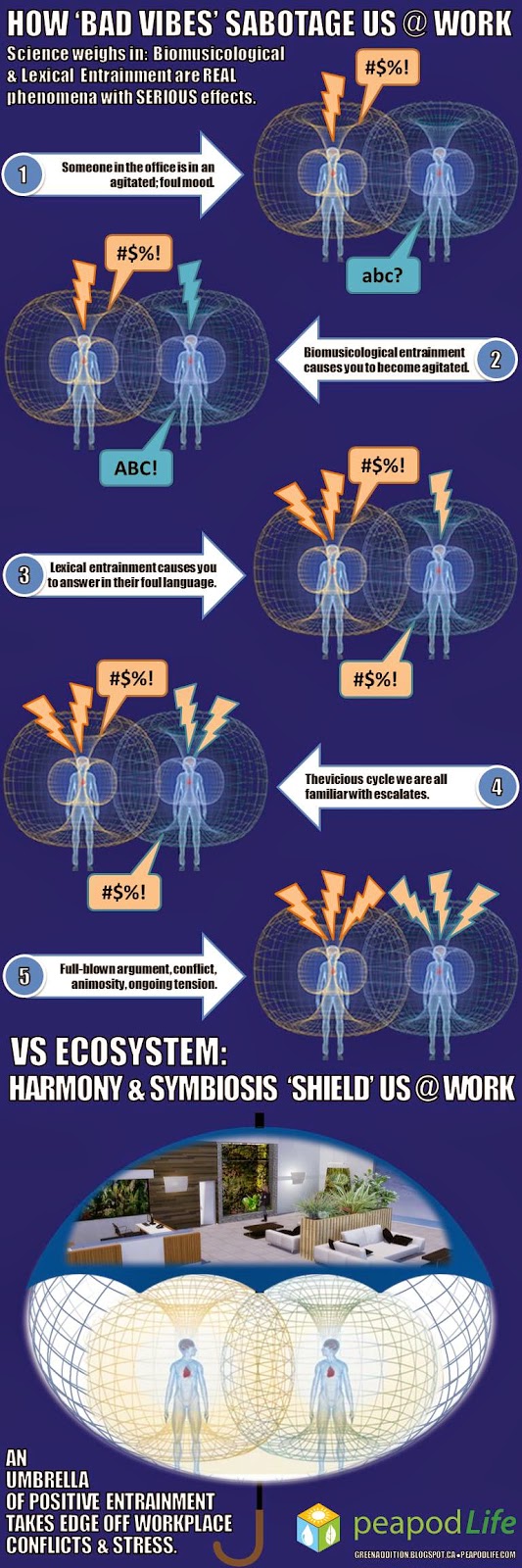
Please refer to the following infographic: 


Again, here we see how the best of intentions related to self-organization are hamstrung without the power of an ecosystem.

Ecosystems are not the only way nature self-organizes; but they are the most powerful expression of the underlying process of self-organization which we can interact with in an everyday sort of way. In other words, the earth is a self-organizing biosphere, but is far too vast for us to interact with as biological creatures in totality…we are mere specks compared to it. No, ecosystems are the natural, biological phenomena which we can best relate to and be a part of.

It is precisely the oneness we can experience with ecosystems which can inform our relationships, groups dynamics, organizational behaviour and evolving organizational structure; as we attune ourselves intuitively to our inner ecosystem, and thus expand our sensitivity from an organizational perspective to the outer ecosystems of community, economy, business environment, etc.

The Bottom Line

The intellect cannot, will not, and should not attempt to understand infinite complexity. It’s not its job. It was never designed for that task. The consciousness is another matter entirely. It can, should and with patience and discipline will comprehend the nature of infinite complexity. But only through direct experience, and only with little baby steps.

Self-organization is the product of countless billions of organisms playing out conscious interrelationships defined by harmony and symbiosis. Even if sacrifice and death appear on a regular basis, these too are a part of that self-organizing process of renewal, evolution and devolution.

Unfortunately the mind doesn’t like dealing with sacrifice, death, conflict and other “messy” aspects of self-organization. It wants everything to be sanitized and controlled…like a Swiss watch or an iPod.  But watches and machines are designed. They do not; cannot self-organize.

To be comfortable in your own skin, to be comfortable in an ecosystem, to be one with the “messiness” of self-organization and evolution, going with the flow of events and not trying to control the process all the time…these are the keys to organic growth and evolving a self-organizing entity of harmony and mutual symbiosis. Having an ecosystem on site can make all the difference.

Thursday, 2 April 2015

A Shield Against 'Bad Vibes' in the Workplace:
Biomusicology, Lexicology, Entrainment, Ecosystems and YOU

“Discussion is an exchange of knowledge;
an argument an exchange of ignorance.”
~ Robert Quillen
Source: Brainy Quote: Argument Quotes

Infographic by PeapodLife: Negative Biomusicalogical & Lexical Entrainment VS. Ecosystem Harmonic & Symbiotic Entrainment at Work

We’ve all been there: the slippery slope and the downward spiral of the escalating argument. Be it at home or in the workplace, we all know the way things can get out of hand and tend to run away from us. Frustration, reactions, anger, aggression, things are said and done and…it rarely turns out well.

What we may not realize is there are real scientific phenomena affecting us during such conflicts. The fundamental principle involved is entrainment. In a general sense, entrainment is the tendency of oscillations or vibrations to synchronize.

Biomusicological entrainment is the phenomenon of entrainment applied specifically to biological organisms, including animals, human beings and ecosystems.  Biomusicalogical entrainment is responsible for everything from groupthink to mob mentality. 

Video: Bystander Revolution: Sam Trammell | Mob Mentality 

And make no mistake; everything the above video talks about applies to adults and adult group dynamics as much as it does for children, adolescents, etc. Why? Because age has nothing to do with the effects of biomusicalogical entrainment.

Lexical entrainment refers to the phenomenon whereby individuals tend to take on characteristics of speech from others in social situations—including intonation, vocabulary, etc.

Some are more sensitive to entrainment than others, but combined, biomusicalogical and lexical entrainment have a very real impact on our relationships and on our effective use of time and energy in the workplace.

Now, compound the effects of these two types of entrainment with the toxic sick buildings and lifeless environments we typically work in—from electromagnetic radiation from office equipment to noise stress, VOC’s and other sources of indoor atmospheric pollution, the list goes on.

There’s much more than just air quality to consider.  And sorry, Google, no amount of board games, beanbag chairs, foosball tables, or other manmade gimmicks can heal what is fundamentally a toxic environment, hostile to the optimum performance of living organisms…including us.

Enter PeapodLife Building EcoSystems & Technology

High order rainforest ecosystems are the BEST solution for countering the effects of negative biomusicalogical and lexical entrainment. The ecosystem acts as an umbrella, enveloping everyone in the space with a biomusicalogical entrainment field of harmony and symbiosis. Every organism—and person—within the field is constantly being entrained biomusicalogically by the infinitely complex interrelationships and balancing efforts of the superorganism in order to maximize  health, wellness and optimal function of each and every individual in said field.   

Image Rendering by PeapodLife: Imagine your office or workplace transformed into an atmosphere of optimal human performance, harmonic and symbiotic relationships, and health & wellness.
Now, are we saying an ecosystem will completely prevent all interpersonal conflict? Certainly not. But what it can do is take the edge off such conflicts. With the over-arching influence of the ecosystem—complete with beautiful orchids, bromeliads, soothing moss, flowing water, meditative fish, ionized living water counteracting the effects of harsh electromagnetic radiation, etc.—some conflicts might be shorter, or less intense, or more quickly resolved.

In the human body, melatonin is the hormone which is involved in the entrainment of the circadian rhythms of physiological functions including sleep timing and high blood pressure. Source: http://en.wikipedia.org/wiki/Melatonin Put another way, melatonin is the “calming hormone” in the body which counteracts the forces in us which lead to nervousness, agitation, stress, frustration, anger, etc. 

Think of a PeapodLife ecosystem as constantly washing your office space in a melatonin bath. But, unlike melatonin—which can have the effect of causing drowsiness—ecosystems stimulate the senses and invigorate our energy. In addition, nature boosts the immune system, improves mental faculties, increases inspiration and imagination, and all in all makes people feel better.

Imagine fewer sick days…fewer incidents of employees waking up thinking “ugh…I don’t feel like going into work,” when work is such a pleasant place to be.

How pleasant? Videos can’t do it justice, but here’s one anyway…

Video: PeapodLife Living Wall EcoSystem Fitch Street 

Now, just imagine what how all this will make you and your team FEEL? Imagine how much more you and your team will get done, and how much more pleasant an experience you’ll have doing it in the BEST indoor environment possible.  PeapodLife Building Ecosystems & Technology—be at your BEST.

Tuesday, 3 March 2015

Happy World Wildlife Day

Image Collage by PeapodLife "Happy World Wildlife Day 2015" 
"When I hear of the destruction of a species, I feel just as if all the works of some great writer have perished."
~ Former U.S. President Theodore Roosevelt
Source: http://www.dailynews.lk/?q=features/children-06032014
March 3rd is World Wildlife Day, an opportunity for us to appreciate biodiversity in all its forms. It is a chance for us to reflect on the benefits of healthy ecosystems filled with enduring populations of flora and fauna, and how we are better as a species for being good caretakers of the natural world and its fragile ecological balance—as opposed to efficient and ruthless masters of exploitation.  

World Wildlife Day is likewise an occasion for us to take a long, hard look at the international trade in endangered wildlife products. This means taking a long, hard look at ourselves—an exercise which is often times easier said than done. The fact is many of us may be consumers of such products without being aware of it. Or perhaps we simply choose to look the other way. And yet, if we value the continued presence of these creatures in the wild, we cannot afford to be complacent.

"Getting serious about wildlife crime means enrolling the support of all sections of society involved in the production and consumption of wildlife products, which are widely used as medicines, food, building materials, furniture, cosmetics, clothing and accessories."
~ Secretary-General Ban Ki-moon
Source: http://www.un.org/en/events/wildlifeday/

As the above quote by Ban Ki-moon suggests, we have a role to play in the preservation of endangered species; as do governments and the private sector. But it is not enough to “get tough” on wildlife crime. In parts of the world where economic opportunities are limited, we will always find individuals turning to whatever means of survival is at hand—including harvest and trade in illegal goods.

So long as there is a demand for products containing wildlife parts, there will be a supply…until, that is, demand outstrips supply and the wild population and/or ecosystem collapses. The cascading effects of species loss can be disastrous on ecosystems.

True, ecosystems are self-balancing and constantly adapting to change, but it is naïve to think that that they will “recover” to their pre-existing state after the loss of a major species. Instead, a new ecosystem will evolve, one in which a number of other species may likewise disappear.

For as difficult as it may be for us to comprehend, nature itself has no attachments to species. Sacrifice is a fundamental aspect of life. Working with ecosystems day in and day out, we at PeapodLife witness how ecosystems sacrifice individuals for the sake of the whole.

Nature has been responsible for several major extinction events on the planet, and countless minor ones. Nature moves on: new species emerge; new harmonic and symbiotic relationships develop. Negative chaos gives way to positive chaos.

The real question to ask ourselves on World Wildlife Day may be this: are we a part of the negative chaos or the positive chaos? Are we contributing to harmonious and symbiotic relationships or exploitative, conflict-based ones? How does our relationship with our immediate micro environment translate into our relationship with the macro environment?

Image: Endangered Species 

If it is a question of sensitivity—of feeling the plight of endangered species and the loss of species on a deep, almost personal level—then wouldn’t a personal relationship with an ecosystem in our micro environment increase our sensitivity to ecosystems and their endangered residents on the macro level?

PeapodLife doesn’t believe this to be so—we know it. We have witnessed it, time and again. By inviting ecosystems into their lives in a meaningful way, individuals develop a deeper sensitivity to the profound purpose and meaning of nature in their lives. It’s almost inevitable. We, like all creatures, are not separate from our environment. If we immerse ourselves in the embrace of nature’s nurturing embrace, we will have a greater tendency to “pay it forward;” to repay and embrace nature in kind.

When you bring a PeapodLife ecosystem into your life, every day is a Happy World Wildlife Day.


Tuesday, 18 November 2014

Attention Ontario! Don’t be SAD Winter’s here,
Get Yourself a Tropical Rainforest Paradise

Image: A sidewalk snowplow clears snow in Ottawa, Ont., on November 17, 2014. (Errol McGihon/QMI Agency)

Yesterday saw Ontario get hit with the first real blast of winter with anywhere from 5 to 10cm of snow falling in some areas. The wet blanket of slushy snow made for havoc on the streets and the morning commute.

Video: Slick road conditions this morning as snow sweeps through GTA 


Today, in Toronto we are facing temperatures of -7 degrees Celsius with a wind-chill of -18! Yes, winter is here and it’s already messin’ with us!

Worst still, the Farmer’s Almanac is forecasting a worse-than-average winter—even worse than last year. And just to jog your memory, last year included intense ice storms and deep freezes.
“Winter temperatures and precipitation will be below normal, with the coldest periods in mid-December, early and mid-January, and early to mid-February. Snowfall will be below normal in Southwest Ontario and above normal elsewhere, with the snowiest periods in December and mid- to late March.”
~ Old Farmer’s Almanac 2015

Image: 2015 The Old Farmer’s Almanac

Remember what that felt like? Maybe this will help jog your memory…

Image: People walk past fallen ice-covered tree limbs along a road following an ice storm in Toronto in 2013
Credit: MARK BLINCH / REUTERS

Now, instead of all that, many minds turn to thoughts of summer, tropical getaways, all-inclusive holidays, cruises, etc. And we admit: it’s nice to get away from it all. Realistically, not many of use can get away for four months at a time, December to March.

PeapodLife can offer a practical, viable alternative to help combat what is for most “the winter blah’s” and what can be for some a very real and potentially debilitating condition known as Seasonal Affective Disorder or SAD.

According to WebMD, people with SAD exhibit many of the warning signs of depression. These can include:
  • Less energy.
  • Trouble concentrating.
  • Fatigue.
  • Greater appetite.
  • Increased desire to be alone.
  • Greater need for sleep.
  • Weight gain.
Source: http://www.webmd.com/depression/guide/seasonal-affective-disorder

A number of clinical treatments exist for SAD, including light therapy. This involves shining full spectrum light indirectly into your eyes. Other recommendations include exercise, getting outdoors, eating a balanced diet, etc.

Image: Symptoms and Treatments of SAD 

What isn’t listed as a therapy for SAD is an indoor ecosystem (of course, because there has been no clinical research done in this area yet). All PeapodLife ecosystems make extensive use of full spectrum lighting. It follows that what’s allows rainforest ecosystems to survive and thrive in what is otherwise a dark and toxic environment for them will be good for us, too.

Then there’s the fresh air and vitality we experience when sharing the electromagnetic field of a high order ecosystem. It’s not only like being outside, it’s like being in a beautiful clearing of a tropical rainforest…your very own indoor paradise, right in your own home or office. No need for expensive flights and lengthy holidays. Every day can be lived in paradise when you live the PeapodLife.

Image: Winter be damned! Everyday can be like living in a tropical rainforest paradise with PeapodLife.

So why wait any longer? Don’t let winter to continue messing with you and your emotional health. Stick it to Old Man Winter and the Old Farmer’s Almanac and start living the PeapodLife.

Visit www.peapodlife.com to learn more.


Tuesday, 16 September 2014

What does it really mean to “get back to nature?”

Image Collage by PeapodLife: BECAUSE YOU DON’T NEED TO MOVE TO YELLOWSTONE TO “GET BACK TO NATURE”
Credit: Morning in Yellowstone: sometimes you wake up in the middle of a bison herd. 
“I went to the woods because I wished to live deliberately, to front only the essential facts of life, and see if I could not learn what it had to teach and not. When I came to die, discover that I had not lived.”
*Quote and Image from Walden.


The above quote by Henry David Thorough notwithstanding, we have some pretty interesting ideas of what it means to “get back to nature.”

It seems a simple enough concept, especially to children, to whom getting out exploring the wilderness seems to come naturally (at least, it used to be, before the “i-Tech” generation).

Image Collage by PeapodLife: Back to Nature - Then v.s. Now. 
Sources: Kids in Nature: http://www.back2nature.ca/; 
iPod Back to Nature 
Credit: Insanitystudz 

Just where does this technological “i-age,” including the “selfie” take us? To innovations like the “Bird Photo Booth.” It’s cool, no question, but does it qualify as getting back to nature? Judge for yourself.

Video: GoPro: Bird Photo Booth bird feeder and birdcam for Bird photography like never before
Credit: Bryson Lovett

Don’t get us wrong, the GoPro is an amazing piece of technology which allows individuals to capture nature as never before…

Video: Beautiful Nature - Autumn - GoPro 3 

And, of course, GoPro offers the ultimate in “high-performance, high-definition selfie technology” to capture “grown-up kids having grown-up adventures” approach to getting back to nature:

Video: 4 Month GoPro Travel Adventure 
Credit: Henry Cramer


But there’s still good old fashioned intrepid exploration, discovering the hidden gems and secret mysteries of nature, like this subterranean haven:

Image: Underground Green Haven 


What all these forms of so-called “getting back to nature” have in common is that they are illusory and/or temporary; in other words unsustainable. As exciting as a 4-month adventure holiday may be, 4 months is 4 months. It is a holiday; it is not sustainable.

“So we’ll capture it for posterity!” we think.

As cool as shooting and viewing high-speed, HD nature footage may be, it’s not the real thing. And unless you had your camera mounted on a helmet, no: you were not really there. The second we start worrying about “capturing the moment,” we’re taken out of the moment. Truly.

That’s part of the problem with the whole “i-Generation,” “selfie” and “be a hero” culture: we’re so focused on saving the experience for later—or sharing it with others—we deprive ourselves the pure, unadulterated experience itself. And, we falsely believe that others can experience what we experienced. Sadly, like us, they get a watered down, filtered version of it. Yeah, it’s pretty cool to watch, but it’s not the same.

What we’re really talking about, then, is getting back to nature more permanently…in a sustainable way. Living with nature.

And there are plenty of really dramatic ways of achieving this goal which, let’s face it are more or less beyond the reach of most of us…

Image Collage by PeapodLife: There’s a more attainable way to get nature back into your life


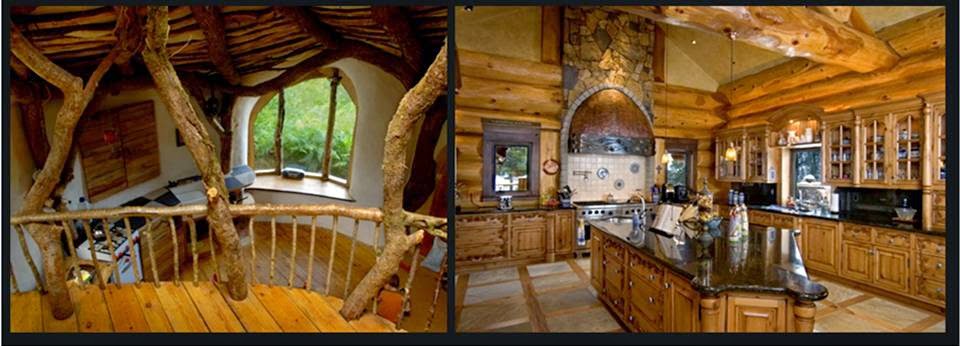
And then there are the old standby, log homes and cabins…

Image Collage by Peapodlife: Log Homes


…quaint, rustic and “natural” to be sure, but ultimately deadwood—lifeless.

And don’t even get us started with potted plants. POTTED PLANTS ARE NOT NATURE. When you separate soil from the earth, put it in a pot and bring it indoors, it immediately begins to putrefy (die, rot, decompose). And although the plant in the soil may appear to be doing well, overall it is polluting your indoor environment and reducing air quality.

At PeapodLife, we believe the BEST way to “get back to nature” in a SUSTAINABLE WAY, are high order indoor rainforest ecosystems.
  • Home
  • Office
  • School
  • Health Centre
  • Retirement Community

And the reasons are simple: no other way of “getting back to nature” is truly sustainable, without abandoning civilization altogether. PeapodLife is all about ecosystems—mutual harmony and symbiosis—reconciling that which must live together sustainably. For humanity, that time is long overdue.

And what does getting back to nature living the PeapodLife look like?

Video: PeapodLife Living Wall EcoSystem Fitch Street


Remember: videos are not the same as experiencing it first-hand.


Tuesday, 5 August 2014

Naturally Produced Negative Ions: Think Positive & Live Positively

Image: A thunderstorm over Martinique.
“Thunder is good, thunder is impressive; but it's lightning that does all the work.”
~ Mark Twain

We can’t see, smell or taste them, but negative ions are molecules that are believed to produce increase levels of serotonin, helping to alleviate depression, relieve stress, increase our energy and boost the immune system. We typically encounter negative ions in natural environments: mountains, waterfalls, beaches, forests. (Source: WebMD: Negative Ions Create Positive Vibes)

We also encounter them after thunderstorms, leading to the expression the thunderstorm effect. Prior to a thunderstorm, positive ionization of atmospheric molecules can cause nervousness, jitteriness, and irritability in both animals and many humans.

After the storm, many will experience a renewed sense of well-being, especially when exposed to the fresh, clean air.  This is because of an abundance of negative ions generated by the storm.
“Positive ions are often pollutants such as dust, bacteria, pollen, chemicals, and fumes.  The storm releases electrical discharges consisting of high concentrations of negative ions.  Negative ions destroy many of these air pollutants and, therefore, give us a sense of well-being.” (Source: envirohealthtech.com: Enviro-Health-Tech: Alternative"Healthy Living" Devices: Ions )

Image: Ions at Work 

How big of an impact can negative ions play?

According to Pierce J. Howard, PhD, author of The Owners Manual for the Brain: Everyday Applications from Mind Brain Research and director of research at the Center for Applied Cognitive Sciences in Charlotte, N.C.:
“Generally speaking, negative ions increase the flow of oxygen to the brain; resulting in higher alertness, decreased drowsiness, and more mental energy. … "[Negative ions] also may protect against germs in the air, resulting in decreased irritation due to inhaling various particles that make you sneeze, cough, or have a throat irritation."
(Source: webmd.com: WebMD: Health & Balance Feature Stories: Negative Ions Create Positive Vibes)

Why should this matter to you?

Our worlds are filled with positive ions. These carry with them allergens, contaminates, toxins, and all manner of elements which deteriorate our mood, our mental capacity, and our overall well-being. Air conditioning, computers, electronics, all manner of machines, motors, etc. are constantly filling the spaces we live, work, study, play—and even heal—with positive ions.

Negative ions can dramatically improve your mood, mental acuity, immune system and sense of well being. “Columbia University studies of people with winter and chronic depression show that negative ion generators relieve depression as much as antidepressants….And for a whopping one in three of us who are sensitive to their effects, negative ions can make us feel like we are walking on air." (Source:  webmd.com: WebMD: Health & Balance Feature Stories: Negative Ions Create Positive Vibes)

So what does PeapodLife bring to the table?

Negative ions, but not just JUST any negative ions…negative ions as managed by an intelligent and self-organizing ECOSYSTEM. In other words, NOT-ARTIFICIAL IONIZATION! Our indoor rainforest ecosystems create negative ions the all-natural way, with a real living, breathing ecosystem fed by (and feeding) ionized living water.

There are many mechanical products on the market claiming to generate negative ions. Then there are Himalayan salt crystal lamps, which supposedly “shed” negative ions as they are heated by a candle or incandescent light bulb.  

But how much is too much?

With an ecosystem you don’t have to worry about it. The ecosystem will never generate more negative ions than is safe, appropriate, and optimal. In the same way, it will never allow positive ions to overpower the negative. It is alive, intelligently self-organizing and constantly “balancing” itself, just as the discharge of lightning during a storm can be seen as nature’s way of balancing itself.

One look at our ecosystems during their rain cycle and you can just imagine that fresh, clean, post-thunderstorm atmosphere.

Video: PeapodLife Living Wall EcoSystem Fitch Street, creates the perfect balance of negative ions for positive wellbeing.

Don’t just think positive, start living positively by filling your home, work, school or hospital with the life-boosting effects of negative ions, courtesy of your own beautiful, living, self-organizing rainforest ecosystem. 

Tuesday, 22 July 2014

Are GMO Foods Dangerous? Opinions Aside, History shows us the Truth

Image: David Suzuki speaks out against GE (GMO) Foods 

“Any politician or scientist who tells you these [GMO] products are safe is either very stupid or lying.”

Genetically Modified Foods, or GMO Foods are certainly one of the hot-button issues of our day. Never before in the history of humanity have we had the ability to tamper with nature on such a fundamental level as we do today with the creation of genetically modified organisms.

But are GE (Genetically Engineered) Foods toxic? (GE Food = GMO Food)

Video: Dr. Leonard Coldwell talks about the dangers of genetically modified foods. 
Credit: iHealthTV.com  Source: naturalnews.tv: GMO Foods are Toxic

Dr. Coldwell talks about why GMO foods will cause cancer and what other toxic properties these foods have. He frames part of his argument on the energetic foundations of nature and the human body, and how tampering with nature on a genetic level alters the body’s ability to process it energetically.

We at PeapodLife concur with this premise. The long forgotten science of ancient civilizations is slowly coming to fore as alternative medicine slowly begins to go mainstream, and medical research is beginning to rediscover the significant impact more subtle aspects of our being have on our health.

Mental and emotional health have a direct impact on the physical health of an individual. Likewise, physical activity has a profound impact on cognitive function and psychological health. The word disease itself is a compound word meaning dis-ease…stress. One can understand stress as “negative vibes”…negative energy.

In the above video, Dr. Leonard Coldwell also makes repeated references to one of the GMO Food issue’s champions, Jeffery M. Smith, and his project, Seeds of Deception.

The website states that Smith documents “how the world’s most powerful Ag biotech companies bluff and mislead critics, and put the health of society at risk.” It also features books and films on the subject of GMOs including the 2012 film, Genetic Roulette – the Gamble of Our Lives.

Video: Genetic Roulette – the Gamble of Our Lives Trailer. 

Is there a precedent to GMO foods in history?

We opened today’s blog with the statement that human beings have never been able to tamper with nature on such a fundamental level. While this may be true, what precedents can we draw on to understand the potential consequences of genetically engineering life?

Video: Invasive Species Introduction 

Now, call us crazy, but if introduced organisms have the potential to devastate an ecosystem, what does an INTRODUCED GENE have the potential to do to the organism; and, by extension, what effect will that organism have on the ecosystem?

Australia is a shining example of the IDIOCY, sheer lunacy of so-called “experts” who decided it was a good idea to introduce species from other parts of the world to make life in Australia “better.” English hares for hunting and food. Cane toads from South America to control mosquitos.

All these experiments (and they were just that: not “hard science,” but reckless tinkering with the natural order of things) have proven themselves to be unmitigated disasters to ecosystems…failures on a continental scale.

Now, here we are again, being told by men in white lab coats (and the men in suits who fund them, and lobby politicians to draft laws in their favour): “trust us, we know what we’re doing.”

They don’t. They never have. But they’ve always claimed that they do. There is no way ANY materialist scientist can begin to comprehend the infinite complexity of nature, because they cannot even accept the existence of positive, negative and neutral energies at work at its foundation.

So long as we put our faith in a materialist science—so clearly being developed for the economic gain and political power of a few—we will be destined to keep repeating the same mistakes. Only this time, with GMO’s, it’s on a much more fundamental level.


Tuesday, 8 July 2014

How Green Roofs & Walls Impact Building Occupants’ Well-Being
Living Architecture Monitor looks at Green Infrastructure & Human Health

Image Collage: Living Architecture Monitor Summer 2014 Cover & PeapodLife Living Wall Ecosystem  
Source: livingarchitecturemonitor.com: Living Architecture Monitor (LAM) magazine Digital Edition Summer 2014 - Health Issue
“…Green infrastructure in commercial or residential properties can increase employee productivity and property values, by providing visual and physical access to green space.” 
– Living Architecture Monitor¹ 

In the Summer 2014 edition of Living Architecture Monitor, three professionals share their insights into the advantages and benefits of installing “green infrastructure”—green roofs and walls—into their buildings. The complete article can be read in Living Architecture Monitor Online, but here are some highlights:

On the affects of green roofs and/or walls on building occupants:

“The response that our employees had was and is overwhelmingly positive…The investment into what was unusable space and the environmental benefits increased company-wide awareness, exposure and appreciation of the overall design.” – Kevin Repasky, Director of Operations, Hanover Architectural Products Source¹

“The Manulife Centre’s green roof…is considered to be a garden in the heart of the city, a quiet and tranquil place for tenants and employees to use at their leisure, hidden above the bustling corner of Bay and Bloor Streets.” – Michael Bardyn, Managing Director, Greater Toronto, Manulife Real Estate Source¹

On the financial impacts of Green Architecture:

“The living wall is definitely one of the greater features to the building and an added value to the project. The visitors and guests are always admiring the living wall. It’s also a tour stop for our leasing team. The living wall is definitely an emenity for the tenants and visitors to the property." – Sherry Mashadian, Manager, Operations, Irvine Company Office Properties, Source²

“We believe it has a very positive affect on our tenants as evidenced by our low vacancy rate which drives long-term value for the property.” – Michael Bardyn, Managing Director, Greater Toronto, Manulife Real Estate Source²

Additionally, the article cites that 1330 Boyslston Street Apartment near Fenway Park in Boston generates an additional $120,000 in additional revenues for units that overlook a newly installed green roof. J.P. Morgan Asset Management estimates the green roof has increased the value of the property by $2.4 million.²

And, according to Economics of Biophilia report, 10% of employee absences can be attributed to architecture which has no connection to nature.²

For more information on what nature can do for YOUR commercial or residential building, its tenants, your business, etc, Connect with PeapodLife Today.

¹ Source http://www.nxtbook.com/dawson/greenroofs/lam_2014summer/#/8
² Source http://www.nxtbook.com/dawson/greenroofs/lam_2014summer/#/10


Thursday, 19 June 2014

The BEST Green Real Estate Investment Opportunity
(Greenhabbing that’s Social too)

Image by PeapodLife: BEST HOMES: The BEST Real Estate Investment Opportunity

“…we focus heavily on the nexus between green investment and profit,
and how investors can use green technology and incentives to create win-win solutions.”

No matter what anyone tells you, we know that real estate investing is still pretty much about one thing: maximizing ROI. However, how one goes about achieving that goal as an investor is changing.

From Ethical Funds to Green Real Estate News, including “greenhabbing" (making green improvements to existing real estate properties) CSR, “Corporate Social Responsibility,” normally measured as SRI—Social Responsibility Index—is trickling down into the real estate market. So what is "greenhabbing?" Checkout this excellent YouTube video by Jim Simcoe:

Video: Green Real Estate Investing (Greenhabbing) with Jim Simcoe

For the purposes of today’s article, our focus will be on “Social, Environmental, Economic Real Estate Investing” or "SEE REALTY." This is a type of real estate investing which takes greenhabbing to new heights of social responsibility and positive social impact, all the while maintaining an ROI focus.

It would be nice if "SEE REALTY" took off, because after all, it's only one "I" short of SEEing the REALITY of the housing situation we all live in, but we'll just have to wait for it to catch on.

PeapodLife BEST HOMES (Building EcoSystems & Technology via Home Ownership for the Masses that's Economical & Social) offers investors an approach that is truly unique.

Together with our partner, Casavant, we can help investors profit from the healthiest, most stress-free, energy-efficient and environmentally friendly properties possible.

PeapodLife's unique all-in-one green real estate investment program rolls green renovations and PeapodLife ecosystems into the mortgage, greatly reducing the up-front capital costs (and risks) for investors!

Here’s how it breaks down:

Image By PeapodLife: UNIQUE BEST HOMES INVESTMENT PROCESS

Just imagine being able to buy, renovate and sell green properties at a fraction of the typical capital investment, and even less time and effort.

PeapodLife and any affiliated contractors / subs we use are performance bonded to 1 ½ times the cost of the renovations.

The system our Architectural Technologist uses is the same one as the insurance agency and is featured on W Network program The Property Brothers.

THE POSSIBILITIES FOR GREEN SOCIAL REAL ESTATE INVESTMENTS ARE ENDLESS:

Working with the right investors, PeapodLife can also convert existing properties into green rental, rent-to-own, condo, co-op, mixed residential-commercial, or commercial properties.

If we’re looking at a simple home buy, renovate & flip scenario, we can also create a Legal Second Suite (most likely in the basement) that benefits from all the green technologies on the property, including the ecosystem!

Just to remind you what that looks like (and the IMPACT IT CAN HAVE ON PEOPLE WHO EXPERIENCE IT IN PERSON), check-out our latest video of an ecosystem in-progress (in an AFFORDABLE GREEN RETIREMENT RESIDENCE)...

Video: PeapodLife EcoSystem in Progress in Fitch Street Low-Income Green Retirement Residence

SO JUST HOW “SOCIAL” IS PEAPODLIFE'S APPROACH TO GREENHABBING?

Let’s face it: you know the condition of many basement apartments in Toronto. You know the problems they have with flooding, mould, etc. With skyrocketing prices in places like Toronto and Vancouver, coupled to “real estate investing as usual” (bottom-line profit at any price) the low-income and underprivileged trying to get by really do get shafted in terms of quality and healthfulness.

PeapodLife, partnered with Casavant’s Second Suites Program will completely change the complexion of social and affordable housing. This program is a true game-changer. It is so revolutionary and potentially lucrative, to receive details investors must first sign and return a confidentiality agreement.   CONTACT US TODAY for more information.

Why the secrecy? Because we don't want our trade secrets used to perpetuate some of the awful trends which can be seen in low-income housing projects. In the wake of PeapodLife's approach to greenhabbing, their days are numbered anyway...

WHY CONVENTIONAL REAL ESTATE INVESTING CAN’T COMPARE TO PEAPODLIFE

In today's red-hot real-estate market, many are doing just the same old slap on a coat of paint" routine. You know, lipstick on a pig. Mostly contractors who are perhaps best equipped to assess renovation costs, swallow additional "surprise" expenses, and generally milk every wholesale discount they can to maximize their profits. Makes perfect sense. Not exactly “green.”

But what about other investors? No matter who they are; no matter how close a relationship they may have with architects, contractors, etc., the fact remains that they are taking a good deal of risk footing the bill for renovations which are really out of their hands; unexpected costs which are more often than not beyond their control.

Then there's the whole issue of differentiation. Sure, with a well-designed, renovated and staged property in the right location in Toronto, a bidding war may even ensue. But this is becoming less common as more and more new and/or renovated homes come onto the market, all sporting the same contemporary look, features, etc. 

PeapodLife BEST HOMES offers less risk, more convenience, greater differentiation in the marketplace, while building SUSTAINABILITY and SOCIAL RESPONSIBILITY into every property.

CONTACT US TODAY for more information.


Friday, 13 June 2014

List of Heart Disease Risk Factors Grows: Air Quality & Environmental Noise
A Healthy Heart is STRESS-FREE, a Healthy Environment is CLEAN & NOISELESS.

Image Collage by PeapodLife: Nature = Stress Free, Healthy Heart Zone

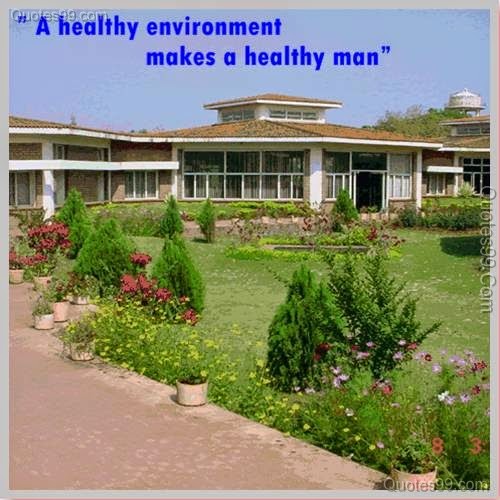
“A Healthy Environment Makes a Healthy Man” 
~ Unknown

Here are some Controllable Risk Factors for Heart Disease:
  
•    Smoking
•    High LDL, or "bad" cholesterol and low HDL, or "good" cholesterol
•    Uncontrolled hypertension (high blood pressure)
•    Physical inactivity
•    Obesity (more than 20% over one's ideal body weight)
•    Uncontrolled diabetes
•    Poor air quality
•    Noise

Sources: webmd.com: WebMD: Heart Disease Health Center: Risk Factors for Heart Disease ;
baqs.spph.ubc.ca: Border Air Quality Study: Noise and Air Quality Research

Whenever we see a list like this, it’s always interesting to note how entries such as “stress and anger” are listed as two separate items, as if they were in themselves unrelated. Likewise, noise and air pollution are shown unrelated to stress.

Now, obviously there are practical reasons for this. For instance, it’s clear that noise causes stress (at least, it should be common sense). Thus, it is not the noise itself that leads to heart disease, it is the stress it causes which matters. But one cannot say it is stress alone that causes heart disease because people might be tempted to believe a relaxing cocktail and a meditation CD will do the trick.

The key here is to recognize and distinguish between lifestyle factors and environmental factors. Whether or not one smokes is a lifestyle choice. Whether or not one works in a toxic workplace environment is less of a choice and more of an environmental circumstance.

Image: Healthy Environment Makes a Healthy Man  
Image Credit/Source: Quotes99.com: A healthy environment makes a healthy man


A study out of British Columbia published in 2010 asserts that workplace noise is a contributing factor to Heart Disease (Source: http://knowelty.com/study-shows-workplace-noise-can-lead-to-heart-disease/873839/).  Previous studies have shown various sources of noise pollution, including that from traffic and aircraft, are also risk factors. (Sources: http://baqs.spph.ubc.ca/border-air-quality-study/noise-and-air-quality-research; http://www.cbc.ca/news/health/aircraft-noise-tied-to-higher-heart-disease-risk-1.1931092)

Our previous posts on indoor air pollution (Sick Building Syndrome) are really a no-brainer. If smoking is a risk factor, so too must be toxic indoor environments.

It’s safe to say that all environmental factors contribute to stress. Anger, too, is a form of stress. So what, exactly is stress!? According to MedicineNet.com,
“…In a medical or biological context stress is a physical, mental, or emotional factor that causes bodily or mental tension. Stresses can be external (from the environment, psychological, or social situations) or internal (illness, or from a medical procedure).”

So, an environment that contributes to tension is a stressful environment. An environment which relieves tension is a healthy environment (at least where the heart is concerned). The key, then, is RELAXATION.

Suddenly it all becomes clear: all those relaxation CD’s featuring soft music and nature sounds. There are clearly sounds which relax. Fresh clean air relaxes. Natural impressions (pleasing sights, sounds, scents, textures, etc. created by nature) relax us. They alleviate tension. An environment flush with them alleviates tension and rejuvenates us.

PeapodLife creates such indoor environments. At home; the office; school; healing centres; wherever anyone lives, works, rests, heals, or plays, PeapodLife high-order rainforest ecosystems provide a healthy environment, for a healthy YOU!


Tuesday, 4 March 2014

Stress is not the Enemy; Our own Psychology is
Forget the War on Stress; Declare Peace on Life Instead

Image Collage: Know Your Enemy : Your Face Here
Image Background: Know Your Enemy
Image Foreground: Your Face Here

“If a kingdom is divided against itself, that kingdom cannot stand.”
~ Mark 3:24

As human beings, we like to declare war on things. We declare war on drugs, war on crime, war against AIDS, and in our own minds, we’ve probably declared war on STRESS.

How ironic is that? There can be no doubt: there are few activities more stressful than going to war. The irony here is that there is no stress in the world. Stress is our own reaction to circumstances. Or to quote Dr. Wayne Dyer, “There is no stress in the world, only people thinking stressful thoughts.”

Image: Dr. Wayne Dyer
Image Source: facebook.com: Facebook | Dr. Wayne W. Dyer

For you or I, even the most routine brain surgery is stressful. For a seasoned brain surgeon, who must have a perfectly steady hand, stress is not an option.

The reality is, we are often our own worst enemy when it comes to stress, especially chronic stress which, apparently, can rewire your brain and create mood disorders. In fact, there are at least five ways we subject ourselves to stress on an ongoing basis.

5 Ways we Load-Up on Stress:

It may seem hard to believe, but we do tend to cling to stress. Here are five ways we don’t make matters any easier for ourselves when it comes to stress:

  1. Avoiding exercise – We all know regular exercise is one of the best ways to manage stress. Unfortunately, when we view it as “extra effort,” it’s all too often one of the first activities we cut from our schedule when life seems too much. “I’m too tired to exercise” is an excuse which sounds so good to us after a hard day or tough week.  If we really observed ourselves, however, we would find that exercise can invigorate and revitalize, leaving us energized and more able to take on the pressures of life.

  2. Neglecting PTSD Treatment – Many of us suffer from chronic stress related to unresolved trauma. There are a number of different approaches to dealing with PTSD, and even simple physical exercises which can help alleviate the symptoms. Our ability to remain calm and relaxed regardless of our circumstances is greatly boosted when we deal with the hidden baggage we carry which causes us a great deal of grief.

  3. Busy-ness and Over-Commitment – Some of us feel uncomfortable doing nothing. Like the busy mind that can’t quiet down in meditation, we constantly keep ourselves occupied with tasks, fill our schedules with commitments, and then repeat our “to-do list” incessantly to ourselves and others. We may also develop a kind of martyr-complex, taking on way too much responsibility, feeling unable to say “no” to family, friends, employers, etc.  We must observe ourselves carefully to recognize that this self-imposed source of chronic stress is really a mask for very negative and counter-productive (if not self-destructive) psychological traits. 

  4. Eating Junk – We are what we eat. If we eat garbage, we will feel like garbage. Period. Sure, we may feel the “sugar rush” in the short term—like any drug—but the “crash” which follows always leaves our heart-mind-body with “a terrible hangover.” The 2004 film, Super-Size Me vividly explored the stress eating junk food can have on us. Sadly, junk food is cheap, fast, convenient, addictive, accessible 24/7, and presses all of our “comfort food” hot buttons. In other words, it’s a drug, and we are all too easily susceptible to the downward spiral of feeling stressed, eat junk food, feel better for a while then feel even more stressed later > eat more junk food, etc.

  5. Attachments and Self-Sabotage – Possibly the 500 lb. gorilla of the bunch, self-sabotage is what compels us to do the opposite of what we know is best for us.  Self-sabotage makes us say or do the opposite of what we really long for. We are not talking about competing voices in the head, here. Self-sabotage isn’t the inner dialogue debating which flavour of potato chip you should buy, it’s the almost automatic tendency to perpetuate habits which go directly against what we feel intuitively we must do.

Source: naturalnews.com: How chronic stress rewires your brain and creates mood disorders

PeapodLife knows that dealing with stress is all about healing our own thoughts, feelings and actions. Forget declaring war on stress, focusing all your energies on external circumstances, all the while ignoring the sinister sabotage teams lurking within yourself!

Imagine if you had—not an ally; let’s lose the war analogy once and for all—a friend, a supporter, a nurturing community of beings whose sole purpose is not just survive but thrive. Imagine if, as a part of that one entity, you were also raised to a level of optimal balance in your life.

Now you know how and why PeapodLife “declares peace on life.” 


Tuesday, 10 December 2013

Rainforest Ecosystem Greens Café at 401 Bay!
Shared Office Space Abuzz with Orchids, Moss, Bromeliads, Waterfall & More!

Image by PeapodLife: Angolo Ecosystem Unit in 401 Bay Centre Suite 1600 Café

“OMG! It’s Beautiful!”

“I love it!”

“It’s great! I eat my lunch here every day!”

These are just a sample of the comments we’ve been hearing from occupants of 401 Bay Centre, 401 Bay Street, Suite 1600, Toronto, Ontario M5H 2Y4.  The shared office space on the 16th floor has caught ecosystem fever since we moved a special Angolo unit into their café.

Really? Doesn’t look like much to me…what’s all the fuss about?

Pictures really cannot do our ecosystems justice. Like any experience of nature, you’ve got to experience it for yourself to really appreciate what all the fuss is about. The good news is, you can experience it for yourself. More on that later.

In the meantime, let us share with you that we have had nothing but positive feedback from everyone we’ve spoken to at 401 Bay Centre since the installation of the ecosystem.

Why 401 Bay Centre?

In their own words:
“401 Bay Street is an award winning Green building having received the Building of Excellence Award in 2007. It was Canada’s first office tower to recycle 100% of the waste, and utilizes the Enwave Deep Lake Cooling system that reduces the building cooling electricity by 90%. Our café is plastic free and our garbage is recycled.”
Source: Frequently Asked Questions 401 Bay Street

All this is well and good, but it’s still not literally green.

Marnie Walker, Owner of 401 Bay Centre, fell in love with the ecosystem.  Having a truly green addition to her shared office space environment seemed like a no-brainer, considering her love of plants and her passion for all things green. 

What Can the Companies at 401 Bay Expect?

While impossible to predict exact outcomes, what people at 401 Bay can expect is the calming yet invigorating effect the ecosystem has on them. Whenever they need a break, they can go to the café and chill out in the company of a high order rainforest ecosystem.

Lush foliage. Bright colourful orchids and exotic flowers. The soothing sounds of water running down a real rock waterfall. Freshly minted oxygen bellowing off a rainforest living wall unlike any other: with no plant replacement costs, no chemicals or fertilizers of any kind added.

Just nature in her highest expression…beckoning for you to achieve your highest expression. Nature at its best and most balance, filling the room with that same vital energy, doing everything it can to help you be the best, most balanced and alive you can be. Just imagine having a space like that in your office.

Why Should Bay Street Care?

Companies are a reflection of their people. Their strategies and decisions at the top reflect the well-being and clear thinking of their leaders. Leaders rely on the efforts of all those who work for them. An unhealthy, disharmonious office environment can produce neither a healthy company nor a healthy bottom line.

Sure, you might have a great quarter. You might even achieve year over year earnings growth. But this doesn’t necessarily mean your company is healthy. Health denotes long-term strength, resilience, and organic growth based on real-world performance in the macro-environment.

Attrition, cost-cutting, down-sizing, accounting tricks, financial wizardry, and a myriad other ways in which companies (especially publically traded ones) meet the incessant need of the markets for bottom-line growth are to business what steroids are to Olympic athletes. It’s simply not sustainable, period.

What can an ecosystem do to change business as usual on Bay Street?

It’s quite simple, really: an ecosystem helps create an environment of health and harmony within your company. Forget structural changes, we’re talking about an explosion of opportunity at the very heart and soul of your enterprise.

Your people perform better. They align their thoughts and ideas about how best to move forward with ideas that come to them more often in more profound moments of inspiration. Nature can do that; our ecosystems can do that.

You’ll invite more clients/partners/suppliers/government officials/media to come attend meetings in the company of your ecosystem. Those meetings will run more smoothly. You will find yourself more productive; more resilient; more able to handle whatever fires need to be put out today.

And yes, you too will feel the power of the rainforest ecosystem’s infinite energetic balancing capabilities to relax you, invigorate you, and inspire you to incredible new courses of action for tomorrow.

Can I Experience it for myself?

Yes! Contact PeapodLife at info@peapodlife.com today. Tell us a little about yourself, your company, and what intrigues you about having an ecosystem in your office. Don’t forget to leave us a number where we can reach you. We’ll call to arrange a viewing.

Your company is about to go into full bloom.

Image by PeapodLife: Monkey Orchid on Ecosystem at 401 Bay Centre, Toronto