The website not only features singing denizens of the tropical Costa Rican rainforest, it has a great deal of maps, information on destinations, and tempting photos inviting visitors to “Explore [their] Human Habitats.”
Image Collage by PeapodLife: Explore Human Habitats in Costa Rica
The site also many features numerous videos highlighting the many beautiful destinations one can visit in Costa Rica, such as La Paz Waterfall Gardens.
We at PeapodLife applaud the efforts by Costa Rica’s rainforest ecosystem flora and fauna to save Canadians from the drudgery and toxicity of their daily workplace. And while getting away to a beautiful place like Costa Rica for a week or two every year is a good start, it won’t “save the Canadians…”
And Mother Nature knows it.
That’s why some of those dedicated rainforest plants and animals from Costa Rica have chosen to come north to Canada to partner with PeapodLife in bringing the beauty, relaxation, invigoration and healing powers of high order rainforest ecosystems to Canadian homes and workplaces 365 days a year.
Image Collage by PeapodLife: Ecosystems for Overworked Canadians
Including up to five biomes, including canopy, waterfall, terrestrial and aquatic, our ecosystems fill your home or office with the beautiful and soothing sights, sounds and energies of a tropical rainforest, with no soil, no mess, and very little maintenance required.
As a little change of pace, we thought we would offer you a little meditative break from your busy day to just stop and remind yourself that earth is an amazing place.
We begin with this montage featuring the music of Vangelis.
I think we can all agree watching videos on YouTube is not the same as being there. Sadly, we have lives, responsibilities, and realities to face surrounding the practicalities of life. Fortunately, there is a way we can invite the earth, in all its magnificence, Mother Nature in her essence, back into our lives in a very practical and meaningful way. We can live the PeapodLife.
Video by PeapodLife: Living Wall Ecosystem up-close and personal - Bodystream Health & Wellness Center
Decades after the birth of the modern environmental movement, the western world has seen the rise of a burgeoning “green economy.”
But the world seems somehow hamstrung to tackle global warming and other major environmental problems, leaving environmentalists frustrated and the general public apathetic. Perhaps the ecological warning of the century came not from Al Gore, but from Kermit the Frog…
So what makes being green so hard? Like anything in life, how we think about something effects greatly its impact on us. Recycling, conservation, emissions reduction, carbon trading, and many other schemes have emerged into the mainstream under the umbrella of sustainability.
But this isn’t the definition of sustainability…it’s the definition of efficiency. And this gross oversimplification of sustainability in purely material terms has become the proverbial Achilles Heel of the so-called “green” movement.
But sustainability is not a question of material efficiency alone. If it were, the world would be taking it much more seriously. If we say sustainability only matters in the material economic sense, then we are attributing purely tangible value to ecology, ecosystems and humanity’s ongoing harmonious and symbiotic relationship with the natural world.
By thinking about sustainability solely in the “what we take out of / what we put back into the environment” equation, we deny its intrinsic value—the intangible value of nature and a healthy, vibrant, thriving environment.
Accounting for the Tangible and Intangible Costs of Business
One of the interesting concepts in economics is that of opportunity cost, the notion that, in free markets, while direct costs of goods and services are contained in the price, one must also consider the benefits of making alternative choices. The inherent scarce nature of resources means that choices are usually based on a prioritized cost-benefit analysis including consideration of opportunity costs.
Consumers, like most entities existing in free markets, have incentives to achieve maximum benefits at minimum costs. While there are exceptions to every rule, on the whole consumers will make purchase decisions based on an evaluation of their choice—the tangible and intangible benefits they will receive versus the tangible costs they will incur, including some opportunity cost factor. Of note here is the consideration of intangible benefits on the part of the consumer. A designer label or prestigious trademark will often fetch a higher price than an identical substitute (minus the mark) despite having the same tangible costs. One might be tempted to argue that supply and demand forces prices higher in this instance, as in others, since designer brands are distributed in limited quantities and the desire to own one of a limited number of units is high. Or a connoisseur might argue that it is precisely the limited availability of premium goods that warrants paying a higher price. In either case, the producers of such goods make up for lower quantities with higher margins. In the case of some producers such as Tommy Hilfiger or the GAP, neither argument applies, since neither of these so-called designer labels are produced in limited quantities. In fact, the intangible benefit of fashion is the very notion of being “fashionable,” which by definition stands in opposition to the idea of exclusivity. The paradox of individuality as it is expressed through following the latest fashion trends is a socio-psychological issue beyond the scope of this chapter; nevertheless, the point must be made that markets—especially in the West—have accepted the concept of intangible benefits and use monetary metrics to account for them, despite inherent incompatibilities.
One need only observe the salaries of certain athletes, actors, and CEOs in the West—particularly in the United States—to realize that accounting for intangible benefits with dollars can produce simply outrageous results. Investors and analysts alike have puzzled over exactly how an acquiring firm arrived at the sum paid out in “goodwill.” So-called priceless works of art, antiques, and artefacts nonetheless get auctioned off for very real sums of money. The retail price of a designer t-shirt manufactured offshore can sell for double or triple the price of a higher-grade cotton t-shirt “Made in the USA.” One cannot deny the inherent incompatibility between intangible value and dollar measurement. Currency is useful for valuating measurable quantities of resources: pounds of salt, bags of grain, kilowatt hours, acres, hours of labour, etc. But how does one quantify the value of the Sistine Chapel or the Great Wall of China? Surely not in terms of square footage! The old cliché “money can’t buy happiness” rings true in this regard. Still, markets have deemed it fair and necessary to incorporate intangible value into price.
If there are varying degrees of intangible benefits considered in all economic choices, then it follows that there must also be intangible costs. Like the balance sheet itself, the cost-benefit analysis should balance, and yet it does not. Historically, free markets have over-emphasized the “assets” side and turned a blind eye to the “liabilities.” After all, there is no incentive for markets driven by earnings growth and increased profitability to concern themselves with the intangible costs of doing business. The capitalist system, moreover, is ill-equipped to account for intangible costs.
To illustrate, consider a $20 GAP t-shirt. Due to all the advertising and fashion trends depicted in the media, I as a consumer may believe the intangible benefits of wearing a GAP t-shirt (over and above the tangible benefits of any normal $10 t-shirt) are greater than the $10 premium I must pay to wear it. The market has priced in the intangible benefits of wearing GAP, and I am willing to pay that price, despite the fact that Costco sells an American-made generic-label t-shirt for $10. The GAP could source t-shirts manufactured under decent conditions, with workers being paid relatively decent wages, and still provide me with a $20 GAP t-shirt at a profit of at least $10. Instead, it sources t-shirts from Southeast Asia manufactured under sub-par conditions, paying sub-standard wages, to provide me with a $20 t-shirt at a profit significantly greater than $10. As a consumer, I have no simple basis on which to make an informed choice in this case, since although the price clearly accounts for the intangible benefits—reinforced through marketing and fashion trends—it fails to account for the intangible costs of GAP’s business practices. In short, I cannot readily or easily evaluate all the costs against the benefits.
If I was an investor and not a consumer, I would have an even greater incentive to buy GAP, since its business practices give it a better operating margin, and that translates into higher earnings. Thus, the high social costs of GAP’s exploitative business practices abroad and the high environmental costs of its international shipping practices, are reflected in lower economic costs and higher share price for the company and its investors. In other words, the effects of GAP’s high intangible costs have been accounted for as tangible benefits—assets, if you will—but the intangible costs themselves have not been accounted for anywhere for what they are—liabilities. Given the natural scarcity of resources and the purported long-term nature of equity investment, such inequitable cost-benefit analysis is unsustainable over time.
Tens of millions of dollars are spent on marketing and advertising the intangible benefits of wearing GAP clothing, but nowhere are the intangible costs mentioned to either the consumer or the shareholder who, by purchasing GAP over another company, are supporting low-paying, high-margin operations in Southeast Asia, increasing contributions to greenhouse gases via shipping, and helping eliminate higher-paying jobs domestically. The ripple effect of their economic choice, compounded with the choice of millions of others following fashion and investment trends, will eventually come back to haunt them, but the effect is so far removed at the time the purchase decision is made it is intangible and unaccounted for—“out of sight; out of mind.” Like the billions upon billions in off-balance-sheet debt that caused the collapse of Enron, global markets have set themselves up for a terrible fall. Eventually, all those unaccounted-for intangible costs will catch up to us—this time in the trillions—or if not us, then our children (and/or our children’s children).
Source: – Attila Lewis Lendvai, Author, "The Attlas Project," Chapter 2: SEEconomics.
Image: The Attlas Project Volume One - SEE the World in a New Light Cover
But rainforests can and are measured in square kilometers and tons of lumber. What’s worse, after they are cut or burned down, the land they once occupied is repurposed and measured in heads of cattle or tons of coffee beans, cocoa, palm oil, etc. The pricelessness of the rainforest, however, is unaccounted for. At least not yet, according to Lendvai :
Eventually this issue will take care of itself. Economics does, after all, take into account scarcity of resources and supply and demand. The intangible costs of generations of indiscriminate logging, fishing, agri-business, manufacturing, and science and technology will eventually be priced into the handful of fresh vegetables, healthy farm animals, and potable water left on our planet. How ironic if someday mighty CEOs, oil barons, rock stars, and professional athletes must face a future when the wealthiest people on earth are farmers, and a bushel of grain is auctioned off for the price of a Ferrari or a luxury home. Indeed, economics has built in the mechanism—albeit delayed—to price intangible costs into goods, with compound interest to boot.”
~ Attila Lewis Lendvai, Author, "The Attlas Project," Chapter 2: SEEconomics.
PeapodLife and The Attlas Project alike challenge us to consider, then, a much more comprehensive definition of sustainability:
Image: Sustainability as more than just efficiency
In this definition of sustainability (SEE: Social, Environmental, Economic), the efficiency part is at best only 1/3rd of the equation (economy). The word economy is practically synonymous with efficiency (economies of scale, more economical products, etc.) Since the satisfaction of the profit motive is based on net results, efficiency is only 50% of the equation of “materialist success.” Thus, it is only 1/6th a factor in the overarching umbrella of sustainability.
Why This Matters to PeapodLife Building Ecosystems and Technology
It should be clear that PeapodLife ecosystems adheres to the much more comprehensive, holistic and meaningful definition of sustainability…SEE Value(s). These are benefits you do not measure or think so much as you feel…instinctively in your body and intuitively in your heart.
When you experience a high-order rainforest ecosystem in the flesh, you know its value. Not because you’re measuring the amount of fresh oxygen it’s producing; not because you’re counting the atmospheric particulates being filtered out of the air by the living wall; not even because you’re calculating the number of sick-days you won’t be taking thanks to having an ecosystem in your life. No, you just know its valuable to you and yours…you just feel it.
And no, a video cannot do it justice, but hey—what more can we offer over the Internet?
Now ask yourself (and be honest), can your low-flow toilet or showerhead make you feel that way? How about your recycling bin? Don’t get me wrong, we’re sure you believe you’re doing good, and making some difference, but do you know it…can you feel it, deep down?
Can you develop a meaningful relationship with “energy efficient technology?” More importantly, does “materialist green technology” truly deepen your appreciation for—and love of—nature, your friends and family, your community? Do gadgets and gizmos and processes relax you, invigorate you, strengthen your immune system by immersing you in an experience of mutual harmony and symbiosis?
Your Toyota Prius may make you feel like you’re doing something good for the environment in your head, but it’s still just a machine…it’s not actively surrounding you with a space of love. You may “love it” in a materialistic sense—a kind of ego attachment—but it cannot love you back.
PeapodLife‘s ecosystem can…and does…more than your mind can begin to imagine, but in ways that your body, heart and soul can experience…without mind…and can absolutely know.
Yes, it takes more than efficiency to be green…it takes something much deeper. And it’s that deeper thing inside all of us which is the only level on which we can ever find lasting satisfaction of any kind—true peace, joy and happiness. PeapodLife’s ecosystems create a space of love and connect with you on that level.
SEE a New Vision of Green Bloom, Rooted in a Holistic Definition of Sustainability
Now imagine a world in which everyone had the opportunity to connect with nature on that level, all the time. Imagine what that would mean to the societal, environmental and economic aspects of sustainability…if everyone was surrounded by a space of love…if everyone was immersed in a field of peace, joy and happiness. What would happen to the nature of relations, decisions and transactions if they could be made surrounded by nature in its highest expression?
This is PeapodLife’s vision of “Green.” And no, it’s not easy to get there, maybe. But it’s not that hard to experience. PeapodLife is an Attlas Project: we have the technology and the financial services to make owning and living/working in a high order rainforest ecosystem a reality.
“Love is a flower that grows in any soil, works its sweet miracles undaunted by autumn frost or winter snow, blooming fair and fragrant all the year, and blessing those who give and those who receive.”
A quick survey of the web produces dozens of blogs, lists, etc. professing the cures for the winter blahs (or, winter blues, if you prefer).
Advice ranges from getting exercise to treating yourself; from embracing the season to getting social support; from getting more sun to getting more sleep.
At PeapodLife, we think the key thing to remember about the winter blahs is its relationship to our deeply-rooted hibernation instincts.
Let’s face it, no matter how much you love the outdoors, skiing, snowshoeing, etc. at the end of a long day of activity in the cold, you want nothing more than to come inside and enjoy a hot beverage by the fire, or curl up under a duvet and sleep in ‘til noon the next day.
It’s appropriate that Valentine’s Day is in February, because certainly lovers like nothing more than to huddle and cuddle on a cold winter’s night.
The bottom line, whether supported by science or not, we think everyone living in Canada or other northern climates can decide for themselves whether or not they have “hibernation tendencies.”
Now consider that one of the common symptoms of depression is lethargy and chronic tiredness! Surely there might be a connection between the hibernation-like feelings of curling up, cuddling up, staying in and sleeping and the winter blues...again, feelings of lethargy, lack of motivation, etc.
It’s no wonder many of the “cures” for the winter blahs happen to be word-for-word copies of anti-depression strategies!
And sure, there are as fancy blue lights, recipes and regimens to go along with the fancy terminology: “SAD – Seasonal Affective Disorder”. Now don’t misunderstand us: for many SAD is a serious condition that causes them a great deal of discomfort and outright suffering.
Medical advice is to eat foods and engage in activities (such as exercise) which increase levels of serotonin. It’s all about raising and maintaining energy levels.
But if it all comes down to raising your energy levels, why not surround yourself with a space of love? After all, isn’t love the highest energy we humans need? And doesn’t love increase our levels of serotonin the most? Best of all, a space of love increases our positive energy just by being in it.
PeapodLife suggests injecting your life with one of our high order rainforest ecosystems.
No matter how cold it gets outside, it’s tough to get depressed and discouraged when your den is teaming with life! Bright colours, dynamic changes, orchids, tropical fish, full-spectrum lighting systems, and more!
“The stakes are high surrounding the fortunes of the Greater Toronto Area housing market,” adds the report. “A healthy housing system is critical to a region’s economic fortunes. And with the GTA key to Canada’s economic engine, the success or failure of housing in this region carries significant national importance.”
$140,000 is a big number. And according to a TD Economics Report released Monday, it is the annual income needed to finance a single-family home in the GTA (which now costs about $740,000). Source: thestar.com Real Estate
The problem, as it turns out, is all that urban densification happening around the city (translation: the condo-crazy city).
New home sales are way down compared to new condo sales. This has led to a shortage in supply of homes and that has helped push prices up to the point where Toronto is nearing New York-like home costs. And it should not come at all as a surprise, according to George Carras, President of RealNet:
“This is a problem ten years in the making. … The desire to curb sprawl and encourage intensification has led to the continued condominium boom in the 416, spiking home prices and a widening price gap between low-rise and high-rise housing product.”
If something is not done, it is clear that more families will have to live in hi-rise condominiums. And, as it turns out, builders are responding by starting to offer larger condos (as opposed to the 400 sq. ft. variety designed for first-time buyers and young singles).
What to do? Clearly, new homes require land. No one wants to take the GTA back into the urban sprawl scenario which warranted the current urban intensification approach. And yet, it is all but impossible for entire neighbourhoods to be levelled to build new low-cost low-rise housing.
What can be done?
PeapodLife is Changing the Face of Real Estate in Toronto in 2015
With our partner, Casavant, PeapodLife is able to offer benefits to each of the following:
• Home buyers: a way to purchase, renovate and own a home they could otherwise not afford, complete with an indoor rainforest ecosystem.
Image By PeapodLife: BEST HOMES Process
• Low-income Renters: newly renovated second-suites in good neighbourhoods, with their own small rainforest ecosystem included.
• The City of Toronto: a practical way to achieve urban densification and urban renewal while reducing the load on aging infrastructure and services (PeapodLIfe BEST HOMES are more efficient, and utilize cisterns to capture and utilize precious rainwater for ecosystems instead of it running off into Toronto’s overwhelmed drainage and sewer system).
• Real Estate Investors: an easy way to increase their return on investment.
Infographic By PeapodLife: $500K VS $2M => 4 BEST Homes w/Ecosystems
So, from our standpoint, in 2015 the BEST thing that can happen to the Toronto Real Estate market is PeapodLife. Why not contact us for more information and put your BEST foot forward in 2015.
At this special time of year we take this opportunity to wish you and yours a magical Holiday Season, filled with family, friends, and the warmth of the season, no matter what faith (if any) you celebrate.
We also extend our heartfelt gratitude for our clients and partners who made 2014 so special. We look forward to an even more prosperous 2015 filled with new opportunities to bring the beauty, tranquility and healthfulness of the PeapodLife to even more people.
The natural world is filled with flamboyant, elaborate and beautiful displays by male species courting their female counterparts.
The above ritual by the tiny Peacock Spider, native to Australia, is one such dancing display, complete with colourful abdomen flap which raises just like a peacock’s feathers—hence the name. But these small spiders are by no means the only ones “putting the moves on” their ladies.
It’s no secret that male birds are often more colourful than females, and that they must woo partners using all types of behaviours. But Papua New Guinea’s Birds of Paradise are legendary not only for their elaborate ritual/mating dance, but their beautiful plumage.
Now let’s face it: the human animal likewise performs its own mating rituals, whether we admit to it or not. And the proliferation of beauty, fashion & lifestyle magazines for women and health, fashion and lifestyle magazines for men are proof of this. Such publications often offer both sexes ways to gain an “advantage” over rivals when it comes to “attracting and/or keeping a mate.”
Then there’s “the nest.” Some birds woo a mate by building an elaborate nest which prospective mates come and examine. If the nest is to their liking and meets with their approval, the courtship is successful and mating can proceed.
This also has its correspondence in the human animal. The “swinging bachelor pad” is but one example of how men attempt to make a good impression on prospective partners, by showcasing their success, cleanliness, organization, likes and interests, tastes in food, design & music, and much more.
Now, imagine if your “bachelor pad” had one of PeapodLife’s high-order rainforest ecosystems…
Image: PeapodLife Rainforest Ecosystem turns any Bachelor Pad into a sanctuary for new “lovebirds” to become “empty nesters.”
The colours, vivacity, freshness, vitality and life-affirming energy of our indoor rainforest ecosystems will surely turn any bachelor pad into a sanctuary where “lovebirds” can meet, mate and perhaps even become “empty nesters.” But not just any old nest…a nest of MUTUAL HARMONY & SYMBIOSIS, as embodied by one of our high-order ecosystems. The essence of balanced, sustainable beauty.
FOR DISCUSSION PURPOSES ONLY. ACTUAL VALUES MAY VARY. NOT AN OFFER.
Here’s a very simple scenario, but a target scenario for Toronto (based on an actual property available for purchase, real world renovation costs, real estate fees, etc. and greenhab investing with PeapodLife BEST HOMES Program):
House in trendy/desirable “Junction” in Toronto (nicely renovated properties sell in $1.3-1.8 million range in the Junction, usually for asking price, sometimes above asking).
Image: PeapodLife BEST HOMES Investment Case Study
The Bottom Line
In this scenario, the Investor nets out at an estimated ROI of 77%.
As you can see, PeapodLife takes a 1% commission / management fee for managing the PeapodLife BEST HOMES process beginning to end on behalf of the Investor. We are therefore incentivized to create a truly stunning home, perform outstanding marketing and promotion to and through the real estate brokers (and beyond), negotiate the best sale price, and realize savings whenever and wherever possible. This is a preliminary fee% for initial deal, and is subject to increase moving forward, based on performance.
We are certain that there are investors who will want varying degrees of involvement, etc. in the process. PeapodLife’s goal is to identify the “right” investor(s) for PeapodLife BEST HOMES. Ones who can SEE our Vision/Mission (SEE – Social, Environmental, Economic) of our consortium of partners, and who want to get on the same page with us: to make money building BEST HOMES and bringing Advanced Human Habitat to the world. We encourage any Investor to check their values against ours and that of our Non-Profit Division, www.GenesisEcoFund.org, as expressed on its website and PeapodLife’s blog: http://greenaddition.blogspot.ca.
And again, please understand that no other company in the world has PeapodLife’s ecosystem technology. Any Investor who thinks they can build something on par with a BEST HOME will soon find themselves knocking on PeapodLife’s door. Also, we have made no mention of our social housing opportunities, and commercial building concepts. We are trying to keep things simple at this stage.
Now, we’re not saying Mother Nature is a like a neurotic director on set losing her marbles at a cast and crew who refuse to cooperate with her and realize her vision of “a perfect picture.” But one must admit, given the recent eruptions and earthquakes, it may not be an altogether inappropriate comparison.
And we also must admit, when it comes to developing a healthy relationship with nature, our approach has been anything but that of a “genius.” Surely not the kind of genius Emerson is referring to.
Pesticides, GMO’s, pollution, climate change, deliberate introduction of invasive foreign species, devastation of vast ecosystems…humanity’s track record of “working with our director” comes up sorely wanting.
But there are “geniuses” out there, ones who believe it is better to work WITH Mother Nature than against her. One of them is PeapodLife’s resident ecosystem guru, Wolfgang Amelung, proprietor of Genetron Systems and inventor of the living wall ecosystem.
Here Wolfgang is featured on a piece produced by CBC’s Venture, back in the 1997, when he first took the world storm with his invention.
Video by PeapodLife: CBC Venture Report on PeapodLife Partner, Genetron Systems Source: YouTube - PeapodLife
Hot on the heels of the authentic work of a real genius whose passion is working with Mother Nature, a slew of so-called clever people saw the living wall ecosystem and decided “I can do that!”
The result was a plethora of so-called “living walls” and “green walls” which flooded the market and still linger today: cheap knock-offs which are chemically fed, soil-based, and don’t have any resemblance whatsoever to an ecosystem—and thus have little or any resemblance to real nature, apart from their inclusion of plants.
And guess what? They don’t work.
Nature works because it is an ecosystem. Balanced, intelligent, able to adapt to changing conditions. Soil putrefies and dies, filling the air with more contaminants than the plants in it can clean. Hydroponic systems fill the air with chemicals and fertilizers. Neither systems are capable of producing ionized living water, and both types of systems suffer from mold and mildew problems due to the moisture.
But wait! Don’t PeapodLife Living Wall Ecosystems also produce a lot of moisture?
Yes they do, but our ecosystems produce ionized living water—negatively charged ions—which suck contaminants out of the air. The electromagnetic field of an ecosystem is balanced, meaning mold is kept in check. What flourishes in its place is moss—a feature no other so-called living wall is able to duplicate.
PeapodLife ecosystems were developed and patented by a true genius who knows the benefits of working with nature—not against it. Now those benefits are available to you: in your home, workplace, school, retirement centre, wherever wellness, calm, clarity and wellbeing are of importance and value.
“I went to the woods because I wished to live deliberately, to front only the essential facts of life, and see if I could not learn what it had to teach and not. When I came to die, discover that I had not lived.”
The above quote by Henry David Thorough notwithstanding, we have some pretty interesting ideas of what it means to “get back to nature.”
It seems a simple enough concept, especially to children, to whom getting out exploring the wilderness seems to come naturally (at least, it used to be, before the “i-Tech” generation).
Image Collage by PeapodLife: Back to Nature - Then v.s. Now.
Just where does this technological “i-age,” including the “selfie” take us? To innovations like the “Bird Photo Booth.” It’s cool, no question, but does it qualify as getting back to nature? Judge for yourself.
Video: GoPro: Bird Photo Booth bird feeder and birdcam for Bird photography like never before
And, of course, GoPro offers the ultimate in “high-performance, high-definition selfie technology” to capture “grown-up kids having grown-up adventures” approach to getting back to nature:
What all these forms of so-called “getting back to nature” have in common is that they are illusory and/or temporary; in other words unsustainable. As exciting as a 4-month adventure holiday may be, 4 months is 4 months. It is a holiday; it is not sustainable.
“So we’ll capture it for posterity!” we think.
As cool as shooting and viewing high-speed, HD nature footage may be, it’s not the real thing. And unless you had your camera mounted on a helmet, no: you were not really there. The second we start worrying about “capturing the moment,” we’re taken out of the moment. Truly.
That’s part of the problem with the whole “i-Generation,” “selfie” and “be a hero” culture: we’re so focused on saving the experience for later—or sharing it with others—we deprive ourselves the pure, unadulterated experience itself. And, we falsely believe that others can experience what we experienced. Sadly, like us, they get a watered down, filtered version of it. Yeah, it’s pretty cool to watch, but it’s not the same.
What we’re really talking about, then, is getting back to nature more permanently…in a sustainable way. Living with nature.
And there are plenty of really dramatic ways of achieving this goal which, let’s face it are more or less beyond the reach of most of us…
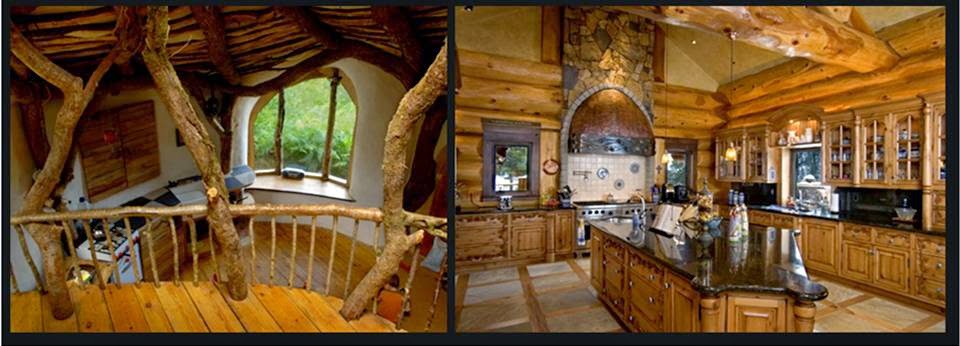
Image Collage by PeapodLife: There’s a more attainable way to get nature back into your life
…quaint, rustic and “natural” to be sure, but ultimately deadwood—lifeless.
And don’t even get us started with potted plants. POTTED PLANTS ARE NOT NATURE. When you separate soil from the earth, put it in a pot and bring it indoors, it immediately begins to putrefy (die, rot, decompose). And although the plant in the soil may appear to be doing well, overall it is polluting your indoor environment and reducing air quality.
At PeapodLife, we believe the BEST way to “get back to nature” in a SUSTAINABLE WAY, are high order indoor rainforest ecosystems.
Home
Office
School
Health Centre
Retirement Community
And the reasons are simple: no other way of “getting back to nature” is truly sustainable, without abandoning civilization altogether. PeapodLife is all about ecosystems—mutual harmony and symbiosis—reconciling that which must live together sustainably. For humanity, that time is long overdue.
And what does getting back to nature living the PeapodLife look like?
Video: PeapodLife Living Wall EcoSystem Fitch Street
“…Green infrastructure in commercial or residential properties can increase employee productivity and property values, by providing visual and physical access to green space.”
– Living Architecture Monitor¹
In the Summer 2014 edition of Living Architecture Monitor, three professionals share their insights into the advantages and benefits of installing “green infrastructure”—green roofs and walls—into their buildings. The complete article can be read in Living Architecture Monitor Online, but here are some highlights:
On the affects of green roofs and/or walls on building occupants:
“The response that our employees had was and is overwhelmingly positive…The investment into what was unusable space and the environmental benefits increased company-wide awareness, exposure and appreciation of the overall design.” – Kevin Repasky, Director of Operations, Hanover Architectural Products Source¹
“The Manulife Centre’s green roof…is considered to be a garden in the heart of the city, a quiet and tranquil place for tenants and employees to use at their leisure, hidden above the bustling corner of Bay and Bloor Streets.” – Michael Bardyn, Managing Director, Greater Toronto, Manulife Real Estate Source¹
On the financial impacts of Green Architecture:
“The living wall is definitely one of the greater features to the building and an added value to the project. The visitors and guests are always admiring the living wall. It’s also a tour stop for our leasing team. The living wall is definitely an emenity for the tenants and visitors to the property." – Sherry Mashadian, Manager, Operations, Irvine Company Office Properties, Source²
“We believe it has a very positive affect on our tenants as evidenced by our low vacancy rate which drives long-term value for the property.” – Michael Bardyn, Managing Director, Greater Toronto, Manulife Real Estate Source²
Additionally, the article cites that 1330 Boyslston Street Apartment near Fenway Park in Boston generates an additional $120,000 in additional revenues for units that overlook a newly installed green roof. J.P. Morgan Asset Management estimates the green roof has increased the value of the property by $2.4 million.²
And, according to Economics of Biophilia report, 10% of employee absences can be attributed to architecture which has no connection to nature.²
For more information on what nature can do for YOUR commercial or residential building, its tenants, your business, etc, Connect with PeapodLife Today.
HD Video by PeapodLife: EcoSystem-in-Progress features Active Rainforest Cycle, Seeded Moss, Bromeliads, Ferns, Grasses.
PeapodLife Rainforest Living Wall EcoSystem "Under Construction" at Fitch Street Affordable Retirement Residence in Welland, Ontario. Video features active Rainforest Cycle (automated spray misters); moss (seeded); bromeliads, ferns, grasses. Still to come: Orchids, aquatic plants, fish and more. Published on Jun 17, 2014 by PeapodLife
“I suffer from depression. My new morning ritual is going to be to come down and sit right here for a little a while. My God it’s so beautiful. It just makes me happy.”
As a part of our continuing series showing the evolution and organic growth of a PeapodLife Rainforest EcoSystem, today we offer video evidence of the dramatic improvement an EcoSystem makes to any space.
In addition, we offer more “in-progress” photographs which will serve as a kind “before and after” pics for the purposes of today’s article.
Image by PeapodLife: “BEFORE” Fitch St. EcoSystem Mechanicals & Foundation Installed.
Image by PeapodLife: “AFTER” Fitch St. EcoSystem: Bromeliads, ferns, grasses planted; moss seeded.
As we mentioned in previous blog posts, the process of installing a high-order indoor rainforest ecosystem by PeapodLife takes time. It is a step-by-step organic process.
There is NO SOIL. NO CHEMICALS. NO FERTILIZERS. NO ADDITIVES OF ANY KIND.
When you’re dealing with nature ON HER TERMS, patience and organic growth are the order of the day. There are no shortcuts. There is no way to exploit the laws of nature and “get away with it.” Apologies to industrial agri-business, et al.
Still to come: orchids, aquatic plants, fish & more!
At PeapodLife, we let our Living Wall EcoSystems to the talking. No dying plants. No smell. Just the freshest, cleanest air; and a most beautiful, vibrant, colourful and energetic background.
On of the Fitch Street residents (who shall remain nameless) put it best when she came by with her little dog to admire our work. She said,
“I suffer from depression. My new morning ritual is going to be to come down and sit right here for a little a while. My God it’s so beautiful. It just makes me happy.”
Whenever we see a list like this, it’s always interesting to note how entries such as “stress and anger” are listed as two separate items, as if they were in themselves unrelated. Likewise, noise and air pollution are shown unrelated to stress.
Now, obviously there are practical reasons for this. For instance, it’s clear that noise causes stress (at least, it should be common sense). Thus, it is not the noise itself that leads to heart disease, it is the stress it causes which matters. But one cannot say it is stress alone that causes heart disease because people might be tempted to believe a relaxing cocktail and a meditation CD will do the trick.
The key here is to recognize and distinguish between lifestyle factors and environmental factors. Whether or not one smokes is a lifestyle choice. Whether or not one works in a toxic workplace environment is less of a choice and more of an environmental circumstance.
Our previous posts on indoor air pollution (Sick Building Syndrome) are really a no-brainer. If smoking is a risk factor, so too must be toxic indoor environments.
It’s safe to say that all environmental factors contribute to stress. Anger, too, is a form of stress. So what, exactly is stress!? According to MedicineNet.com,
“…In a medical or biological context stress is a physical, mental, or emotional factor that causes bodily or mental tension. Stresses can be external (from the environment, psychological, or social situations) or internal (illness, or from a medical procedure).”
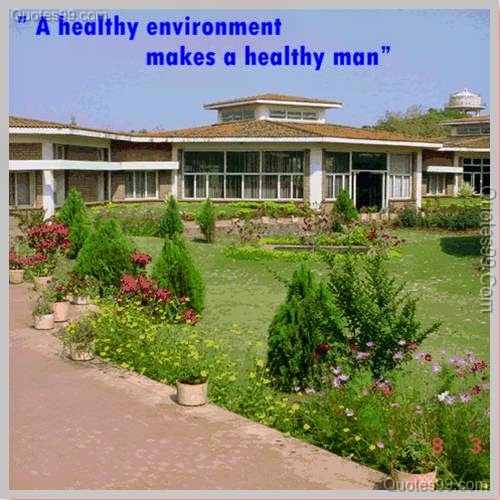
So, an environment that contributes to tension is a stressful environment. An environment which relieves tension is a healthy environment (at least where the heart is concerned). The key, then, is RELAXATION.
Suddenly it all becomes clear: all those relaxation CD’s featuring soft music and nature sounds. There are clearly sounds which relax. Fresh clean air relaxes. Natural impressions (pleasing sights, sounds, scents, textures, etc. created by nature) relax us. They alleviate tension. An environment flush with them alleviates tension and rejuvenates us.
PeapodLife creates such indoor environments. At home; the office; school; healing centres; wherever anyone lives, works, rests, heals, or plays, PeapodLife high-order rainforest ecosystems provide a healthy environment, for a healthy YOU!