Showing posts with label harmony. Show all posts

Thursday, 28 May 2015

Beyond Hierarchy: Six Short Films Exploring Self-Organization


Today we are offering some short films on hirarchy and self organization, for the sake of discussion.


Video: Introduction to Self-Organisation Beyond Hierarchy
Source: YouTube https://www.youtube.com/watch?v=v-g6pRxkwUI

That’s just the introduction to the series. So let’s dig into the first piece, culture:

Video: Creating Culture: Self-Organisation Beyond Hierarchy

Now, if you made it through part one without your eyes glazing over, congratulations! But wait, there’s more…

Video: Finding Fit: Self-Organisation Beyond Hierarchy

In this part, the obvious allegory used is that of nature in relation to the broader environment that organizations are a part of. The example used is that of a “fish in water” or “a fish out of water.”

The film proceeds with a mind-numbing intellectual elaboration on this grossly reductive view of nature: that organisms have needs which they take from the environment.  This is an anthropomorphized view of nature!

One cannot say “understanding natural systems is the way” and then anthropormize those systems, then say you are learning from nature!

Anyway, we are not going to make you watch all six parts of this series. Why? Because it’s an absolutely futile and useless waste of time; a mind-numbing intellectual exercise trying to solve a problem that was created by the very thinking that is being used to try and solve it.

Watch all Six parts at Films for Action: Self-Organisation Beyond Hierarchy

Flawed Thinking will never Solve Anything

Self-organization is not the antithesis of hierarchy. Hierarchies are everywhere in nature!  Hierarchies self-organize all the time. Even in human group dynamics, hierarchies can form organically, whether or not the individuals involved are cognizant of these formations or not.

Intellectualization and defining this structure versus that structure is so limiting, so reductive, so unlike anything which happens in nature—and this series of films likes to use the word “reality” and “complexity” a lot—that it is not going to answer the questions being asked and the problems being raised by this series of films.

So what will?

For starters, how about comprehending what self-organization actually is, and how it works? No, not intellectually, not theoretically, but PRACTICALLY. How do you do that? By becoming a part of a self-organizing entity. Now, since we are grossly unconscious of the self-organizing phenomena occurring in our own bodies, our only other recourse is to become conscious of self-organizing phenomena around us.

Start with getting an ecosystem.

Whether you realize it or not, when you are in an ecosystem’s field of influence, you are actually part of that ecosystem.  As it self-organizes, so you are being self-organized. As it seeks balance, so you are being balanced. As it assumes a posture of harmony and mutual symbiosis, so you are being harmonized and receiving the benefit of that symbiosis.

And how do you respond? As you imagine you might; unless you are cold-hearted, closed-minded, oblivious and uncaring, in which case no system of self-organization will connect consciously with you. An ecosystem will still try to “get through to you,” but even in nature, cancers and toxins exist. So, too, corrosive people and toxic attitudes can sabotage the best intentions of any effort at self-organization.

The point is, self-organization is intuitive. It is energetic, extra-sensory, and organic. Self-organization is not materialistic, and anything but intellectual! Trying to theorize your way through models of self-organization is like trying to understand infinite complexity. You can’t. No one can. The mind cannot grasp it. Nature doesn’t function that way. Nature senses, feels, intuits, and interprets flows of energy and influence. The physical reality we see is just the coarse veneer to what’s really going on. 

If you really pay attention to group dynamics and human interactions, you will see that it’s very much the same for people. We can feel good vibes and bad vibes in the workplace; and individual dynamics functioning on a base level independent of perceived or established social structures can be explosive.

Attempting to self-organize without the presence of an ecosystem is a recipe for disaster because the natural tensions which arise in the self-organizing process are effected by the immediate environment. In most organizational environments, lots of harsh, negative energy is bombarding participants—from fluorescent lights to computer screens to toxic off-gassing from industrial building materials and carpeting to VOC’s, noise pollution, the list goes on and on. 

An ecosystem provides the prerequisite for successful self-organization: harmony and mutual symbiosis; such that even self-organizing hierarchies, which in nature often require violent confrontation, are quickly calmed-down and dissipate once the selection process is complete. In the human context, disagreements and conflicts will arise. But an ecosystem is able to “take the edge off”.

Please refer to the following infographic: 


Again, here we see how the best of intentions related to self-organization are hamstrung without the power of an ecosystem.

Ecosystems are not the only way nature self-organizes; but they are the most powerful expression of the underlying process of self-organization which we can interact with in an everyday sort of way. In other words, the earth is a self-organizing biosphere, but is far too vast for us to interact with as biological creatures in totality…we are mere specks compared to it. No, ecosystems are the natural, biological phenomena which we can best relate to and be a part of.

It is precisely the oneness we can experience with ecosystems which can inform our relationships, groups dynamics, organizational behaviour and evolving organizational structure; as we attune ourselves intuitively to our inner ecosystem, and thus expand our sensitivity from an organizational perspective to the outer ecosystems of community, economy, business environment, etc.

The Bottom Line

The intellect cannot, will not, and should not attempt to understand infinite complexity. It’s not its job. It was never designed for that task. The consciousness is another matter entirely. It can, should and with patience and discipline will comprehend the nature of infinite complexity. But only through direct experience, and only with little baby steps.

Self-organization is the product of countless billions of organisms playing out conscious interrelationships defined by harmony and symbiosis. Even if sacrifice and death appear on a regular basis, these too are a part of that self-organizing process of renewal, evolution and devolution.

Unfortunately the mind doesn’t like dealing with sacrifice, death, conflict and other “messy” aspects of self-organization. It wants everything to be sanitized and controlled…like a Swiss watch or an iPod.  But watches and machines are designed. They do not; cannot self-organize.

To be comfortable in your own skin, to be comfortable in an ecosystem, to be one with the “messiness” of self-organization and evolution, going with the flow of events and not trying to control the process all the time…these are the keys to organic growth and evolving a self-organizing entity of harmony and mutual symbiosis. Having an ecosystem on site can make all the difference.


Thursday, 7 May 2015

Women in Tech:
Is your I.T. Workplace just a Man-Cave for Frat Boys?

“An issue dear to my heart.”
~ Larry Page, CEO of Google
Source:  https://plus.google.com/+LarryPage/posts/E87jUNKHFLr
Image: Google’s Offices 


We know we’re sticking our neck out on this, especially leading with an image of Google’s offices, which—let’s face it—are a bit of a Shangri-la of high-tech office work environments, but it’s an issue which needs to be raised.
“Women make up more than half the US population, account for more than half of college graduates, and earn 40 percent of the MBAs awarded each year. Yet women comprise a much smaller percentage of the tech industry workforce, based on diversity reports released by more than 10 companies, from Apple to Google to Twitter.”
Source: CNET: It's not women who are the problem in tech land 

According to Larry Page’s Google+ feed, the topic of women in tech is an issue “dear to [his] heart.” Source: https://plus.google.com/+LarryPage/posts . As so it should be, according to Negotiation Consultant Victoria Pynchon, who points out the addition of three women to the board of directors “immediately and significantly increases bottom line performance.” Source: https://www.linkedin.com/pulse/20141012181202-11435719-the-1-way-to-get-more-women-in-tech-and-stem. And that 80% of purchase decisions are made by women, making for a striking marketing case.
“That's a fact. Numerous studies show that teams with gender and race diversity get better results. A Lehman Brothers survey of 100 teams found that "gender balanced" teams were most likely to experiment, be creative, share knowledge and fulfill tasks, while a 2009 paper by Institut National de la Statistique et des Etudes Economiques found that technical work teams with women were better at staying on schedule and had lower project costs.

“McKinsey and Co., meanwhile, says diversity translates into dollars: companies that are more gender- and ethnically diverse perform better financially.” 
Source: http://www.cnet.com/news/women-arent-the-problem-in-tech-land/

Yet according to the same CNET article, a survey by executive recruitment firm Korn Ferry reported women held only 14.3 percent of board seats at the 100 top tech companies in June of 2013. Ten percent of those boards had no women on their boards whatsoever at year’s end 2014.

Hopes Dashed

Carol Bartz, the former CEO of Autodesk and Yahoo, who’s been on the boards of Intel, Cisco Systems, BEA Systems and Network Appliance (now NetApp),  has “seen just about everything the industry can throw at a woman. That's why she ‘couldn't be more disappointed’ by what's going on in Silicon Valley and the technology industry today.” Source: http://www.cnet.com/news/women-arent-the-problem-in-tech-land/

According to University of Wisconsin-Madison research, only 14 percent of engineers were women in 2012, and almost 40 percent of women with engineering degrees never enter the field or quit after a short time in it.

Why?

Victoria Pynchon believes the main issue is lack of available child care. In an industry legendary for providing “perks” to attract and retain millennial talent—everything from in house basketball and beach volleyball courts, grocery and car shopping services, even a ticket-buying service and, of all things, doggy daycare—childcare is still a rarity.
“Bay Area companies often plan expansive offices with gyms, kitchens, game rooms, and other lavish perks to attract and retain the brightest workers. But onsite child care centers rarely make the list of amenities. Only 7% of companies nationwide offer on-site daycare to employees, a percentage that has held since 2005.”
~ Fortune Magazine
Source: https://www.linkedin.com/pulse/20141012181202-11435719-the-1-way-to-get-more-women-in-tech-and-stem

But there is another pressing reason, related to the frat-boy culture of a male-dominated industry…

"I had this fantasy that the young men growing up [after me] had more realistic views of their college friends and they would treat them better," Bartz says, shaking her head. "But they're just frat boys...I couldn't be more disappointed."
Source: http://www.cnet.com/news/women-arent-the-problem-in-tech-land/

A Mature Industry that Still Behaves Immaturely

Look, we get it: the hi-tech industry has to attract and retain young talent. But in the retention of said talent, companies need to recognize that young people grow up and have a maturing list of priorities—especially women who get married and have children.

The tech industry itself is no longer run by hippies—though they may have been the pioneers at Atari and Apple. They no longer cater only to “nerds”—The Big Bang Theory notwithstanding—they also no longer cater only to males. The video game industry is beginning to come to terms with this, toning down overtly sexist content.

So when tech companies design their work spaces, and the much-lauded “perks” they use to entice and retain 20-something talent, do they make assumptions about who they are attracting? Are the executives and managers making these decisions men? Are they themselves living out some kind of fantasy of “the ultimate man-cave” at work?

We think probably yes.  Sure, there are many women who will find much of what’s on offer “cool” but there’s a difference between cool and practical, meaningful, useful, helpful.

There’s also a big difference between cool and pleasant, refreshing, relaxing, inspiring, beautiful.

Image by PeapodLife: Cool or Beautiful? 

You can say many things about many hi-tech companies’ work environments; and gawk jaw-dropped over many of their perks, but rarely will you come away thinking “wow, what a beautiful, inspiring place to work.”


Not everyone equates an adult-kindergarten environment or frat-boy fantasy man-cave to inspiring. Just because someone is an engineer and interested in working with technology doesn’t make them automatically interested in an environment best suited to cyborgs and adolescents.

Plenty of ‘Cool’ and “Wow!”

And to be clear: there isn’t anything wrong with ‘cool.’ It’s just that ‘cool’ has very little staying power. What’s cool today is very rarely still cool after some time. What we’re advocating for is a little substance injected into the midst of all that cool…and let’s face it, an indoor rainforest ecosystem has plenty of its own cool and “wow!” to go around. It’s just that it also has something that no amount of digital technology alone can match…it has life.

Leadership from the Top

The leaders of many hi-tech companies aren’t even engineers; or men; or in their twenties. The opportunity to redefine the tech workplace as a space of innovation and inspiration which speaks to everyone in an equal way—including management—begins at the top. It doesn’t need to be a case of pandering to frat-boy mentality; it can be something far more beautiful and meaningful; practical and inspirational.

Rainforests @ Work

Male or female, young or old, engineer or artist, we are all human beings. Our biological and energetic nature means our reliance on the basics of life, health and wellness is absolute. Especially for those who spend the majority of their time indoors in front a computer screen, the opportunity to bring the refreshing and rejuvenating effects of nature back into their life in a beautiful and meaningful way should not be overlooked.

Of all the perks and clever design decisions that go into the typical tech workspace, there is one which represents a more mature appreciation for what all individuals—young and old—need and crave. PeapodLife Ecosystems deliver.

Video by PeapodLife: PeapodLife Living Wall EcoSystem Fitch Street


Thursday, 30 April 2015

ECOsystem, ECOlogy, ECOnomy
It’s all about “How We Live” in our HOME

Image by PeapodLife: ECO=HOME
Image Credit: Earth Nature Vector House & Ecology Graphic 
“There's only one corner of the universe you can be certain of improving, and that's your own self.  So you have to begin there, not outside, not on other people.  That comes afterward, when you've worked on your own corner.”
~ Aldous Huxley, Time Must Have a Stop
Let’s start with the following short film entitled ‘How We Live – A Journey Towards a Just Transition’ by Kontact Films, paying close attention to the first few minutes of the film discussing the definition of ‘eco’ as it relates to ecosystem, ecology and economy.


So let’s break it down once more:
  • Eco = home.
  • Ecosystem = the complex interrelationships of home.
  • Ecology = the study & knowledge of home (self-knowledge, where ‘home’ is an individual).
  • Economy = the management of home.  

And there are three pillars of economy…
  1. Resources
  2. Work
  3. Culture
Now, the film goes on to describe new business models, more democratic ownership, more local ownership, and even starts discussing human consciousness in terms of human behaviour, actions, interactions, “living better,” etc.

But sadly, while the film “gets” that we cannot expect the banking system which got us into this mess to get us out of it, the film ignores its own axioms in prescribing more top-down structural thinking as being the source for a plausible solution.

Nature doesn’t do much from a top-down level. The term ‘seed change’ comes from this very notion of incremental organic change. The planting of a seed which over generations produces not only one tree, but a forest of trees; the pebble dropped into the pond sending out ripples over time.

Now consider all the so-called “green” movements and technologies related to energy conservation, recycling, etc. At the end of the day, these reduce our negative impact on the planet, but do they actually heal our relationship with the planet? What does it mean, to have a relationship with nature?

How can we propose to create a mindset within ourselves—or a culture within our companies, let alone society—aligned with long term sustainability on the planet, if we have no idea what living in harmony and mutual symbiosis actually feels like?  In other words, no practical, experiential knowledge?

We cannot hope to better manage the resources, people and culture of economy unless we experience what it means to live in an ecosystem. Living in an ecosystem, gives us the experiential knowledge we need we truly comprehend the meaning and dynamism of harmony and mutual symbiosis—what we call ecology—and how it relates to our own self-knowledge.

Building upon such a nucleus, such a seed, we can adapt and grow an economy based on harmony and mutual symbiosis… exactly what we experience day in and day out at home—in our homes, offices, schools, as a reflection of what we’re experiencing in our hearts and minds.

In synthesis, we become a part of actual ecosystems…we gain authentic ecology through experience…and our economy cannot help but reflect everything we are and everything we know.

Image by PeapodLife: Explore Our Advanced Human Habitats with a pPodLite Angolo Unit perfect for Home & Small Office

It doesn’t take much, truly. Even a small pPodLite Rainforest Ecosystem from PeapodLife is enough to begin transforming your home/office into a place of harmony and mutual symbiosis…begin giving you the experience of what being in alignment with nature feels like.

Then the real magic happens. But you wouldn’t believe us if we told you! Like all believers in the magical powers of nature to inspire, transform and heal, it’s something you simply know in your heart, and/or have to experience first-hand for yourself. 


Tuesday, 7 April 2015

Bring the Mind Home at Last
with an Ecosystem in the Home First

“All of man’s difficulties arise from his inability to sit quietly in a room by himself.” We do so many things, we speak volumes, and we think an endless amount of useless thoughts, but we’ve lost the sense of being. We’ve lost our ground. The most important thing is presence. Being. We’re often so distracted that: “We’re scattered everywhere, but nobody is at home.”
~ Blaise Pascal, with Sogyal Rinpoche
Source: School of the Holy Science Facebook Page:

The French philosopher Pascal once said, “All of man’s difficulties arise from his inability to sit quietly in a room by...
Posted by School Of The Holy Science on Tuesday, April 7, 2015


Let’s face it: very few of us can sit quietly in a room by ourselves. For so many reasons, both internal and external, we find it very difficult to just be still with ourselves.

Whether it’s the cacophony of our crazy busy mind, our crazy buy life, or the mixed-mash-up of real and perceived distractions pulling our attention in all directions, we find ourselves living in a kind of hurricane; a typhoon of never-ending thoughts, worries, wants, to-do lists, etc.

Like a song that gets stuck in our head, we cannot escape the prison of “mental calm depravation.” We may even have difficulty sleeping; either unable to fall asleep due to the never-ending stream of thoughts troubling us and keeping us awake, or disturbing and unsettling dreams reflective of our waking psychological state.

And while it’s all well and good to tell ourselves we can “leave our troubles at the door,” the reality is our subconscious minds have other plans. Without taking time on a regular basis to relax, concentrate, visualize and remember, revere and experience our naturally pure state of being, we remain trapped on the hamster wheel of an unsettled mind; lost in the hurricane of our lives.

PeapodLife can help. High order ecosystems are the eye in the storm of our lives. An ecosystem in the home creates a space which encourages us to sit comfortably and quietly. The natural harmonics of the ecosystem coupled to the phenomenon of entrainment tune our senses, our central nervous system, and our brain to a more soothing state.

Add to this field of harmony and mutual symbiosis the beautiful colours, soothing sounds, replenishing oxygen, and ambiance of energy and vitality, and you experience a space where you have a chance to actually be…not only alone with yourself, but with whatever deeper experiences of reality your heart and mind are open to having, via meditation, a good book, just your own thoughts coming into clarity, or maybe just the deepest, soundest sleep you’ve had in ages.

The point is, we all can use an eye in the storm; a sanctuary and a place where positive rejuvenating harmonics help you return to your natural, optimal state of being. What you do when you arrive there is up to you. PeapodLife’s job is helping you get there…bringing an ecosystem into your home first so you can bring your mind home at last.
 
Our ‘Crazy-Busy’ Life is a Hurricane & PeapodLife is the Eye of the Storm
Image by PeapodLife: Our ‘Crazy-Busy’ Life is a Hurricane & PeapodLife is the Eye of the Storm


Tuesday, 24 March 2015

Nature ‘Significantly’ Helps overcoming Disease: PhD Study

"In clinical studies, we have proven that 2 hours of nature sounds a day significantly reduce stress hormones up to 800% and activates 500-600 DNA segments known to be responsible for healing and repairing the body."
~ Dr. Joe Dispenza
Image by PeapodLife: Nature Sounds reduce stress hormones and help heal the body – Dr. Joe Dispenza

Until now, most of the studies around the healing power of nature focused on people being outside. More recently, work has been done looking into the positive effects of nature (or at least, “natural elements”) indoors.

And of course, when we refer to the healing power of nature, it follows that we also mean the preventative health and wellness benefits of nature. In other words, you don’t have to be sick to reap the benefits of nature.

In fact, a study by Health Promotional International suggests, “contact with nature may provide an effective population-wide strategy in prevention of mental ill health, with potential application for sub-populations, communities and individuals at higher risk of ill health.” Source: http://heapro.oxfordjournals.org/content/21/1/45.full.

Coming back to the question of nature indoors, our friends at Conscious Life News recently posted an article describing a study by Roger Ulrich, Ph.D. about the importance of building in natural elements into architectural design, including:
  • Appropriate art
  • Soothing music
  • Natural elements
  • Plants

The study, which looked specifically at hospitals, found that natural elements significantly boost the healing outcomes for patients. And the study was mostly considering picture windows which looked out onto pleasing natural scenes, like a garden, or ocean (though not many hospitals are built on seaside real estate).

It’s not just the sight of nature which is soothing and boosts healing, however. Sounds have a huge impact on our psychological well being. According to Dr. Joe Dispenza, his studies have concluded that two hours of nature sounds daily can decrease stress hormones by up to 800% and activates DNA responsible for healing and repairing the body.

Now, if just the sight and sounds of nature indoors have such healing properties, imagine what effect an actual high-order rainforest ecosystem will have.

Not only do PeapodLife’s indoor ecosystems feature absolutely beautiful flora and fauna—orchids, bromeliads, moss, African violets, tropical fish, snails, shrimp and so much more—the gentle gurgling of water in constant motion fills your ears with pure natural sounds. On top of this, the ecosystem produces fresh oxygen, cleans the air of VOC’s and other contaminants, and fills the space with an overwhelmingly positive ambiance of freshness and life.

We cannot wait for the day when PeapodLife EcoSystems are brought into hospitals and measurements taken on how much more benefit is conferred by complete high-order rainforest ecosystem, in stress reduction, healing, bodily repair, mental health, et al.


Thursday, 19 March 2015

The Earth is an Amazing Place
Invite it back into your Life

The earth is an amazing place…invite it back into your life PeapodLife
Image by PeapodLife: The earth is an amazing place…invite it back into your life
Credit: Earth Nature Vector House & Ecology Graphic 

As a little change of pace, we thought we would offer you a little meditative break from your busy day to just stop and remind yourself that earth is an amazing place.

We begin with this montage featuring the music of Vangelis.

Video: Vangelis - Beautiful Planet Earth [HD] 

Next, we offer up this video simply called Planet Earth:

Video: Planet Earth: Amazing nature scenery (1080p HD) 

Some of the amazing places on our planet are almost too beautiful to believe:

Video: Planet Earth Most Amazing Beautiful Places HD 

And then there’s this compilation by our friends at The Rainforest Site:


I think we can all agree watching videos on YouTube is not the same as being there. Sadly, we have lives, responsibilities, and realities to face surrounding the practicalities of life. Fortunately, there is a way we can invite the earth, in all its magnificence, Mother Nature in her essence, back into our lives in a very practical and meaningful way. We can live the PeapodLife.

Video by PeapodLife: Living Wall Ecosystem up-close and personal - Bodystream Health & Wellness Center


Thursday, 19 February 2015

It’s not that easy being “GREEN”
“Efficiency” vs. “Sustainability”

Image Collage by PeapodLife: It takes more than “efficiency” to be “GREEN”

Decades after the birth of the modern environmental movement, the western world has seen the rise of a burgeoning “green economy.”

But the world seems somehow hamstrung to tackle global warming and other major environmental problems, leaving environmentalists frustrated and the general public apathetic. Perhaps the ecological warning of the century came not from Al Gore, but from Kermit the Frog…

Video: sesame street - its not easy being green 

So what makes being green so hard? Like anything in life, how we think about something effects greatly its impact on us. Recycling, conservation, emissions reduction, carbon trading, and many other schemes have emerged into the mainstream under the umbrella of sustainability.

Logo: Sustainability – creating more, wasting less. 

But this isn’t the definition of sustainability…it’s the definition of efficiency. And this gross oversimplification of sustainability in purely material terms has become the proverbial Achilles Heel of the so-called “green” movement.

But sustainability is not a question of material efficiency alone. If it were, the world would be taking it much more seriously. If we say sustainability only matters in the material economic sense, then we are attributing purely tangible value to ecology, ecosystems and humanity’s ongoing harmonious and symbiotic relationship with the natural world.

By thinking about sustainability solely in the “what we take out of / what we put back into the environment” equation, we deny its intrinsic value—the intangible value of nature and a healthy, vibrant, thriving environment.

In my book, The Attlas Project, Volume One: SEE the World in a New Light, I explore this question and offer a context with which to further the discussion:

Accounting for the Tangible and Intangible Costs of Business
One of the interesting concepts in economics is that of opportunity cost, the notion that, in free markets, while direct costs of goods and services are contained in the price, one must also consider the benefits of making alternative choices.  The inherent scarce nature of resources means that choices are usually based on a prioritized cost-benefit analysis including consideration of opportunity costs.

Consumers, like most entities existing in free markets, have incentives to achieve maximum benefits at minimum costs.  While there are exceptions to every rule, on the whole consumers will make purchase decisions based on an evaluation of their choice—the tangible and intangible benefits they will receive versus the tangible costs they will incur, including some opportunity cost factor.  Of note here is the consideration of intangible benefits on the part of the consumer.  A designer label or prestigious trademark will often fetch a higher price than an identical substitute (minus the mark) despite having the same tangible costs.  One might be tempted to argue that supply and demand forces prices higher in this instance, as in others, since designer brands are distributed in limited quantities and the desire to own one of a limited number of units is high.  Or a connoisseur might argue that it is precisely the limited availability of premium goods that warrants paying a higher price.  In either case, the producers of such goods make up for lower quantities with higher margins.  In the case of some producers such as Tommy Hilfiger or the GAP, neither argument applies, since neither of these so-called designer labels are produced in limited quantities.  In fact, the intangible benefit of fashion is the very notion of being “fashionable,” which by definition stands in opposition to the idea of exclusivity.  The paradox of individuality as it is expressed through following the latest fashion trends is a socio-psychological issue beyond the scope of this chapter; nevertheless, the point must be made that markets—especially in the West—have accepted the concept of intangible benefits and use monetary metrics to account for them, despite inherent incompatibilities.

One need only observe the salaries of certain athletes, actors, and CEOs in the West—particularly in the United States—to realize that accounting for intangible benefits with dollars can produce simply outrageous results.  Investors and analysts alike have puzzled over exactly how an acquiring firm arrived at the sum paid out in “goodwill.”  So-called priceless works of art, antiques, and artefacts nonetheless get auctioned off for very real sums of money.  The retail price of a designer t-shirt manufactured offshore can sell for double or triple the price of a higher-grade cotton t-shirt “Made in the USA.”  One cannot deny the inherent incompatibility between intangible value and dollar measurement.  Currency is useful for valuating measurable quantities of resources: pounds of salt, bags of grain, kilowatt hours, acres, hours of labour, etc.  But how does one quantify the value of the Sistine Chapel or the Great Wall of China?  Surely not in terms of square footage!  The old cliché “money can’t buy happiness” rings true in this regard.  Still, markets have deemed it fair and necessary to incorporate intangible value into price.

If there are varying degrees of intangible benefits considered in all economic choices, then it follows that there must also be intangible costs.  Like the balance sheet itself, the cost-benefit analysis should balance, and yet it does not.  Historically, free markets have over-emphasized the “assets” side and turned a blind eye to the “liabilities.”  After all, there is no incentive for markets driven by earnings growth and increased profitability to concern themselves with the intangible costs of doing business.  The capitalist system, moreover, is ill-equipped to account for intangible costs.

To illustrate, consider a $20 GAP t-shirt.  Due to all the advertising and fashion trends depicted in the media, I as a consumer may believe the intangible benefits of wearing a GAP t-shirt (over and above the tangible benefits of any normal $10 t-shirt) are greater than the $10 premium I must pay to wear it.  The market has priced in the intangible benefits of wearing GAP, and I am willing to pay that price, despite the fact that Costco sells an American-made generic-label t-shirt for $10.  The GAP could source t-shirts manufactured under decent conditions, with workers being paid relatively decent wages, and still provide me with a $20 GAP t-shirt at a profit of at least $10.  Instead, it sources t-shirts from Southeast Asia manufactured under sub-par conditions, paying sub-standard wages, to provide me with a $20 t-shirt at a profit significantly greater than $10.  As a consumer, I have no simple basis on which to make an informed choice in this case, since although the price clearly accounts for the intangible benefits—reinforced through marketing and fashion trends—it fails to account for the intangible costs of GAP’s business practices.  In short, I cannot readily or easily evaluate all the costs against the benefits.

If I was an investor and not a consumer, I would have an even greater incentive to buy GAP, since its business practices give it a better operating margin, and that translates into higher earnings.  Thus, the high social costs of GAP’s exploitative business practices abroad and the high environmental costs of its international shipping practices, are reflected in lower economic costs and higher share price for the company and its investors.  In other words, the effects of GAP’s high intangible costs have been accounted for as tangible benefits—assets, if you will—but the intangible costs themselves have not been accounted for anywhere for what they are—liabilities.  Given the natural scarcity of resources and the purported long-term nature of equity investment, such inequitable cost-benefit analysis is unsustainable over time.

Tens of millions of dollars are spent on marketing and advertising the intangible benefits of wearing GAP clothing, but nowhere are the intangible costs mentioned to either the consumer or the shareholder who, by purchasing GAP over another company, are supporting low-paying, high-margin operations in Southeast Asia, increasing contributions to greenhouse gases via shipping, and helping eliminate higher-paying jobs domestically.  The ripple effect of their economic choice, compounded with the choice of millions of others following fashion and investment trends, will eventually come back to haunt them, but the effect is so far removed at the time the purchase decision is made it is intangible and unaccounted for—“out of sight; out of mind.”  Like the billions upon billions in off-balance-sheet debt that caused the collapse of Enron, global markets have set themselves up for a terrible fall.  Eventually, all those unaccounted-for intangible costs will catch up to us—this time in the trillions—or if not us, then our children (and/or our children’s children).
Source: – Attila Lewis Lendvai, Author, "The Attlas Project," Chapter 2: SEEconomics.

Image: The Attlas Project Volume One - SEE the World in a New Light Cover 

But rainforests can and are measured in square kilometers and tons of lumber. What’s worse, after they are cut or burned down, the land they once occupied is repurposed and measured in heads of cattle or tons of coffee beans, cocoa, palm oil, etc. The pricelessness of the rainforest, however, is unaccounted for. At least not yet, according to Lendvai :
Eventually this issue will take care of itself.  Economics does, after all, take into account scarcity of resources and supply and demand.  The intangible costs of generations of indiscriminate logging, fishing, agri-business, manufacturing, and science and technology will eventually be priced into the handful of fresh vegetables, healthy farm animals, and potable water left on our planet.  How ironic if someday mighty CEOs, oil barons, rock stars, and professional athletes must face a future when the wealthiest people on earth are farmers, and a bushel of grain is auctioned off for the price of a Ferrari or a luxury home.  Indeed, economics has built in the mechanism—albeit delayed—to price intangible costs into goods, with compound interest to boot.”
~ Attila Lewis Lendvai, Author, "The Attlas Project," Chapter 2: SEEconomics.

PeapodLife and The Attlas Project alike challenge us to consider, then, a much more comprehensive definition of sustainability:

Image: Sustainability as more than just efficiency 

In this definition of sustainability (SEE: Social, Environmental, Economic), the efficiency part is at best only 1/3rd of the equation (economy). The word economy is practically synonymous with efficiency (economies of scale, more economical products, etc.) Since the satisfaction of the profit motive is based on net results, efficiency is only 50% of the equation of “materialist success.” Thus, it is only 1/6th a factor in the overarching umbrella of sustainability.

Why This Matters to PeapodLife Building Ecosystems and Technology

It should be clear that PeapodLife ecosystems  adheres to the much more comprehensive, holistic and meaningful definition of sustainability…SEE Value(s). These are benefits you do not measure or think so much as you feel…instinctively in your body and intuitively in your heart.

When you experience a high-order rainforest ecosystem in the flesh, you know its value. Not because you’re measuring the amount of fresh oxygen it’s producing; not because you’re counting the atmospheric particulates being filtered out of the air by the living wall; not even because you’re  calculating the number of sick-days you won’t be taking thanks to having an ecosystem in your life. No, you just know its valuable to you and yours…you just feel it.

And no, a video cannot do it justice, but hey—what more can we offer over the Internet?


Now ask yourself (and be honest), can your low-flow toilet or showerhead make you feel that way? How about your recycling bin? Don’t get me wrong, we’re sure you believe you’re doing good, and making some difference, but do you know it…can you feel it, deep down?

Can you develop a meaningful relationship with “energy efficient technology?” More importantly, does “materialist green technology” truly deepen your appreciation for—and love of—nature, your friends and family, your community? Do gadgets and gizmos and processes relax you, invigorate you, strengthen your immune system by immersing you in an experience of mutual harmony and symbiosis?

Your Toyota Prius may make you feel like you’re doing something good for the environment in your head, but it’s still just a machine…it’s not actively surrounding you with a space of love. You may “love it” in a materialistic sense—a kind of ego attachment—but it cannot love you back.

PeapodLife‘s ecosystem can…and does…more than your mind can begin to imagine, but in ways that your body, heart and soul can experience…without mind…and can absolutely know.

Yes, it takes more than efficiency to be green…it takes something much deeper. And it’s that deeper thing inside all of us which is the only level on which we can ever find lasting satisfaction of any kind—true peace, joy and happiness. PeapodLife’s ecosystems create a space of love and connect with you on that level.

SEE a New Vision of Green Bloom, Rooted in a Holistic Definition of Sustainability

Now imagine a world in which everyone had the opportunity to connect with nature on that level, all the time. Imagine what that would mean to the societal, environmental and economic aspects of sustainability…if everyone was surrounded by a space of love…if everyone was immersed in a field of peace, joy and happiness.  What would happen to the nature of relations, decisions and transactions if they could be made surrounded by nature in its highest expression?

This is PeapodLife’s vision of “Green.” And no, it’s not easy to get there, maybe. But it’s not that hard to experience. PeapodLife is an Attlas Project: we have the technology and the financial services to make owning and living/working in a high order rainforest ecosystem a reality.

Come SEE for yourself. Contact Us today.


Thursday, 29 January 2015

Going with the Flow vs. Being in the Flow


You’ve heard the expression, go with the flow. It’s been used in countless situations by motivational speakers, counsellors, life coaches, teachers, even just friends and family.

The intention behind go with the flow is usually to encourage individuals to show less resistance to the circumstances and direction of their life. It’s in the same vein as don’t rock the boat, and don’t worry about the things you cannot change; don’t worry about the things you can

There’s a kind of hurried passivity to going with the flow which reminds us of the rat race and rush hour.  Everyone is in a hurry to get somewhere, but limited to the flow of the traffic. Everyone is in their own little world, wanting to be anywhere but where they are, push/pulled forward by the inevitability of the “big machine”—or, for a more organic metaphor, the enormous lumbering amoeba. 

Video: Tokyo time lapse in rush hour; Published by  Flow Bo

Cog in the wheel, ant in the hive, there is something about going with the flow which says follow the crowd, to us…be at one with the mob.  To go with the flow is a kind of surrender of oneself, but a surrender to circumstances and the status quo.

Going with the flow strikes us a kind of unconscious activity. A “shrug your shoulders and give up” type of response to the “inevitability of life.” Get up, go to work, come home, watch TV, go to sleep. That is a flow, alright…and it’s a flow many certainly go with. But it’s not exactly one anyone wants to be in. So, we tune out. And therein lies the crux of the problem with going with the flow.

Going with the flow leads to a kind of psychological and spiritual stagnation. A dead leaf blown haphazard on the wind…no longer connected to any real purpose. Just going, going, gone.

When you go with the flow, you are never really being in the flow.

One can be very much in the flow and yet not just going with it. To be, present, here and now, conscious, awake, alive…whether one is standing still and observing an ocean of people pass by during rush hour, or walking together very much in sync with them.

Being in the flow of life is the difference between the dead leaf which floats downstream, and the otter which is one with the river, no matter sunning himself on a rock or playfully shooting the rapids. The leaf goes with the flow. The otter is being one with the flow.

And it’s amazing what an experience one can have when one joins in being one with the flow of the moment especially if there’s actually an otter involved!)…

Video: Swimming with river otter in the Chagres River Panama; Published by chattaba

PeapodLife high-order rainforest ecosystems help remind us to be in the flow. Our ecosystems are in constant motion, evolving, responding to you, your moods, your life. That’s because our ecosystems are being in the flow of your life, constantly balancing themselves and by extension, you.

Being in the company of an ecosystem, being one with its flow, can profoundly affect your ability to be in the flow of your life. Now, we’re not saying you’re going to have experiences like playing with an otter, but you’d be surprised just how profound an effect an ecosystem can have on you.

This recently completed Living Wall Rainforest EcoSystem was installed at 235 Fitch Street in Welland, Ontario. 
Like most PeapodLife EcoSystems, it features orchids, moss, bromeliads, African violets, cacti, aquatic plants, fish & more. 
Like all PeapodLife EcoSystems, there is no soil, chemical additives or fertilizers of any kind.
Published by PeapodLife


Tuesday, 23 December 2014

Season’s Greetings 2014


YouTube Video: "The Light Shines All Over The World" 
Hope for Light: Marilyn Lightstone on her Iconic, Multi-Faith Holiday Song
Credit: YouTube MarilynLightstone's channel
"However we worship, whatever our clan,
We all first belong to the family of man.
All over the world...The light shines all over the world."
~ Marilyn Lightstone
Video & Quote: Marilyn Lightstone 
Source: YouTube "The Light Shines All Over The World"
At this special time of year we take this opportunity to wish you and yours a magical Holiday Season, filled with family, friends, and the warmth of the season, no matter what faith (if any) you celebrate.

We also extend our heartfelt gratitude for our clients and partners who made 2014 so special. We look forward to an even more prosperous 2015 filled with new opportunities to bring the beauty, tranquility and healthfulness of the PeapodLife to even more people.

Our sincerest wishes for a joyful holiday,
a happy and prosperous New Year for all,
and Peace on Earth for all Beings.

Image Collage: Happy Holidays from PeapodLife 


Tuesday, 4 November 2014

Dancing KINGS & the PEACOCK Life
Men: “Get Down and COLOURFUL” to “Get it On” the Natural Way

Video: At 0.15” these miniscule jumping spiders are nature’s tiny talents.
Source: YouTube – Peacock Spider 7 
“You can dance if you want to,
you can leave your friends behind.
‘Cause your friends don’t dance
and if they don’t dance,
Well that’s no friend of mine.”
~ Men Without Hats, Safety Dance
The natural world is filled with flamboyant, elaborate and beautiful displays by male species courting their female counterparts.

The above ritual by the tiny Peacock Spider, native to Australia, is one such dancing display, complete with colourful abdomen flap which raises just like a peacock’s feathers—hence the name. But these small spiders are by no means the only ones “putting the moves on” their ladies.

It’s no secret that male birds are often more colourful than females, and that they must woo partners using all types of behaviours. But Papua New Guinea’s Birds of Paradise are legendary not only for their elaborate ritual/mating dance, but their beautiful plumage. 

Video: Birds of Paradise

Now let’s face it: the human animal likewise performs its own mating rituals, whether we admit to it or not. And the proliferation of beauty, fashion & lifestyle magazines for women and health, fashion and lifestyle magazines for men are proof of this. Such publications often offer both sexes ways to gain an “advantage” over rivals when it comes to “attracting and/or keeping a mate.”

Image Collage: The “Peacock life” by PeapodLife.

Then there’s “the nest.” Some birds woo a mate by building an elaborate nest which prospective mates come and examine. If the nest is to their liking and meets with their approval, the courtship is successful and mating can proceed.

Video: “The Bachelor Pad” in Nature

This also has its correspondence in the human animal. The “swinging bachelor pad” is but one example of how men attempt to make a good impression on prospective partners, by showcasing their success, cleanliness, organization, likes and interests, tastes in food, design & music, and much more. 

Now, imagine if your “bachelor pad” had one of PeapodLife’s high-order rainforest ecosystems…

Image: PeapodLife Rainforest Ecosystem turns any Bachelor Pad into a sanctuary for new “lovebirds” to become “empty nesters.”

The colours, vivacity, freshness, vitality and life-affirming energy of our indoor rainforest ecosystems will surely turn any bachelor pad into a sanctuary where “lovebirds” can meet, mate and perhaps even become “empty nesters.” But not just any old nest…a nest of MUTUAL HARMONY & SYMBIOSIS, as embodied by one of our high-order ecosystems. The essence of balanced, sustainable beauty. 

In other words, while what starts off appearing as “The Peacock Life” in time reveals itself to create The PeapodLife. And who doesn’t want a relationship of mutual harmony and symbiosis? Contact PeapodLife today and get to work on your “Nest of Paradise.”


Tuesday, 30 September 2014

Nature’s Plea: “Work with Me, People!”

Image: Spider Memes 
“When Nature has work to be done, she creates a genius to do it.”
~ Ralph Waldo Emerson

Image: “When Nature has work to be done, she creates a genius to do it.” by Ralph Waldo Emerson

Now, we’re not saying Mother Nature is a like a neurotic director on set losing her marbles at a cast and crew who refuse to cooperate with her and realize her vision of “a perfect picture.” But one must admit, given the recent eruptions and earthquakes, it may not be an altogether inappropriate comparison.

And we also must admit, when it comes to developing a healthy relationship with nature, our approach has been anything but that of a “genius.” Surely not the kind of genius Emerson is referring to.

Pesticides, GMO’s, pollution, climate change, deliberate introduction of invasive foreign species, devastation of vast ecosystems…humanity’s track record of “working with our director” comes up sorely wanting.

But there are “geniuses” out there, ones who believe it is better to work WITH Mother Nature than against her. One of them is PeapodLife’s resident ecosystem guru, Wolfgang Amelung, proprietor of Genetron Systems and inventor of the living wall ecosystem.

Here Wolfgang is featured on a piece produced by CBC’s Venture, back in the 1997, when he first took the world storm with his invention.

Video by PeapodLife: CBC Venture Report on PeapodLife Partner, Genetron Systems 
Source: YouTube - PeapodLife

Hot on the heels of the authentic work of a real genius whose passion is working with Mother Nature, a slew of so-called clever people saw the living wall ecosystem and decided “I can do that!”

The result was a plethora of so-called “living walls” and “green walls” which flooded the market and still linger today: cheap knock-offs which are chemically fed, soil-based, and don’t have any resemblance whatsoever to an ecosystem—and thus have little or any resemblance to real nature, apart from their inclusion of plants.   

And guess what? They don’t work.

Nature works because it is an ecosystem. Balanced, intelligent, able to adapt to changing conditions. Soil putrefies and dies, filling the air with more contaminants than the plants in it can clean. Hydroponic systems fill the air with chemicals and fertilizers. Neither systems are capable of producing ionized living water, and both types of systems suffer from mold and mildew problems due to the moisture.

But wait! Don’t PeapodLife Living Wall Ecosystems also produce a lot of moisture?

Yes they do, but our ecosystems produce ionized living water—negatively charged ions—which suck contaminants out of the air. The electromagnetic field of an ecosystem is balanced, meaning mold is kept in check. What flourishes in its place is moss—a feature no other so-called living wall is able to duplicate.

PeapodLife ecosystems were developed and patented by a true genius who knows the benefits of working with nature—not against it. Now those benefits are available to you: in your home, workplace, school, retirement centre, wherever wellness, calm, clarity and wellbeing are of importance and value.


Tuesday, 16 September 2014

What does it really mean to “get back to nature?”

Image Collage by PeapodLife: BECAUSE YOU DON’T NEED TO MOVE TO YELLOWSTONE TO “GET BACK TO NATURE”
Credit: Morning in Yellowstone: sometimes you wake up in the middle of a bison herd. 
“I went to the woods because I wished to live deliberately, to front only the essential facts of life, and see if I could not learn what it had to teach and not. When I came to die, discover that I had not lived.”
*Quote and Image from Walden.


The above quote by Henry David Thorough notwithstanding, we have some pretty interesting ideas of what it means to “get back to nature.”

It seems a simple enough concept, especially to children, to whom getting out exploring the wilderness seems to come naturally (at least, it used to be, before the “i-Tech” generation).

Image Collage by PeapodLife: Back to Nature - Then v.s. Now. 
Sources: Kids in Nature: http://www.back2nature.ca/
iPod Back to Nature 
Credit: Insanitystudz 

Just where does this technological “i-age,” including the “selfie” take us? To innovations like the “Bird Photo Booth.” It’s cool, no question, but does it qualify as getting back to nature? Judge for yourself.

Video: GoPro: Bird Photo Booth bird feeder and birdcam for Bird photography like never before
Credit: Bryson Lovett

Don’t get us wrong, the GoPro is an amazing piece of technology which allows individuals to capture nature as never before…

Video: Beautiful Nature - Autumn - GoPro 3 

And, of course, GoPro offers the ultimate in “high-performance, high-definition selfie technology” to capture “grown-up kids having grown-up adventures” approach to getting back to nature:

Video: 4 Month GoPro Travel Adventure 
Credit: Henry Cramer


But there’s still good old fashioned intrepid exploration, discovering the hidden gems and secret mysteries of nature, like this subterranean haven:

Image: Underground Green Haven 


What all these forms of so-called “getting back to nature” have in common is that they are illusory and/or temporary; in other words unsustainable. As exciting as a 4-month adventure holiday may be, 4 months is 4 months. It is a holiday; it is not sustainable.

“So we’ll capture it for posterity!” we think.

As cool as shooting and viewing high-speed, HD nature footage may be, it’s not the real thing. And unless you had your camera mounted on a helmet, no: you were not really there. The second we start worrying about “capturing the moment,” we’re taken out of the moment. Truly.

That’s part of the problem with the whole “i-Generation,” “selfie” and “be a hero” culture: we’re so focused on saving the experience for later—or sharing it with others—we deprive ourselves the pure, unadulterated experience itself. And, we falsely believe that others can experience what we experienced. Sadly, like us, they get a watered down, filtered version of it. Yeah, it’s pretty cool to watch, but it’s not the same.

What we’re really talking about, then, is getting back to nature more permanently…in a sustainable way. Living with nature.

And there are plenty of really dramatic ways of achieving this goal which, let’s face it are more or less beyond the reach of most of us…

Image Collage by PeapodLife: There’s a more attainable way to get nature back into your life


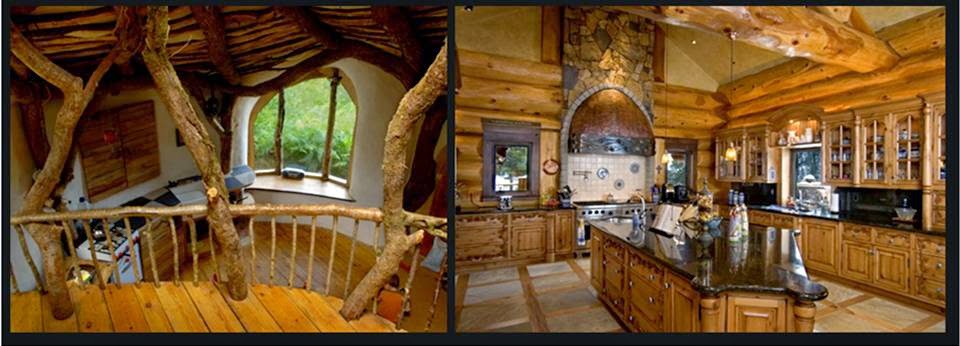
And then there are the old standby, log homes and cabins…

Image Collage by Peapodlife: Log Homes


…quaint, rustic and “natural” to be sure, but ultimately deadwood—lifeless.

And don’t even get us started with potted plants. POTTED PLANTS ARE NOT NATURE. When you separate soil from the earth, put it in a pot and bring it indoors, it immediately begins to putrefy (die, rot, decompose). And although the plant in the soil may appear to be doing well, overall it is polluting your indoor environment and reducing air quality.

At PeapodLife, we believe the BEST way to “get back to nature” in a SUSTAINABLE WAY, are high order indoor rainforest ecosystems.
  • Home
  • Office
  • School
  • Health Centre
  • Retirement Community

And the reasons are simple: no other way of “getting back to nature” is truly sustainable, without abandoning civilization altogether. PeapodLife is all about ecosystems—mutual harmony and symbiosis—reconciling that which must live together sustainably. For humanity, that time is long overdue.

And what does getting back to nature living the PeapodLife look like?

Video: PeapodLife Living Wall EcoSystem Fitch Street


Remember: videos are not the same as experiencing it first-hand.