Thursday, 19 June 2014

The BEST Green Real Estate Investment Opportunity
(Greenhabbing that’s Social too)

Image by PeapodLife: BEST HOMES: The BEST Real Estate Investment Opportunity

“…we focus heavily on the nexus between green investment and profit,
and how investors can use green technology and incentives to create win-win solutions.”

No matter what anyone tells you, we know that real estate investing is still pretty much about one thing: maximizing ROI. However, how one goes about achieving that goal as an investor is changing.

From Ethical Funds to Green Real Estate News, including “greenhabbing" (making green improvements to existing real estate properties) CSR, “Corporate Social Responsibility,” normally measured as SRI—Social Responsibility Index—is trickling down into the real estate market. So what is "greenhabbing?" Checkout this excellent YouTube video by Jim Simcoe:

Video: Green Real Estate Investing (Greenhabbing) with Jim Simcoe

For the purposes of today’s article, our focus will be on “Social, Environmental, Economic Real Estate Investing” or "SEE REALTY." This is a type of real estate investing which takes greenhabbing to new heights of social responsibility and positive social impact, all the while maintaining an ROI focus.

It would be nice if "SEE REALTY" took off, because after all, it's only one "I" short of SEEing the REALITY of the housing situation we all live in, but we'll just have to wait for it to catch on.

PeapodLife BEST HOMES (Building EcoSystems & Technology via Home Ownership for the Masses that's Economical & Social) offers investors an approach that is truly unique.

Together with our partner, Casavant, we can help investors profit from the healthiest, most stress-free, energy-efficient and environmentally friendly properties possible.

PeapodLife's unique all-in-one green real estate investment program rolls green renovations and PeapodLife ecosystems into the mortgage, greatly reducing the up-front capital costs (and risks) for investors!

Here’s how it breaks down:

Image By PeapodLife: UNIQUE BEST HOMES INVESTMENT PROCESS

Just imagine being able to buy, renovate and sell green properties at a fraction of the typical capital investment, and even less time and effort.

PeapodLife and any affiliated contractors / subs we use are performance bonded to 1 ½ times the cost of the renovations.

The system our Architectural Technologist uses is the same one as the insurance agency and is featured on W Network program The Property Brothers.

THE POSSIBILITIES FOR GREEN SOCIAL REAL ESTATE INVESTMENTS ARE ENDLESS:

Working with the right investors, PeapodLife can also convert existing properties into green rental, rent-to-own, condo, co-op, mixed residential-commercial, or commercial properties.

If we’re looking at a simple home buy, renovate & flip scenario, we can also create a Legal Second Suite (most likely in the basement) that benefits from all the green technologies on the property, including the ecosystem!

Just to remind you what that looks like (and the IMPACT IT CAN HAVE ON PEOPLE WHO EXPERIENCE IT IN PERSON), check-out our latest video of an ecosystem in-progress (in an AFFORDABLE GREEN RETIREMENT RESIDENCE)...

Video: PeapodLife EcoSystem in Progress in Fitch Street Low-Income Green Retirement Residence

SO JUST HOW “SOCIAL” IS PEAPODLIFE'S APPROACH TO GREENHABBING?

Let’s face it: you know the condition of many basement apartments in Toronto. You know the problems they have with flooding, mould, etc. With skyrocketing prices in places like Toronto and Vancouver, coupled to “real estate investing as usual” (bottom-line profit at any price) the low-income and underprivileged trying to get by really do get shafted in terms of quality and healthfulness.

PeapodLife, partnered with Casavant’s Second Suites Program will completely change the complexion of social and affordable housing. This program is a true game-changer. It is so revolutionary and potentially lucrative, to receive details investors must first sign and return a confidentiality agreement.   CONTACT US TODAY for more information.

Why the secrecy? Because we don't want our trade secrets used to perpetuate some of the awful trends which can be seen in low-income housing projects. In the wake of PeapodLife's approach to greenhabbing, their days are numbered anyway...

WHY CONVENTIONAL REAL ESTATE INVESTING CAN’T COMPARE TO PEAPODLIFE

In today's red-hot real-estate market, many are doing just the same old slap on a coat of paint" routine. You know, lipstick on a pig. Mostly contractors who are perhaps best equipped to assess renovation costs, swallow additional "surprise" expenses, and generally milk every wholesale discount they can to maximize their profits. Makes perfect sense. Not exactly “green.”

But what about other investors? No matter who they are; no matter how close a relationship they may have with architects, contractors, etc., the fact remains that they are taking a good deal of risk footing the bill for renovations which are really out of their hands; unexpected costs which are more often than not beyond their control.

Then there's the whole issue of differentiation. Sure, with a well-designed, renovated and staged property in the right location in Toronto, a bidding war may even ensue. But this is becoming less common as more and more new and/or renovated homes come onto the market, all sporting the same contemporary look, features, etc. 

PeapodLife BEST HOMES offers less risk, more convenience, greater differentiation in the marketplace, while building SUSTAINABILITY and SOCIAL RESPONSIBILITY into every property.

CONTACT US TODAY for more information.


Tuesday, 17 June 2014

Living Wall EcoSystem COMES ALIVE! What Progress Indeed
Fitch Street Retirement Residence gets a Colourful Burst of Fresh Air

HD Video by PeapodLife: EcoSystem-in-Progress features Active Rainforest Cycle, Seeded Moss, Bromeliads, Ferns, Grasses.
PeapodLife Rainforest Living Wall EcoSystem "Under Construction" at Fitch Street Affordable Retirement Residence in Welland, Ontario.
Video features active Rainforest Cycle (automated spray misters); moss (seeded); bromeliads, ferns, grasses.
Still to come: Orchids, aquatic plants, fish and more.
Published on Jun 17, 2014 by PeapodLife

“I suffer from depression. My new morning ritual is going to be to come down and sit right here for a little a while. My God it’s so beautiful. It just makes me happy.”
~ Fitch Street Retirement Home Resident

The above video really does speak volumes (watching it on our YouTube Channel in HD is best).

As a part of our continuing series showing the evolution and organic growth of a PeapodLife Rainforest EcoSystem, today we offer video evidence of the dramatic improvement an EcoSystem makes to any space.

In addition, we offer more “in-progress” photographs which will serve as a kind “before and after” pics for the purposes of today’s article.

Image by PeapodLife: “BEFORE” Fitch St. EcoSystem Mechanicals & Foundation Installed.

Image by PeapodLife: “AFTER” Fitch St. EcoSystem: Bromeliads, ferns, grasses planted; moss seeded.

As we mentioned in previous blog posts, the process of installing a high-order indoor rainforest ecosystem by PeapodLife takes time. It is a step-by-step organic process.

There is NO SOIL. NO CHEMICALS. NO FERTILIZERS. NO ADDITIVES OF ANY KIND.

When you’re dealing with nature ON HER TERMS, patience and organic growth are the order of the day. There are no shortcuts. There is no way to exploit the laws of nature and “get away with it.” Apologies to industrial agri-business, et al.

Still to come: orchids, aquatic plants, fish & more!

At PeapodLife, we let our Living Wall EcoSystems to the talking. No dying plants. No smell. Just the freshest, cleanest air; and a most beautiful, vibrant, colourful and energetic background.

On of the Fitch Street residents (who shall remain nameless) put it best when she came by with her little dog to admire our work. She said,
“I suffer from depression. My new morning ritual is going to be to come down and sit right here for a little a while. My God it’s so beautiful. It just makes me happy.”

Enough said.


Friday, 13 June 2014

List of Heart Disease Risk Factors Grows: Air Quality & Environmental Noise
A Healthy Heart is STRESS-FREE, a Healthy Environment is CLEAN & NOISELESS.

Image Collage by PeapodLife: Nature = Stress Free, Healthy Heart Zone

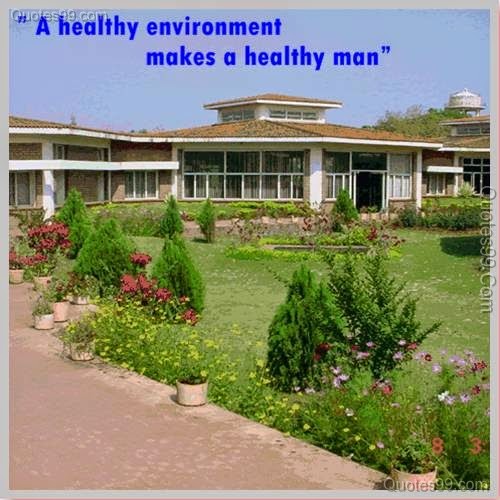
“A Healthy Environment Makes a Healthy Man” 
~ Unknown

Here are some Controllable Risk Factors for Heart Disease:
  
•    Smoking
•    High LDL, or "bad" cholesterol and low HDL, or "good" cholesterol
•    Uncontrolled hypertension (high blood pressure)
•    Physical inactivity
•    Obesity (more than 20% over one's ideal body weight)
•    Uncontrolled diabetes
•    Poor air quality
•    Noise

Sources: webmd.com: WebMD: Heart Disease Health Center: Risk Factors for Heart Disease ;
baqs.spph.ubc.ca: Border Air Quality Study: Noise and Air Quality Research

Whenever we see a list like this, it’s always interesting to note how entries such as “stress and anger” are listed as two separate items, as if they were in themselves unrelated. Likewise, noise and air pollution are shown unrelated to stress.

Now, obviously there are practical reasons for this. For instance, it’s clear that noise causes stress (at least, it should be common sense). Thus, it is not the noise itself that leads to heart disease, it is the stress it causes which matters. But one cannot say it is stress alone that causes heart disease because people might be tempted to believe a relaxing cocktail and a meditation CD will do the trick.

The key here is to recognize and distinguish between lifestyle factors and environmental factors. Whether or not one smokes is a lifestyle choice. Whether or not one works in a toxic workplace environment is less of a choice and more of an environmental circumstance.

Image: Healthy Environment Makes a Healthy Man  
Image Credit/Source: Quotes99.com: A healthy environment makes a healthy man


A study out of British Columbia published in 2010 asserts that workplace noise is a contributing factor to Heart Disease (Source: http://knowelty.com/study-shows-workplace-noise-can-lead-to-heart-disease/873839/).  Previous studies have shown various sources of noise pollution, including that from traffic and aircraft, are also risk factors. (Sources: http://baqs.spph.ubc.ca/border-air-quality-study/noise-and-air-quality-research; http://www.cbc.ca/news/health/aircraft-noise-tied-to-higher-heart-disease-risk-1.1931092)

Our previous posts on indoor air pollution (Sick Building Syndrome) are really a no-brainer. If smoking is a risk factor, so too must be toxic indoor environments.

It’s safe to say that all environmental factors contribute to stress. Anger, too, is a form of stress. So what, exactly is stress!? According to MedicineNet.com,
“…In a medical or biological context stress is a physical, mental, or emotional factor that causes bodily or mental tension. Stresses can be external (from the environment, psychological, or social situations) or internal (illness, or from a medical procedure).”

So, an environment that contributes to tension is a stressful environment. An environment which relieves tension is a healthy environment (at least where the heart is concerned). The key, then, is RELAXATION.

Suddenly it all becomes clear: all those relaxation CD’s featuring soft music and nature sounds. There are clearly sounds which relax. Fresh clean air relaxes. Natural impressions (pleasing sights, sounds, scents, textures, etc. created by nature) relax us. They alleviate tension. An environment flush with them alleviates tension and rejuvenates us.

PeapodLife creates such indoor environments. At home; the office; school; healing centres; wherever anyone lives, works, rests, heals, or plays, PeapodLife high-order rainforest ecosystems provide a healthy environment, for a healthy YOU!


Thursday, 5 June 2014

EcoSystem Begins to Take Shape in 50-Plus Lifestyle Residence:
Water Circulating; Lighting Functional

Image by PeapodLife: EcoSystem with Plant Pockets, Water & Lighting Installed

“Life requires thorough preparation - veneer isn't worth anything.”

A few weeks ago we told you that an ecosystem had gone into Birchwood Place, Fitch Street Affordable Residence for Seniors. In that blog, we listed three steps which needed to take place:
  1. Final dust cleaning and building flush to expel most construction adhesives and other chemical construction pollution, including off-gassing materials.

  2. Add water and get the Ecosystem running; allow water and system to settle.

  3. Add plants, water plants and fish; again, in a gradual, organic process.

We were there on Thursday of this week to  execute Step Two of the process…
“Once ample time has been given to achieve safe levels, we will begin to add water and get the Ecosystem running.”

Except for some minor hiccups (there are always a few to be expected whenever one does an install, because there is simply no way to predict the unpredictable), everything went smoothly.

Tradespeople, Building Management, neighbours and certainly residents have all expressed a good deal of curiosity and anticipation. And, remarkably, so many of them simple “get it”—that is, they very quickly grasp the essence of what PeapodLife is doing and cannot wait to experience it.

They also seem to grasp that there is no “final product” per se, unlike other so-called “living walls” which look at their best just after their installed, after which they begin the process of decay. No amount of natural or chemical fertilizer can sustain life in their fundamentally unnatural configurations.

PeapodLife Living Wall EcoSystems, on the other hand, look good once their installed, but really start to grow, thrive, flourish and dazzle weeks and months later.  There is never a “finished product” because the ecosystem, with all its beauty and wonder, is constantly changing, growing, surprising us while renewing itself. 

Image by PeapodLife: Lush EcoSystem at former Club Monaco Head Office.

So in a very real sense, PeapodLife is truly Life, and everything else is just a veneer. Veneers wear out, chip, fade, and reveal their substance less nature. Life, on the other hand, grows, prospers, discovers, and reveals the fertility of Mother Nature herself.

Which would you like to see in a 50+ retirement residence? Stay tuned, the planting of life in Welland will soon be at hand.


Tuesday, 3 June 2014

Human-Right Court Rules against Compassionate Therapy; underscores
Need for Independent Healing Zones Free from Politics & Big Business

Image: Voltaire, “the Art of Medicine…Nature cures the Disease” 

“The art of medicine consists of amusing the patient while nature cures the disease.”
~ Voltaire
Source: goodreads.com: Quotes About Health Care

“Healthcare Freedom” is a buzzword which has been on the lips of many an American pundit, especially since the introduction of Obamacare in America.

Whereas in the United States the term has as of late focused on Health Insurance and issues related to personal choice in terms of both protection and ultimate service providers, elsewhere in the world—including here in Canada—citizens must be on watch for a more insidious governmental intervention.

Of course in Canada we have a much lauded public healthcare system (wait times notwithstanding), and there are many treatments not covered by provincial healthcare plans, particularly so-called “alternative” treatments.

As of May 28, 2014, patients are not automatically entitled to seek compassionate therapy, according to a landmark ruling of the European Court of Human Rights in Strasbourg, France.

Without scientific evidence of efficacy, publically funded systems are not obligated to fund experimental therapies, even in cases where established therapies have all proven ineffective; and, even if the patient still in need of therapy is dying, suffering, etc.

The background and basis for the ruling was discussed recently in a newsblog on www.nature.com posted on May 30th: “Human-rights court rules that evidence must support compassionate therapy.”

Indoor Ecosystems could prove to be an effective Defensive Measure against Future Tyranny by the State

We have long referred to PeapodLife Building EcoSystems as “spaces of love, health & wellness, healing, etc.” Pretty soon, we may also be able to refer to them as sanctuaries against tyranny by large corporations and the government.

As austerity measures put the all mighty dollar ahead of compassion; as corporate interests ensure that only the most successful and lucrative drugs, treatments, therapies and procedures are offered in publically funded healthcare programs, the ability to take control of your own health and wellness is becoming that much more prudent and urgent.

Clean air and a boosted immune system are only the beginning. With other at-home and at-work preventative therapies, consultations, diets, etc., attuning oneself to the notion of living in an environment of health and wellness just makes sense.

An ecosystem supports taking a proactive role in one’s own wellness program (or establishing one at work). Ecosystems surround individuals with a space of wellness: an energy field of optimum physical, mental and emotional wellbeing.

One never knows what treatments the corporate-lobbied, publically-funded healthcare system is going to try to impose on us (we know it’s going to profit others, possibly at our expense).

But  no-one can prevent us from taking care of ourselves, our families, our residents and our employees in a natural and holistic way. It never hurts to take Voltaire’s words to heart, hole-up and prepare for the inevitable calamity of a financial market/corporate driven healthcare system.

Let nature cure the disease.


Thursday, 29 May 2014

Is Stress Response to Blame for Obesity Crisis in Children as well as Adults?
New Research & OECD Study point to Stress as the Culprit in Epidemic

Video: Child obesity fuelled by stress response: How stress and the environment influence our decisions about food

“Dealing with stress in a better way is the key to breaking the cycle of stress eating.”
~ Deepak Chopra, What Are You Hungry For?

A new study suggests that children who use food as a means to cope with stress are more likely to gain body fat. The link between emotional eating and stress has been well established in adults, but few studies have looked at this relationship in children.

At the European Congress on Obesity, held this week in Sofia, Bulgaria, researchers presented a study connecting children’s stress , hormones, diet and increasing body fat, the CBC reports.
“In a three-year study of about 500 elementary school children, those with high levels of the stress hormone cortisol and who turned to food for comfort gained body fat, Natalie Michels of the public health department at Ghent University in  Belgium and her colleagues found.

"’We see the relation mainly in children with a high sweet tooth consumption,’" Michels said in an interview. "’So those who take a lot of sweet foods … these children we see the stress increased adiposity.’" 

Increases in cortisol might directly affect body fat, or indirectly influence less healthy dietary choices, the researchers suggest. That said, the Belgian researchers found children with high cortisol levels who didn’t use food to manage stress levels; not surprisingly, those children didn’t gain additional weight.

Image: “Stressed” is “Desserts” spelled backwards 
Source: vanessareillytelt.wordpress.com: Christmas stress!


Environmental Effects on Stress

If you’ve been an avid reader of PeapodLife’s blog, you’ll know we are big proponents of the human-environment connection. Sara Kirk, obesity researcher at the IWK Children's Hospital in Halifax, echoes our concerns:
"We need to understand how the environment influences our decisions about food…We need to think about the widespread availability of heavily processed, nutrient-poor but energy-dense foods that are highly palatable. So when we're feeling stressed, we're more likely to reach for those kinds of foods because they're everywhere around us.
…
"One of the things that we really need to get a grip with in society is this environment undermining our health behaviours. Stress fits into that picture, but we have to recognize that that picture is very complex" Sara Kirk, IWK Children's Hospital”
Source: CBC.ca: CBC News: Health: Child obesity fuelled by stress response

It is a very complex picture, indeed. And because it is so complex, PeapodLife believes wholeheartedly that we humans are entirely out of our depth in our attempts to cope with it. There is only one thing that can handle such infinite complexity successfully: the ecosystem.

A high-order ecosystem deals with complexity on orders of magnitude much greater than that faced by us, particularly when it comes to this issue. Why not allow an ecosystem into the living spaces currently infested by all the unnatural, industrial, addictive, and fattening-if-not-downright-toxic-foods?

An ecosystem functions to regulate the root cause of the problem: the stress itself. An ecosystem fills an indoor environment with a mitigating field of freshness, energy and ambiance which helps absorb and “scrub” negative vibrations, while at the same time filling the consciousness with thoughts of more natural, productive, healthy activities.

It’s clear that taking a long walk in the woods or a relaxing bubble bath is a fantastic stress reliever. But child or adult, our busy lives and packed schedules often just don’t permit us such luxuries! Let’s face it: that “quick fix” chocolate bar or bag of potato chips is just too quick, too convenient…too tempting!

Image: You Are Now Entering a Stress Free Zone  
Source: innerself.com: InnerSelf: How to Relieve Stress and Live Stress-Free

An indoor ecosystem helps nip temptation in the bud by enveloping occupants with a cushion of stress relief. Think of it like a gigantic natural invisible stress sponge, sucking the stress right out of you! The point is, you never even get to the point of craving “the quick fix.”

That’s the genius of PeapodLife ecosystems: they help regulate and manage stress, without directly affecting your activities or schedule. Just go one doing what you need to do: work, school, music, cooking, taxes…whatever. Let our ecosystems take care of you so you care of what you need to.


Thursday, 22 May 2014

Ecosystem Installed in Affordable Seniors Residence
Welland, Ontario Seniors will Benefit from the BEST

Image by PeapodLife: Ecosystem mechanicals, base, and panels installed
at Birchwood Place, 235 Fitch Street, Welland Ontario 
(inset photo credit: Niagara Regional Housing).

“We know safe and affordable housing is an absolute necessity for having a healthy life.”
~ Maryellen MacLellan, NRH Housing Operations Manager

Over the past few weeks, PeapodLife and its partners have been working on a rudimentary green wall ecosystem for Birchwood Place, Fitch Street Affordable Residence for Seniors.

PeapodLife has to wait for the final completion of the ecosystem, due to various factors which must be met:
  1. The building has undergone final clean-up of dust, and airing out of the complex for construction adhesives and other chemical construction pollution, including contributing materials gassing-off.

  2. Once ample time has been given to achieve safe levels, we will begin to add water and get the Ecosystem running.

  3. Shortly thereafter we will add the plants, water plants and fish, as the water and system settle. Please note that this too is a gradual, organic process. Ecosystems are self-organizing and at their best when given a chance to find their own expression.

In synthesis, we need to give the ecosystem the best possible start and can’t rush this critical time. Like any natural being in its infancy, the ecosystem is at its most fragile and nowhere near its full potential in the beginning. It actually “grows up” and into its new environment, self-organizing and establishing its own optimum way of being.

Image by PeapodLife: What a PeapodLife Living Wall looks like when the ecosystem has had a chance to begin to establish itself.

Compare this to other so-called “living walls” which look great just after being installed, but then begin a slow—and sometimes quite rapid—decline into a soggy, rotting, mouldy mess. Many designers and architects have actually dropped the idea of working with these pretend living walls, and building owners who invested in large-scale installations now lament doing so, with tens of thousands of dollars being spent annually in plant replacement costs.

PeapodLife is committed to doing living walls the right way, as they were meant to be done: working in support of natural processes, not against them. The result? Vibrant, beautiful ecosystems which may cost a little more money up-front, but in the long term pay dividends to all who experience them.

Image: PeapodLife Ecosystem at Graduate Engineering Lab, University of Toronto.

And really, if an affordable housing complex for seniors in Welland can afford one, that speaks volumes: not only of PeapodLife’s willingness to work within the parameters set out by our clients, but also our commitment to making our BEST—Building EcoSystems & Technology—available to everyone on the economic and demographic spectrum. 

Niagara Regional Housing is accepting applications for the new non-smoking seniors (55+) apartment building at 235 Fitch Street (East Building), Welland, ON.