Tuesday, 30 September 2014

Nature’s Plea: “Work with Me, People!”

Image: Spider Memes 
“When Nature has work to be done, she creates a genius to do it.”
~ Ralph Waldo Emerson

Image: “When Nature has work to be done, she creates a genius to do it.” by Ralph Waldo Emerson

Now, we’re not saying Mother Nature is a like a neurotic director on set losing her marbles at a cast and crew who refuse to cooperate with her and realize her vision of “a perfect picture.” But one must admit, given the recent eruptions and earthquakes, it may not be an altogether inappropriate comparison.

And we also must admit, when it comes to developing a healthy relationship with nature, our approach has been anything but that of a “genius.” Surely not the kind of genius Emerson is referring to.

Pesticides, GMO’s, pollution, climate change, deliberate introduction of invasive foreign species, devastation of vast ecosystems…humanity’s track record of “working with our director” comes up sorely wanting.

But there are “geniuses” out there, ones who believe it is better to work WITH Mother Nature than against her. One of them is PeapodLife’s resident ecosystem guru, Wolfgang Amelung, proprietor of Genetron Systems and inventor of the living wall ecosystem.

Here Wolfgang is featured on a piece produced by CBC’s Venture, back in the 1997, when he first took the world storm with his invention.

Video by PeapodLife: CBC Venture Report on PeapodLife Partner, Genetron Systems 
Source: YouTube - PeapodLife

Hot on the heels of the authentic work of a real genius whose passion is working with Mother Nature, a slew of so-called clever people saw the living wall ecosystem and decided “I can do that!”

The result was a plethora of so-called “living walls” and “green walls” which flooded the market and still linger today: cheap knock-offs which are chemically fed, soil-based, and don’t have any resemblance whatsoever to an ecosystem—and thus have little or any resemblance to real nature, apart from their inclusion of plants.   

And guess what? They don’t work.

Nature works because it is an ecosystem. Balanced, intelligent, able to adapt to changing conditions. Soil putrefies and dies, filling the air with more contaminants than the plants in it can clean. Hydroponic systems fill the air with chemicals and fertilizers. Neither systems are capable of producing ionized living water, and both types of systems suffer from mold and mildew problems due to the moisture.

But wait! Don’t PeapodLife Living Wall Ecosystems also produce a lot of moisture?

Yes they do, but our ecosystems produce ionized living water—negatively charged ions—which suck contaminants out of the air. The electromagnetic field of an ecosystem is balanced, meaning mold is kept in check. What flourishes in its place is moss—a feature no other so-called living wall is able to duplicate.

PeapodLife ecosystems were developed and patented by a true genius who knows the benefits of working with nature—not against it. Now those benefits are available to you: in your home, workplace, school, retirement centre, wherever wellness, calm, clarity and wellbeing are of importance and value.


Tuesday, 16 September 2014

What does it really mean to “get back to nature?”

Image Collage by PeapodLife: BECAUSE YOU DON’T NEED TO MOVE TO YELLOWSTONE TO “GET BACK TO NATURE”
Credit: Morning in Yellowstone: sometimes you wake up in the middle of a bison herd. 
“I went to the woods because I wished to live deliberately, to front only the essential facts of life, and see if I could not learn what it had to teach and not. When I came to die, discover that I had not lived.”
*Quote and Image from Walden.


The above quote by Henry David Thorough notwithstanding, we have some pretty interesting ideas of what it means to “get back to nature.”

It seems a simple enough concept, especially to children, to whom getting out exploring the wilderness seems to come naturally (at least, it used to be, before the “i-Tech” generation).

Image Collage by PeapodLife: Back to Nature - Then v.s. Now. 
Sources: Kids in Nature: http://www.back2nature.ca/; 
iPod Back to Nature 
Credit: Insanitystudz 

Just where does this technological “i-age,” including the “selfie” take us? To innovations like the “Bird Photo Booth.” It’s cool, no question, but does it qualify as getting back to nature? Judge for yourself.

Video: GoPro: Bird Photo Booth bird feeder and birdcam for Bird photography like never before
Credit: Bryson Lovett

Don’t get us wrong, the GoPro is an amazing piece of technology which allows individuals to capture nature as never before…

Video: Beautiful Nature - Autumn - GoPro 3 

And, of course, GoPro offers the ultimate in “high-performance, high-definition selfie technology” to capture “grown-up kids having grown-up adventures” approach to getting back to nature:

Video: 4 Month GoPro Travel Adventure 
Credit: Henry Cramer


But there’s still good old fashioned intrepid exploration, discovering the hidden gems and secret mysteries of nature, like this subterranean haven:

Image: Underground Green Haven 


What all these forms of so-called “getting back to nature” have in common is that they are illusory and/or temporary; in other words unsustainable. As exciting as a 4-month adventure holiday may be, 4 months is 4 months. It is a holiday; it is not sustainable.

“So we’ll capture it for posterity!” we think.

As cool as shooting and viewing high-speed, HD nature footage may be, it’s not the real thing. And unless you had your camera mounted on a helmet, no: you were not really there. The second we start worrying about “capturing the moment,” we’re taken out of the moment. Truly.

That’s part of the problem with the whole “i-Generation,” “selfie” and “be a hero” culture: we’re so focused on saving the experience for later—or sharing it with others—we deprive ourselves the pure, unadulterated experience itself. And, we falsely believe that others can experience what we experienced. Sadly, like us, they get a watered down, filtered version of it. Yeah, it’s pretty cool to watch, but it’s not the same.

What we’re really talking about, then, is getting back to nature more permanently…in a sustainable way. Living with nature.

And there are plenty of really dramatic ways of achieving this goal which, let’s face it are more or less beyond the reach of most of us…

Image Collage by PeapodLife: There’s a more attainable way to get nature back into your life


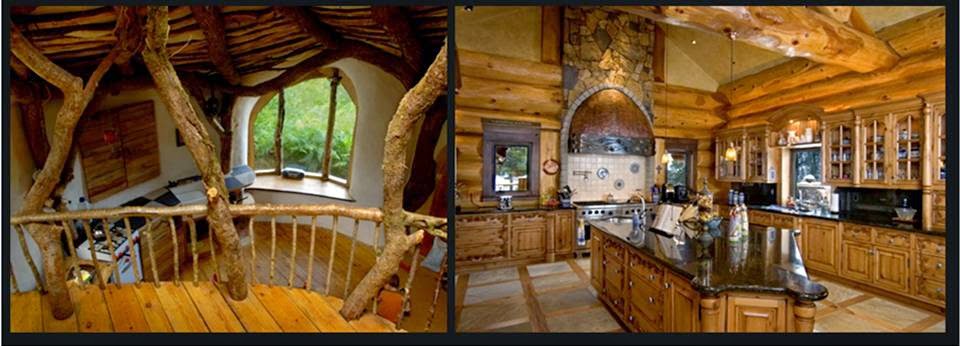
And then there are the old standby, log homes and cabins…

Image Collage by Peapodlife: Log Homes


…quaint, rustic and “natural” to be sure, but ultimately deadwood—lifeless.

And don’t even get us started with potted plants. POTTED PLANTS ARE NOT NATURE. When you separate soil from the earth, put it in a pot and bring it indoors, it immediately begins to putrefy (die, rot, decompose). And although the plant in the soil may appear to be doing well, overall it is polluting your indoor environment and reducing air quality.

At PeapodLife, we believe the BEST way to “get back to nature” in a SUSTAINABLE WAY, are high order indoor rainforest ecosystems.
  • Home
  • Office
  • School
  • Health Centre
  • Retirement Community

And the reasons are simple: no other way of “getting back to nature” is truly sustainable, without abandoning civilization altogether. PeapodLife is all about ecosystems—mutual harmony and symbiosis—reconciling that which must live together sustainably. For humanity, that time is long overdue.

And what does getting back to nature living the PeapodLife look like?

Video: PeapodLife Living Wall EcoSystem Fitch Street


Remember: videos are not the same as experiencing it first-hand.


Thursday, 11 September 2014

Do Plants Hold the Secrets to Consciousness?
Do they Feel Pain? How do they Make YOU FEEL?

Video: Do Plants Respond to Pain? 

What is a weed? A plant whose virtues have never been discovered.
~ Ralph Waldo Emerson

By Ralph Waldo Emerson’s definition, TODAY ALL PLANTS ARE WEEDS IN THE EYES OF MATERIALST SCIENCE. Why? Because science refuses to accept the possibility that plants are conscious. And yet, the above video points to the possibility that plants may hold the keys to understanding consciousness itself!

The above video is another in a long line of experiments exploring the nature of how plants “feel” (if that is the right word). The Smithsonian experiment specifically tests the effects of ether on a plant’s stimuli-response ability to function normally, postulating it has something to do with the plant’s ability to conduct electricity.

A simple stimulus-response is one thing, but the efficacy of ether as an anesthetic—it was thought by medical science—was how it affects the central nervous system of humans. But hang on: a plant has no brain; it has no central nervous system. How is it affecting the plant itself?

This is where we must go back to ancient wisdom; ancient knowledge of human physiognomy known to the Chinese and Ayurveda’s.

The term nadi in Sanskrit yoga refers not to nerves, but to channels through which the vital energies of the etheric—or subtle—body flow (prana). They connect at special fulcrums of intensity known as chakras. Nadis are 1:1 analogous to the meridian system in traditional Chinese medicine and acupuncture through which the life-force-energy as qi (“chi”) flows.

Image Collage by PeapodLife: Meridians and Nadis in the Subtle (etheric; vital) Body 


According to Wikipedia, “Acupuncture points may exhibit low electrical resistance and impedance but this evidence is mixed, and limited by poor-quality studies with small sample sizes and multiple confounding factors.” Source: http://en.wikipedia.org/wiki/Acupuncture_point

Still, the point is that there is a precedent for the movement of energy through the body which is not physical, and thus does not rely on the central nervous system. The central nervous system also carries energy, in the form of electrical charges, as do synapses in the brain.

But here again we come back to the underlying assumptions of science: that thought (and therefore consciousness) is reliant on the brain, on a central nervous system. This is where the secret life of plants will really blow your mind…

Video: The Secret Life of Plants 


Is it possible that even the very threat of fire can cause a plant to react? What is going on here?

Now, to be fair, others have tried to replicate Backster’s experiments, but have been unable to duplicate his results. According to Wikipedia,
Biologist Arthur Galston told St. Petersburg Times, "We know plants don't have nervous systems. But they do have little electrical currents flowing through them and are subject to outside manipulation." He further said that plants can show altered electrical responses to light, chemical agents and disease but he "draws the line" to the claim of them "responding to human thoughts and events, including life elimination." 

The problem, as many who experiment in the fields of consciousness, including Masaru Emoto and Lynn McTaggart, face issues around “skeptical consciousness” that is; that a skeptical mind has adverse effects on the outcome of consciousness experiments. If consciousness is, indeed, a “field,” and positivity and negativity  exist in consciousness, then this is not surprising.

Material scientists criticize these experimenters’ lack of controls and failure to adhere strictly to the scientific method. They likely would call the “positive attitude” of the consciousness researchers “confirmation bias,” meaning the occasions their experiments do not produce the desire result are quietly discarded, forgotten, and not mentioned in any of their publications.

Yes, the established scientific community seems focused on denying the plausibility of plant consciousness.

Video: Stuff They Don’t Want You to Know – Plant Intelligence 
Credit: HowStuffWorks


Still, it’s hard to deny the life-changing effect such experiences with plants can have on someone:
“I must say that as of 14 minutes along in that initial observation on the morning of February 2nd 1966, my life just hasn’t been the same.”

With PeapodLife, Your Life May Never Be the Same Again, Either

Suffice it to say, anyone can experience a life-altering experience with an ecosystem from PeapodLife. Why? Because the ecosystem is even more conscious than a single plant. We have to stop thinking in terms of single, separate “organisms” and move into the space of the “superorganism.” That the strength and vitality of individual organisms is dependent on their environment; especially when it comes to plants.

Only material scientists have the audacity to separate a single cell or an organ from an organism, put it in isolation, run a myriad of tests on it in completely unnatural environments, and say they comprehend the nature of a cell/organ and its functions.

One cannot, ever, comprehend anything out of context. Context is everything. This is the very nature of “something in its place” or “out of place.” Nothing in nature is truly out of place. The perfection of nature is its ability to manage chaos in a harmonious way. 

Thus, to be present and experience the harmonious order in the middle of those patterns of chaos, one can actually experience a kind of intelligence at work—a conscious presence, if you will. Call it what you will, explain it how you must.

But feel it you will (unless, like the materialist scientist who needs empirical proof in order to trust their own experience of life, your skeptical mind blocks you). 

In any case, the more time you spend living with an ecosystem, the more you will begin to commune—if not communicate directly—with it. It will surprise you. It will change your life for the better. How, exactly? Consciousness doesn’t work that way. Ecosystems are NOT MACHINES. And neither are we.

You don’t understand this one in the head, you feel it in the heart. Like true beauty, love, kindness, compassion, and all the most wonderful experiences this life has to offer.

Here’s a taste (keeping in mind video CANNOT do the experience justice).

Video by PeapodLife: Living Wall Ecosystem up-close and personal - Bodystream Health & Wellness Center


Maybe, just maybe, how plants feel is how they make us feel…how we all feel. Maybe, just maybe, buy spending more time simply experiencing plants (and less time “studying them”), just being conscious and receptive, we can discover much more about their true nature, our true nature, and the nature of knowing itself.

Or, maybe we’ll just be much happier, healthier, with a more comfortable life. There’s only one way to find out.


Tuesday, 9 September 2014

FED UP with Sugar!?
Forget “Hooked on Phonics;” Get Kids “Hooked on Healthy Food”

Video: FED UP – Official Trailer

Everybody's got their poison, and mine is sugar.
- Derrick Rose

Not alcohol, cigarettes, or what we typically think of as drugs. Like so many others in the industrialized world I’ve picked my poison—sugar—and it’s 100% legal and available EVERYWHERE, in just about EVERYTHING. In fact, this particular poison is nearly impossible to avoid. 

Did I really pick my poison? Or was I picked? And just how much of a “poison” is sugar, anyway? The new documentary film, “FED UP” explores America’s addiction to sugar, and the epidemics it is causing in young people; the first generation, it is said, whose life expectancy will be lower than that of previous generations.

One of the rather vivid arguments the film makes is that sugar “lights up” the same area of the brain as cocaine. If that is so, then in terms of addiction, sugar can be considered the most widely used drug on the planet.

Image: Screenshot from FED UP Official Trailer – Brain response to sugar and cocaine

“So what?” You might be asking yourself: “so a few cavities and some kids who grow up as adults with a sweet tooth aside, what possible harm can come from this pure white sweetener which made all our childhoods that much more bearable?” Well, it’s not quite that simple.

For the record: I am a sugar addict. Like most people, I turn to carb-laden, starchy, fatty, and sugary comfort foods for—well—comfort. I am on a diet free of gluten, corn, soy and cow-dairy (for medical reasons), and yet I still find a way to satisfy my cravings for starchy/sweet foods.

If you cannot get out to the theatres to see FED UP anytime soon, you can watch an episode of CBC’s the fifth estate exposing “The Secrets of Sugar,” below, which pretty much summarizes much of the current scientific and medical basis for “the war on sugar,” as well as the economic and political pushback against any efforts to reduce consumption.

Video: The Secrets of Sugar - the fifth estate - CBC News

So what can be done?

Well, since the issue here seems to be first and foremost the effects of sugar on children and their long-term health, there is an immediate message of prevention and education. With an educational component, one might have expected this blog on Genesis Eco Fund’s Blog, but not so: it’s not that kind of “education” that’s needed.

What’s needed is some good old-fashioned child rearing, like the kind we got from our parents—like the kind being shown in the following CBC news report on the importance of getting kids hooked on healthy food early in life.

Image Video-Link: Getting kids hooked on healthy food early is crucial, researchers say 
Source: CBC News The National Sep 2 2014 Child Nutrition

Right now, children’s addiction to sugar is being institutionalized on an industrial scale (especially in the United States where school breakfast and lunch programs are inundated with industrial food: cheap sugar-laden products whose primary ingredients—like carbs and starches—convert to sugar in the body; let’s not even mention the unhealthy fats and “flavor enhancers” like MSG).

But wait a second: I was brought up pretty well. We did have lots of carbs, mind you—but 30 and 40 years ago there was no talk of the dangers of carbs, yet…not like today. Well, maybe that explains why my mom now has Type-II diabetes.

Still, my mom prepared home-cooked meals. I suppose we ate at places like McDonalds and Kentucky Fried Chicken on occasion. And we did drink a fair amount of juice (which nowadays they say is almost as bad as soda pop). But there’s more to this than just “instilling healthy lifestyles.”

Kyboshing Comfort-Seeking

Make no mistake: sugar is “comfort food.” Like any drug, sugar makes children feel good; not only that, the “crash” you feel after the “high,” has a sedative, relaxing effect (if slightly depressing).

We reach for the snacks partially because our bodies are addicted to them and craving them, biologically—as Dr. Mark Hyman argues in his book “The Blood Sugar Solution: 10-Day Detox Diet,” discussed in an article on NYDailyNews.com—but there’s more to it than that.

There is a neuropsychological connection. When we are nervous, for instance, we like to crunch starchy food (like popcorn in the theatre). Chocolate and sweets likewise become more attractive to us when we “need something.” Maybe it’s the “warm fuzzy feeling” sugar gives us, like a warm hug.

In my own experience, I find that meditating or mantralizing has a powerful effect on my ability to curb cravings for sugar. In addition, being in the company of an ecosystem likewise relieves cravings, since I feel good without turning to comfort food.

PeapodLife advocates a more healthy, wholesome and comfortable environment: one with high-order rainforest ecosystems. No matter how well you try to eat, or what kind of lifestyle and nutrition regimen you try to stick to, what good is it if you’re surrounded by an environment which causes stress?

In a stressful environment, you’re just going to find yourself fighting your own cravings for comfort—sugar and related unhealthy choices.

In a calming, soothing, relaxing and invigorating environment, you crave neither the warm and fuzzies, nor the power-drink rush, nor the post-sugar-high crash. You are already balanced, content and happy.

At PeapodLife, this is what we feel is so important: allowing children the opportunity to experience the power of nature to provide the comfort and support in a safe and positive way—mutually symbiotic relationship. The ecosystem provides the ongoing nurturing we once received from our parents, and in many ways, is what we seek when we turn to sugar.

We surround ourselves with toxic environments and impressions, causing all kinds of stress and anxiety, in a society which shuns open displays of affection, compassion, empathy, etc. in certain “serious” circumstances, and we wonder why we turn to sugar!?

We subject children to unnatural, mechanical institutionalized education and indoctrination programs, standardized testing, etc., television, video games, iPads, the digitization of their lives, and we wonder why when they seek warmth and comfort they turn to “the quick fix” of sugar?

It’s time to bring nature back into our lives, and let the ecosystem begin the healing, the comforting; only then will our cravings for sugar be under control. 


Thursday, 28 August 2014

Meditations in Motion,
Living Ecosystems Give Life

“Our Nature Consists in Motion; complete rest is death”
~ Blaise Pascal
As opposed to the usual offerings, today PeapodLife offers a series of videos, kind of meditations on movement in nature. We begin with starlings.

Video: Starlings Murmuration 

We soon discover that such mesmerizing movements are in no way limited to birds and other winged creatures (bats, mosquitoes, etc). If we dive into the oceans, we encounter similar phenomenon—schooling, shoals.

Video: Sardine Run 2010 HD 


And one might think such fluid movements may be limited to air and water; not so. Even land creatures,  herding and stampeding take on similar shapes and patterns of motion.

Video: Wildebeast crossing Mara river

And such movements show up in even the most unexpected places, in unexpected ways, in uncommon “herds” (if it’s 5,000 ducks waddling, does that make it a herd or a flock?)

Video: 5000 Ducks Stop Traffic in Taizhou, China: Hong Minghsu's Ducks March into Chinese City

From winds and waves to flying beasts and crawling critters, here’s a nice video of Movement in Nature to close out today’s blog.

Source: Vimeo

The point of all this? To show, rather than just tell, that the life-giving flow of energies reverberate and reflect on all levels in nature in all manner of manifestation. It is important to grasp this as one considers how the presence of an ecosystem in one’s life can fill one’s world with new movements of revitalizing and rejuvenating movements.

Ecosystems are in constant motion. There may be no better meditation than to go deeper into oneself in the still point at the centre of one’s life in constant motion. 


Thursday, 21 August 2014

Mission Blue: CODE RED
New Relationship with Nature Required!

Video: “Mission Blue” Credit: Netflix

“The Ocean is dying. … No ocean, no life. No ocean, no us.”
~ Dr. Silvia Earle
Source: “Mission Blue”

It’s not everyday one gets to meet a pioneer. In the latest Netflix Original film, “Mission Blue,” the viewer gets to do just that. What’s more, we are taken on a journey into the remarkable life of a remarkable pioneer: Sylvia Earle, “an American marine biologist, explorer, author and lecturer.” Source: Wikipedia: Silvia Earle.

Image Collage by PeapodLife: Looking back on a life dedicated to the sea:
Silvia Earle Diving early in her career; more recently on her “Mission Blue”

Just how much of a pioneer was she? Rather than reading through an impressive laundry list of her accolades, watch this short clip of from the movie. One quickly realizes that this feisty explorer and scientist was not just conquering the Great Barrier Reef, but breaking down social barriers as well:

Video: Mission Blue Clip: Breaking Down Barriers

But that was only the beginning. Now, in the twilight of her long and illustrious career, Dr. Earle is championing the creation of “hope spots,” her not-so-radical idea to save the dying oceans.

And they are dying. Ocean acidification due to climate change has ravaged the world’s coral reefs (over 50% of which have vanished in the last two decades). Overfishing and decimation of marine ecosystems—including foundational species like Menhaden, overfished for production of fish oil, and all things chicken feed—have caused the collapse of fish stocks worldwide.

But perhaps we should let the woman of the moment tell you herself…

Video: Sylvia Earle: How to protect the oceans (TED Prize winner!)

The Ecosystem Connection

Another famous personality and a marine explorer in his own right—he recently set a world record for deepest solo dive—James Cameron was one of the individuals interviewed for the film, Mission Blue. Something he said in the film certainly grabbed our attention…

“We need to develop a new relationship with nature.”
~ James Cameron
Source: “Mission Blue”
Image: James Cameron aboard his Deepsea Challenger Vessel during filming of National Geographic’s film “Deepsea Challenge”

That’s a profound platitude, to be sure. But how exactly does one do that? When our so-called “natural world” is becoming more and more remote, and our so-called “greenspaces” are little more than gardens masquerading as nature…they are anything but ecosystems.

That is one reason why the wildlife in cities like Toronto feed mostly on our garbage. There is no viable ecosystem for them to participate in. One of the reasons there is no viable ecosystem is because of us and our waste: the slowly dying Great Lakes is one prominent example.

PeapodLife’s approach are indoor rainforest ecosystems.  Living with and in an ecosystem—which is self-regulating and supporting, but still reliant upon us for establishment—is the key.

Living with an ecosystem changes our perception of nature. We are a part of it; it becomes a part of us. We choose to sip our coffee in the morning next to it, or a glass of wine in the evening in its company. There’s no better place to relax, unwind, read, meditate or do yoga than in the fresh air and warm embrace of an ecosystem’s electromagnetic field. It’s a positive energy field; a field of negative ions.  

EVERY PEAPODLIFE ECOSYSTEM HAS AN AQUATIC ELEMENT AND IS DESIGNED BASED ON THE PLANETARY PRINCIPLE OF TWO-THIRDS WATER.

If you want people to comprehend the importance of the oceans, and get them to “get it”—that oceanic ecosystems support all other ecosystems—we have to get ecosystems into their life. If you want oceanic ecosystems to be top of mind, we must make ecosystems every bit as prevalent as computers, TV screens and hi-tech gadgets!

Image by PeapodLife: Ecosystem helps you discover an Intimate Relationship of Symbiosis and Harmony

Just imagine if every school, public building, hospital, workplace, and certainly every home had a vibrant living ecosystem. Imagine children interacting with those ecosystems. Studying them. Comprehending the infinite complexity of high-order ecosystems, and their ability to self-organize, self-regulate, and creatively adapt to every conceivable change…true intelligence, not “artificial intelligence.”

Imagine what creative solutions and revolutionary new relationships between humanity and nature would be born of that kind of cultural shift…that kind of paradigm. Humanity once again connecting to and identifying with their organic nature and the consciousness of collective symbiosis and harmony (as opposed to their mechanistic nature and the ego-intelligence of individualism and competition.

As Dr. Earle points out in her TED Prize winning Talk, alternative energy and all the green technologies associated with sustainability are pointless if the blue heart of the planet isn’t preserved—preserved and resuscitated.

But just as a patient recovering from heart surgery needs to rethink their lifestyle which lead to heart failure, Cameron is right: humanity needs to establish a new relationship with the planet’s big blue heart…and that means a new, close, intimate, mutually symbiotic and harmonious relationship with ecosystems.

Humanity desperately needs to discover the PeapodLife.


Post Scriptum

Thank you The Nature Daily for re-publishing this article.

Image: The Nature Daily Screenshot: Shared by Genesis Eco Fund
PeapodLife: Mission Blue: CODE RED New Relationship with Nature Required!


Tuesday, 5 August 2014

Naturally Produced Negative Ions: Think Positive & Live Positively

Image: A thunderstorm over Martinique.
“Thunder is good, thunder is impressive; but it's lightning that does all the work.”
~ Mark Twain

We can’t see, smell or taste them, but negative ions are molecules that are believed to produce increase levels of serotonin, helping to alleviate depression, relieve stress, increase our energy and boost the immune system. We typically encounter negative ions in natural environments: mountains, waterfalls, beaches, forests. (Source: WebMD: Negative Ions Create Positive Vibes)

We also encounter them after thunderstorms, leading to the expression the thunderstorm effect. Prior to a thunderstorm, positive ionization of atmospheric molecules can cause nervousness, jitteriness, and irritability in both animals and many humans.

After the storm, many will experience a renewed sense of well-being, especially when exposed to the fresh, clean air.  This is because of an abundance of negative ions generated by the storm.
“Positive ions are often pollutants such as dust, bacteria, pollen, chemicals, and fumes.  The storm releases electrical discharges consisting of high concentrations of negative ions.  Negative ions destroy many of these air pollutants and, therefore, give us a sense of well-being.” (Source: envirohealthtech.com: Enviro-Health-Tech: Alternative"Healthy Living" Devices: Ions )

Image: Ions at Work 

How big of an impact can negative ions play?

According to Pierce J. Howard, PhD, author of The Owners Manual for the Brain: Everyday Applications from Mind Brain Research and director of research at the Center for Applied Cognitive Sciences in Charlotte, N.C.:
“Generally speaking, negative ions increase the flow of oxygen to the brain; resulting in higher alertness, decreased drowsiness, and more mental energy. … "[Negative ions] also may protect against germs in the air, resulting in decreased irritation due to inhaling various particles that make you sneeze, cough, or have a throat irritation."
(Source: webmd.com: WebMD: Health & Balance Feature Stories: Negative Ions Create Positive Vibes)

Why should this matter to you?

Our worlds are filled with positive ions. These carry with them allergens, contaminates, toxins, and all manner of elements which deteriorate our mood, our mental capacity, and our overall well-being. Air conditioning, computers, electronics, all manner of machines, motors, etc. are constantly filling the spaces we live, work, study, play—and even heal—with positive ions.

Negative ions can dramatically improve your mood, mental acuity, immune system and sense of well being. “Columbia University studies of people with winter and chronic depression show that negative ion generators relieve depression as much as antidepressants….And for a whopping one in three of us who are sensitive to their effects, negative ions can make us feel like we are walking on air." (Source:  webmd.com: WebMD: Health & Balance Feature Stories: Negative Ions Create Positive Vibes)

So what does PeapodLife bring to the table?

Negative ions, but not just JUST any negative ions…negative ions as managed by an intelligent and self-organizing ECOSYSTEM. In other words, NOT-ARTIFICIAL IONIZATION! Our indoor rainforest ecosystems create negative ions the all-natural way, with a real living, breathing ecosystem fed by (and feeding) ionized living water.

There are many mechanical products on the market claiming to generate negative ions. Then there are Himalayan salt crystal lamps, which supposedly “shed” negative ions as they are heated by a candle or incandescent light bulb.  

But how much is too much?

With an ecosystem you don’t have to worry about it. The ecosystem will never generate more negative ions than is safe, appropriate, and optimal. In the same way, it will never allow positive ions to overpower the negative. It is alive, intelligently self-organizing and constantly “balancing” itself, just as the discharge of lightning during a storm can be seen as nature’s way of balancing itself.

One look at our ecosystems during their rain cycle and you can just imagine that fresh, clean, post-thunderstorm atmosphere.

Video: PeapodLife Living Wall EcoSystem Fitch Street, creates the perfect balance of negative ions for positive wellbeing.

Don’t just think positive, start living positively by filling your home, work, school or hospital with the life-boosting effects of negative ions, courtesy of your own beautiful, living, self-organizing rainforest ecosystem.